


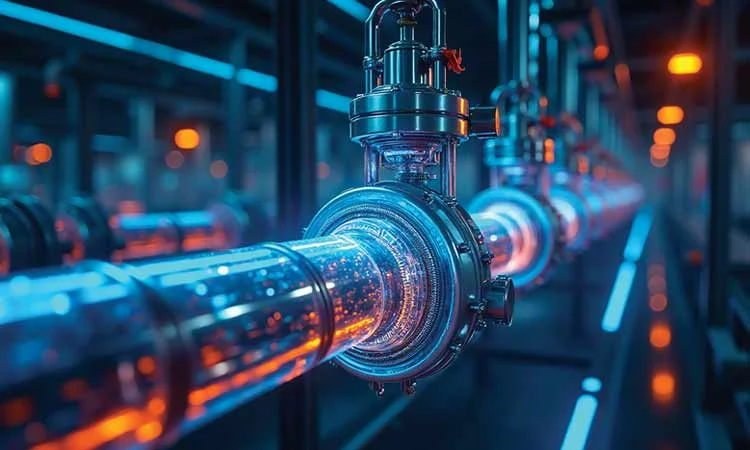
Fluid flow technology is at the heart of modern industry. From transporting water, oil, chemicals and gases to controlling cooling systems, hydraulic machinery, process equipment and energy infrastructure, the efficient movement of fluids directly influences productivity, safety and operating costs. Today, advances in digitalisation, computational modelling, smart sensors, advanced materials and energy-efficient equipment are transforming conventional fluid-flow systems into intelligent, highly optimised networks.
From Conventional Flow Control to Intelligent Systems
Traditional fluid-flow systems were largely designed around fixed operating conditions. Valves, pumps, pipes and regulators were selected to meet expected flow and pressure requirements, with operators making adjustments manually.
Modern systems increasingly use sensors, variable-speed drives, intelligent valves and digital controllers to continuously match fluid flow to actual demand. Flow rate, pressure, temperature, vibration and energy consumption can be monitored in real time. This enables closed-loop control, improving process stability while avoiding unnecessary energy consumption.
The integration of connected devices is also enabling operators to monitor fluid systems remotely and identify developing problems before they result in failures.
Computational Fluid Dynamics: Designing Before Building
Computational Fluid Dynamics (CFD) has become an important tool for modern fluid-flow engineering. Instead of relying exclusively on physical prototypes and empirical calculations, engineers can simulate fluid behaviour under different operating conditions.
CFD can reveal pressure distribution, velocity profiles, turbulence, heat transfer, recirculation zones and potential erosion or cavitation. This helps optimise the design of pumps, valves, manifolds, heat exchangers, ducts and piping systems.
The ability to evaluate multiple design alternatives virtually can shorten development cycles and reduce prototyping costs. Increasingly powerful computing resources are also making high-fidelity simulations more accessible.
Energy-Efficient Pumping
Pumping systems are among the largest consumers of electrical energy in many industrial facilities. Consequently, improving pump efficiency has become a major focus of fluid-flow technology.
High-efficiency pump designs, improved hydraulic profiles and variable-frequency drives allow pumping capacity to be closely matched to process demand. Instead of throttling excess flow through valves, variable-speed systems can reduce pump speed when demand falls.
System-level optimisation is equally important. Correct pipe sizing, reduced pressure losses, efficient valves and proper pump selection can deliver significant energy savings.
The emerging philosophy is therefore to optimise the entire pumping system rather than the pump alone.
![Efficient Pumping]() Smart Valves and Precision Flow Control
 Smart Valves and Precision Flow Control
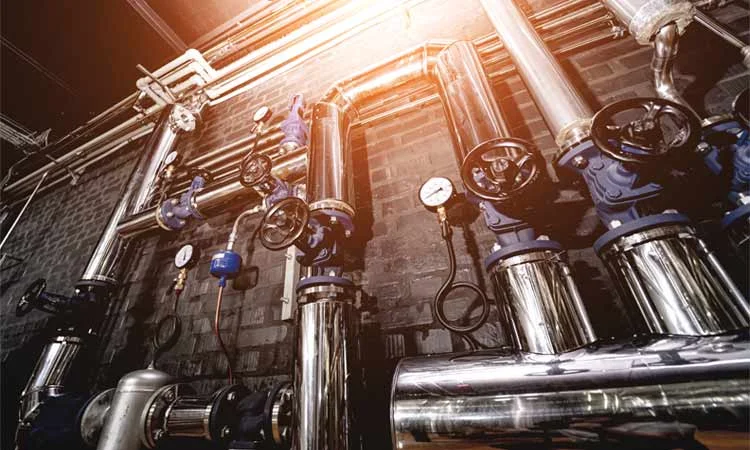
Valves are evolving from passive flow-control components into intelligent devices. Smart control valves can incorporate sensors, positioners, diagnostics and communication capabilities.
These systems can continuously monitor valve position and operating conditions and identify problems such as abnormal friction, leakage or actuator deterioration. Advanced control algorithms can provide more precise regulation of flow and pressure.
In demanding process industries, this capability can improve product consistency while reducing energy consumption and maintenance requirements.
Advanced Flow Measurement
Accurate flow measurement is fundamental to efficient fluid management. Conventional technologies such as differential-pressure meters remain widely used, but modern installations increasingly incorporate electromagnetic, ultrasonic, Coriolis and other advanced flow-measurement technologies.
Ultrasonic flowmeters, for example, can provide accurate measurement without inserting significant obstructions into the flow path. Coriolis meters offer direct mass-flow measurement and can also provide information about fluid density.
The integration of digital communication allows measurement data to become part of broader plant-control and energy-management systems.
Digital Twins and Predictive Analytics
The combination of sensors, simulation and data analytics is giving rise to digital twins of fluid-flow systems. A digital twin can represent the behaviour of a real pumping or process system and compare predicted performance with actual operating data.
Changes in pressure, flow, temperature or vibration can be analysed to identify deviations from normal behaviour. This creates opportunities for predictive maintenance and optimisation.
For example, increasing pressure drop across a section of piping may indicate developing blockage or fouling. A change in pump vibration may indicate mechanical deterioration. Detecting such conditions early can prevent costly shutdowns.
Artificial Intelligence in Fluid Systems
Artificial intelligence is beginning to play a larger role in fluid-flow optimisation. AI algorithms can analyse large volumes of historical and real-time operating data to identify patterns and recommend operating strategies.
In complex systems, AI can help determine optimum pump combinations, valve settings and flow conditions while accounting for changing production requirements.
Machine learning can also support anomaly detection, identifying operating conditions that differ from established normal patterns. Over time, these systems can become increasingly effective as they learn from plant operating data.
Microfluidics and Precision Flow
At the opposite end of the scale, microfluidics is enabling highly precise control of extremely small quantities of fluids. Microfluidic technologies are increasingly important in medical diagnostics, biotechnology, pharmaceuticals, chemical analysis and laboratory automation.
Microchannels allow fluids to be manipulated at very small scales, creating opportunities for compact analytical systems and highly controlled chemical and biological processes.
Advances in microfabrication and materials are continuing to expand the capabilities of these systems.
Advanced Materials and Surface Engineering
Materials technology is also influencing fluid-flow performance. Corrosion-resistant alloys, engineered polymers, ceramics and advanced coatings can extend component life in aggressive environments.
Surface engineering can reduce friction, erosion and deposition. Low-friction internal surfaces can reduce pressure losses, while specialised coatings may improve resistance to chemicals, high temperatures and abrasive particles.
For pumps, valves and pipelines operating under severe conditions, such developments can significantly improve reliability and reduce maintenance requirements.
![Surface Engineering]() Managing Turbulence, Cavitation and Erosion
 Managing Turbulence, Cavitation and Erosion
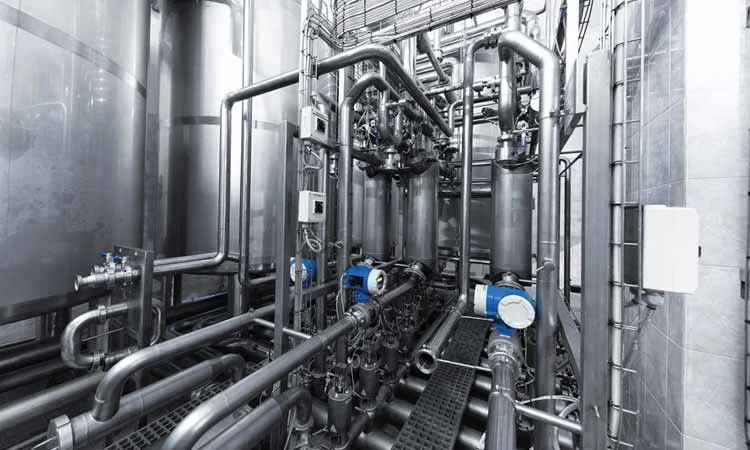
Understanding and controlling undesirable flow phenomena remains essential. Turbulence can increase pressure losses, while cavitation can cause noise, vibration and severe damage to pumps and valves.
Modern simulation tools enable designers to predict regions where cavitation or excessive turbulence may occur. Equipment geometry can then be modified to minimise these effects.
This is particularly important in high-pressure systems, hydraulic machinery and applications involving large changes in pressure.
Sustainable Fluid Transport
Sustainability is becoming a central consideration in fluid-flow system design. Energy-efficient pumps, low-pressure-drop components, leak detection and optimised control can reduce electricity consumption.
Water conservation is another major driver. Industries are increasingly adopting closed-loop cooling, water recycling and process-water recovery systems. Intelligent monitoring helps identify abnormal consumption and leakage.
In oil, gas and chemical applications, improved flow control can also reduce product losses and minimise environmental risks.
Towards Autonomous Fluid-Flow Systems
The long-term direction is towards increasingly autonomous systems. Sensors will continuously collect operating information, digital platforms will analyse it, and intelligent controllers will automatically adjust equipment to maintain optimum performance.
Such systems could dynamically balance flow, optimise energy consumption, anticipate maintenance requirements and respond to changing process conditions with minimal human intervention.
The convergence of IoT, AI, CFD, digital twins, advanced sensors and efficient mechanical equipment is therefore redefining the possibilities of fluid-flow engineering.
Conclusion
The state-of-the-art in fluid-flow technology is no longer defined simply by how efficiently a pump moves a fluid or how accurately a valve controls it. The emphasis has shifted towards intelligent, connected and energy-efficient flow systems that optimise performance throughout their lifecycle.
From AI-enabled pumping stations and smart valves to CFD-optimised equipment, advanced flowmeters, digital twins and microfluidic technologies, innovation is taking place across every scale.
For industry, the opportunity is substantial: lower energy consumption, improved process control, reduced downtime, longer equipment life and greater sustainability. The future of fluid flow will ultimately be about making every movement of a fluid more measurable, controllable, efficient and intelligent.