


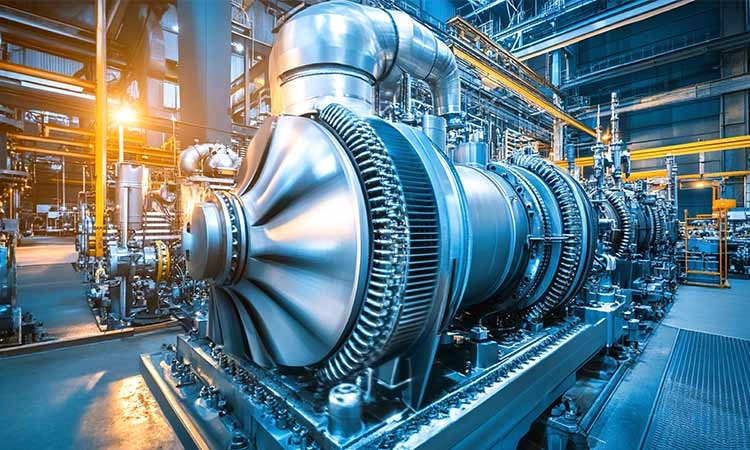
Compressors are the workhorses behind a vast range of industrial processes, providing compressed air and gases for manufacturing, automation, assembly, refrigeration, process industries, energy infrastructure and numerous specialised applications. As industries pursue higher productivity, lower operating costs and reduced carbon footprints, compressor technology is undergoing a significant transformation. The focus is shifting from simply generating compressed air to delivering it efficiently, intelligently, reliably and sustainably.
Energy Efficiency Takes Centre Stage
Energy consumption remains one of the biggest concerns associated with compressed-air systems. Consequently, manufacturers are placing greater emphasis on improving the efficiency of compressors throughout their operating range. Advanced air-end designs, high-efficiency electric motors, improved compression profiles and sophisticated control algorithms are helping reduce specific power consumption.
Variable Speed Drive (VSD) compressors represent one of the most important developments. Instead of operating continuously at a fixed speed, these machines adjust compressor output according to actual demand. This is particularly valuable in plants where compressed-air requirements fluctuate significantly during production.
The latest generation of compressors is also moving towards integrated system optimisation, in which multiple compressors are controlled as a single system. Intelligent sequencing ensures that the most efficient combination of machines operates according to demand, avoiding excessive unloading and inefficient part-load operation.
Oil-Free Compression for Critical Industries
The demand for oil-free compressed air is increasing rapidly in industries where air quality is critical. Food and beverage, pharmaceuticals, electronics, semiconductor manufacturing, healthcare and certain chemical processes cannot tolerate contamination from compressor lubricants.
Modern oil-free screw, scroll, reciprocating and centrifugal technologies are addressing this requirement while improving energy efficiency and reliability. Advances in materials, coatings, precision manufacturing and cooling systems are enabling oil-free compressors to operate at increasingly higher efficiencies.
The trend is particularly significant as manufacturers seek to comply with stringent product-quality, hygiene and environmental requirements. Rather than treating oil-free compression as a niche requirement, compressor manufacturers are increasingly developing it as a mainstream technology platform.
Intelligent and Connected Compressors
One of the most transformative trends is the integration of IoT, sensors and digital intelligence. Modern compressors can continuously monitor parameters such as pressure, temperature, vibration, motor performance, energy consumption, operating hours and air demand.
Connected systems can transmit this information to cloud-based or plant-level platforms, enabling operators to monitor equipment remotely. More importantly, analytics can identify abnormal operating conditions before they result in failures.
This is driving the transition from preventive maintenance towards predictive maintenance. Instead of servicing equipment solely according to a fixed schedule, maintenance can be planned based on actual machine condition. This reduces unplanned downtime, extends component life and helps optimise maintenance costs.
Digital monitoring is also making energy performance more transparent. Operators can track specific energy consumption and identify where compressed-air systems are losing efficiency.
AI-Powered Compressor Management
Artificial intelligence is expected to take compressor optimisation to another level. AI-based systems can analyse historical and real-time operating data to understand demand patterns and recommend or automatically implement optimum operating strategies.
In a multi-compressor installation, AI can determine which machines should run, at what capacity and in what sequence. It can account for changing production schedules, pressure requirements, ambient conditions and machine efficiency.
AI can also support early fault detection by identifying patterns that may not be obvious to conventional monitoring systems. As more compressor installations become connected, the availability of operating data will create new opportunities for machine-learning-based optimisation.\
Heat Recovery Gains Momentum
Although compressors are designed to produce compressed air, much of the electrical energy consumed during compression ultimately becomes heat. Historically, this heat was frequently rejected into the surrounding environment.
Today, heat recovery is becoming an important component of energy-management strategies. Waste heat from compressors can potentially be recovered for hot-water generation, space heating, process heating and other applications.
The concept transforms the compressor from a simple electricity-consuming machine into part of an integrated energy system. For plants with simultaneous requirements for compressed air and low- or medium-temperature heat, heat recovery can substantially improve overall energy utilisation.
High-Efficiency Motors and Power Electronics
Developments in electric motors and power electronics are contributing significantly to compressor efficiency. High-efficiency motors reduce electrical losses, while advanced variable-frequency drives enable precise speed control.
Permanent magnet motors are also gaining attention in applications where their efficiency and compactness provide advantages. Combined with sophisticated inverter technology, these motors can maintain high efficiency over a broad operating range.
The continuing evolution of motor-drive packages is expected to result in smaller, quieter and more efficient compressor systems.
Electrification and Sustainable Refrigeration
Compressor technology is also evolving rapidly in refrigeration and HVAC applications. Growing environmental concerns surrounding refrigerants are encouraging the development of systems compatible with lower-global-warming-potential refrigerants and natural refrigerants.
At the same time, electronically controlled compressors, variable-speed operation and improved heat-exchanger technology are enabling refrigeration systems to match capacity more closely with actual demand.
The broader trend is towards electrification combined with intelligent energy management, particularly as industries increasingly integrate renewable electricity into their energy mix.
Advanced Materials and Additive Manufacturing
Materials technology is another area influencing compressor development. Improved alloys, engineered polymers, coatings and surface treatments can enhance wear resistance, corrosion resistance and thermal performance.
Additive manufacturing is opening possibilities for components with complex geometries that may be difficult or expensive to manufacture using conventional methods. Optimised internal passages, lightweight components and improved cooling structures could contribute to future gains in compressor performance.
These technologies can also support rapid prototyping and application-specific component development.
Compact, Modular and Decentralised Systems
Manufacturing is becoming increasingly flexible, and compressor systems are following the same direction. Modular compressor packages allow capacity to be expanded as production requirements grow.
Instead of relying exclusively on a large central compressor installation, some facilities are considering decentralised systems positioned closer to points of use. Such arrangements can reduce pressure losses and provide greater flexibility, particularly in facilities with widely distributed production areas.
Compact compressors are also becoming increasingly important for mobile machinery, laboratory equipment, medical applications and specialised industrial systems.
Reducing Pressure Losses Across the System
Compressor efficiency cannot be evaluated by the compressor alone. The entire compressed-air system—including dryers, filters, piping, valves and end-use equipment—affects energy consumption.
Modern systems are therefore being designed around total cost of ownership rather than compressor purchase price. Low-pressure-drop dryers and filters, correctly sized piping, efficient condensate management and automated leak detection can significantly reduce the energy required to deliver usable compressed air.
This system-level approach is likely to become increasingly important as industries establish energy-efficiency targets.
Towards Net-Zero Compression
Sustainability is emerging as a defining factor in compressor technology. Manufacturers are looking beyond incremental improvements and exploring ways to reduce the overall environmental impact of compression.
This includes energy-efficient equipment, oil-free technologies, heat recovery, recyclable materials, longer service intervals, digital optimisation and compatibility with renewable-energy systems.
The future compressor will therefore be much more than a machine that generates pressure. It will be a connected, intelligent and energy-aware asset integrated into the plant’s broader production and sustainability strategy.
Conclusion
Emerging compressor technology is being shaped by a convergence of energy efficiency, digitalisation, electrification, intelligent control and sustainability. Variable-speed operation, oil-free compression, predictive maintenance, AI-driven optimisation, heat recovery and connected monitoring are already changing the way compressed air is produced and managed.
For users, the priority is increasingly shifting from purchasing a compressor to optimising the entire compressed-air ecosystem. As manufacturers pursue lower energy consumption, higher reliability and reduced carbon emissions, compressors will play an increasingly important role in building the efficient, connected and sustainable factories of the future.