

Pressure boosting systems have become an essential part of modern fluid-handling infrastructure. From industrial process plants and manufacturing facilities to commercial buildings, water distribution networks, firefighting systems and energy installations, these systems ensure that fluids are delivered at the required pressure and flow rate. As industries demand greater efficiency, reliability and flexibility, conventional booster systems are evolving into intelligent, energy-efficient and digitally connected solutions. The fundamental purpose of a pressure boosting system is straightforward: compensate for inadequate or fluctuating inlet pressure and deliver a controlled outlet pressure to meet process or distribution requirements. However, achieving this efficiently has become increasingly sophisticated. Advances in pump technology, variable-speed drives, sensors, automation, materials and digital controls are transforming pressure boosting from a purely mechanical function into an intelligent fluid-management operation.
The Evolution of Pressure Boosting
Traditional booster installations generally consisted of fixed-speed pumps operating according to relatively simple pressure-switch controls. While effective, such systems could consume excessive energy when demand varied significantly. Frequent starting and stopping could also increase mechanical stress, while pressure fluctuations could affect downstream equipment.
Modern systems address these limitations through variable-speed operation, multiple-pump configurations and sophisticated control algorithms. Instead of running a pump continuously at full capacity, the system adjusts pump speed according to real-time demand.
This fundamental change has made pressure boosting more responsive while reducing energy consumption and improving equipment life.
Variable-Speed Technology
Variable-frequency drives (VFDs) represent one of the most important innovations in pressure boosting. By adjusting motor speed according to demand, VFD-controlled pumps can maintain relatively constant pressure even when flow requirements change.
During periods of low demand, the pump operates at reduced speed rather than cycling unnecessarily between full operation and shutdown. As demand increases, the controller progressively increases pump speed.
The benefits extend beyond energy savings. Soft starting and stopping reduce hydraulic shocks and mechanical stress, while improved pressure control protects pipelines, valves and downstream equipment.
Modern integrated pump systems increasingly combine high-efficiency motors with intelligent drives, making the entire pumping unit more efficient rather than optimising the pump alone.
Multi-Pump and Cascade Systems
Industrial and commercial applications rarely operate at a constant flow requirement. A building, process plant or water network may experience substantial variations in demand throughout the day.
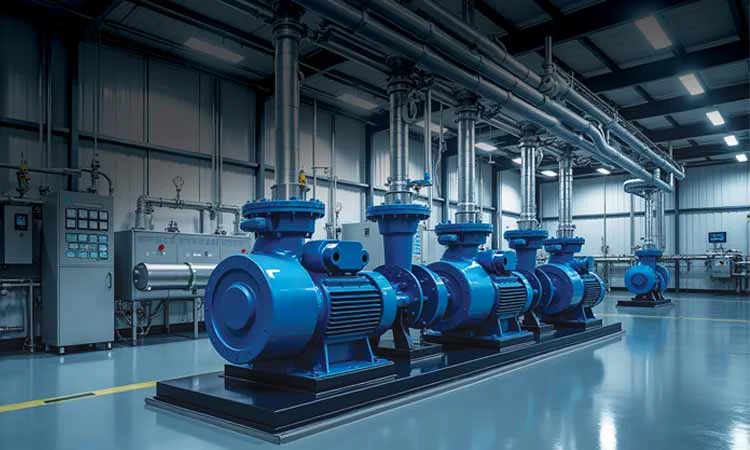
Multi-pump booster systems address this challenge by combining several pumps and operating only the number required at any given moment. Intelligent sequencing determines which pump should start, stop or vary its speed.
This approach provides both efficiency and redundancy. If one pump requires maintenance, other units can continue supplying the system. Pumps can also be rotated automatically so that operating hours are distributed evenly across the installation.
For critical applications, redundancy can be further enhanced through standby pumps and N+1 configurations.
Sensor-Based Pressure Management
The growing use of pressure, flow, temperature, vibration and level sensors is transforming booster systems into data-driven installations.
Pressure sensors located at strategic points can continuously monitor system conditions. Controllers can compare actual pressure with the desired set point and immediately adjust pump operation.
Flow sensors provide additional information about consumption patterns, while temperature and vibration sensors can help identify developing mechanical problems.
This sensor-driven approach allows pressure boosting systems to respond dynamically rather than relying solely on predetermined operating schedules.
Smart Controls and Automation
Modern booster systems increasingly incorporate programmable controllers, intelligent pump controllers and building or plant automation systems.
Advanced control logic can consider several parameters simultaneously, including pressure, flow, pump efficiency, operating hours and system demand. Algorithms can select the most efficient combination of pumps for a particular operating condition.
Integration with SCADA, building management systems and industrial automation platforms enables operators to monitor performance remotely.
A central dashboard can provide information on pressure, flow, energy consumption, pump status, alarms and maintenance requirements. This improves operational visibility and allows problems to be identified before they develop into major failures.
![Boosting systems]() Energy Efficiency: The New Priority
 Energy Efficiency: The New Priority
Energy consumption is one of the largest lifecycle costs associated with pumping systems. Consequently, energy efficiency has become a primary consideration in pressure booster design.
The most effective strategy is to optimise the entire system rather than focusing on pump efficiency alone. Pump selection, pipe diameter, system resistance, motor efficiency, drive efficiency and control strategy all influence energy consumption.
Oversized pumps are a common source of inefficiency. A pump operating far away from its best efficiency point may consume unnecessary energy and experience increased wear.
Modern system design therefore increasingly uses hydraulic modelling and duty-point analysis to select pumps accurately.
High-efficiency motors, improved hydraulics and variable-speed operation can collectively deliver substantial lifecycle savings.
Permanent Magnet and High-Efficiency Motors
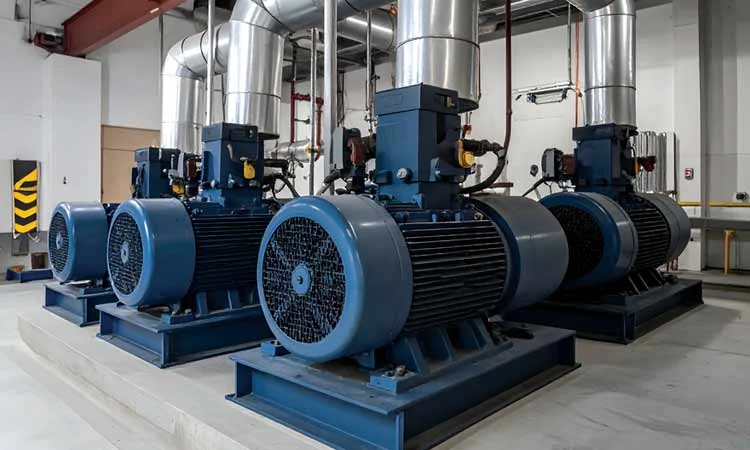
Motor technology is also advancing. High-efficiency motors, including permanent-magnet motor technologies in appropriate applications, can reduce electrical losses and improve performance over a wider operating range.
When combined with variable-speed drives and intelligent controls, these motors can provide efficient operation across changing load conditions.
Compact integrated motor-pump packages are another emerging trend. By combining motor, drive, pump and controller into a single engineered unit, manufacturers can simplify installation and reduce system footprint.
Digitalisation and Predictive Maintenance
One of the most promising developments is the integration of pressure boosting systems with Industrial Internet of Things technologies.
Connected systems can continuously collect operating data and transmit it to local or cloud-based platforms. Historical trends can then be analysed to identify abnormal behaviour.
For example, a gradual increase in power consumption at a given flow rate could indicate pump wear, blockage or changes in system resistance. Increasing vibration could indicate bearing problems, imbalance or misalignment.
Predictive maintenance uses such information to move away from time-based maintenance towards condition-based intervention. Components can be serviced when their actual condition indicates a need, reducing both unnecessary maintenance and unexpected downtime.
Hydraulic and Mechanical Innovations
Pump hydraulics are also evolving. Improved impeller geometries, computational fluid dynamics, advanced manufacturing techniques and better surface finishes are helping manufacturers improve hydraulic efficiency.
Materials and coatings are becoming increasingly important where fluids are corrosive, abrasive or chemically aggressive. Stainless steels, engineered polymers, specialised alloys and protective coatings can improve component life and reduce maintenance requirements.
Mechanical seals and bearing technologies are similarly evolving to withstand higher speeds, temperatures and demanding fluid conditions.
Pressure Boosting for Industrial Applications
Industrial users have particularly demanding requirements. Pressure boosting may be required for process water, cooling systems, boiler feed applications, cleaning systems, chemical processes, high-pressure manufacturing and other utilities.
In such environments, reliability is as important as efficiency. A pressure drop can interrupt production, damage equipment or compromise product quality.
Consequently, industrial booster systems are increasingly engineered around specific duty cycles and process requirements. Customised pump configurations, redundancy, remote monitoring and automatic fault detection are becoming important features.
Water Infrastructure and Building Applications
Pressure boosting has an equally important role in municipal and building water systems. High-rise buildings, hospitals, hotels, residential complexes and commercial facilities require reliable water pressure across multiple floors and varying demand conditions.
Modern packaged booster systems can automatically adjust their output according to consumption. This avoids excessive pressure during low-demand periods while ensuring adequate supply during peak demand.
The same principles are applicable to decentralised water systems and industrial water networks, where efficient pressure management can reduce both energy consumption and water losses.
The Road Ahead
The next generation of pressure boosting systems is likely to become even more intelligent, compact and autonomous. Artificial intelligence and machine-learning algorithms could enable systems to learn demand patterns and optimise pump operation proactively.
Digital twins could provide virtual representations of pumping installations, allowing operators to simulate operating conditions, identify inefficiencies and evaluate maintenance strategies.
Remote diagnostics will also become increasingly important. Manufacturers and service providers could monitor equipment performance remotely, identify faults and recommend corrective action before a failure occurs.
Cybersecurity will consequently become an important consideration as pumping systems become connected to industrial networks and cloud platforms.
Conclusion
Innovations in pressure boosting systems are moving the technology far beyond the traditional concept of simply increasing fluid pressure. Modern systems combine high-efficiency pumps, intelligent drives, sensors, automation, advanced controls and digital connectivity to deliver precisely the pressure and flow required.
The emphasis is shifting from maximum pumping capacity to optimum system performance. Energy efficiency, reliability, predictive maintenance, compact design and intelligent control are becoming the defining characteristics of next-generation booster systems.
For industries seeking to reduce operating costs while improving reliability and sustainability, intelligent pressure boosting represents an important opportunity. As digitalisation and advanced pump technologies continue to converge, pressure boosting systems will increasingly become smart, self-monitoring and highly efficient components of the modern industrial infrastructure.