

Engineering Trust: The New Imperative of Industrial Safety and Security

Business Development Manager
Pilz India Pvt. Ltd.
As industrial automation becomes increasingly connected, the convergence of functional safety, industrial cybersecurity, and regulatory compliance is emerging as a critical priority for manufacturers. In this interview, Dhiraj Podutwar, Business Development Manager at Pilz India, discusses how evolving European regulations, Industry 4.0, and secure-by-design engineering are reshaping the manufacturing landscape. He highlights the importance of integrating safety and security across the machine lifecycle, helping Indian OEMs strengthen operational resilience, improve productivity, and enhance their competitiveness in global markets. Excerpts:
Q. European regulations such as the EU Machinery Regulation and Cyber Resilience Act are reshaping industrial automation. What should Indian machine builders and manufacturers understand today to remain globally compliant and competitive?
The EU Machinery Regulation will apply from 20 January 2027 and will bring greater focus on digital technologies, software, artificial intelligence, and protection against manipulation that could compromise machine safety. The Cyber Resilience Act will further introduce cybersecurity requirements for connected hardware and software, including vulnerability management and security support throughout the product lifecycle.
For Indian OEMs exporting to Europe, this means identifying applicable regulations during the quotation and concept stages, integrating safety and cybersecurity requirements into the machine specification, conducting both safety and security risk assessments, and maintaining traceable technical documentation. Manufacturers will also need processes for software updates, vulnerability monitoring, and controlled changes after the machine has been placed on the market.
Compliance should not be treated as a final certification activity. Machines should be designed to be regulation-ready from the beginning. This approach reduces redesign, improves customer acceptance, and strengthens the OEM’s position as a reliable global supplier.
![EU Machinery]() Q. Compliance is often viewed as a regulatory requirement rather than a business advantage. How can safety and security compliance help organizations improve productivity, reduce risks, and strengthen customer confidence?
 Q. Compliance is often viewed as a regulatory requirement rather than a business advantage. How can safety and security compliance help organizations improve productivity, reduce risks, and strengthen customer confidence?
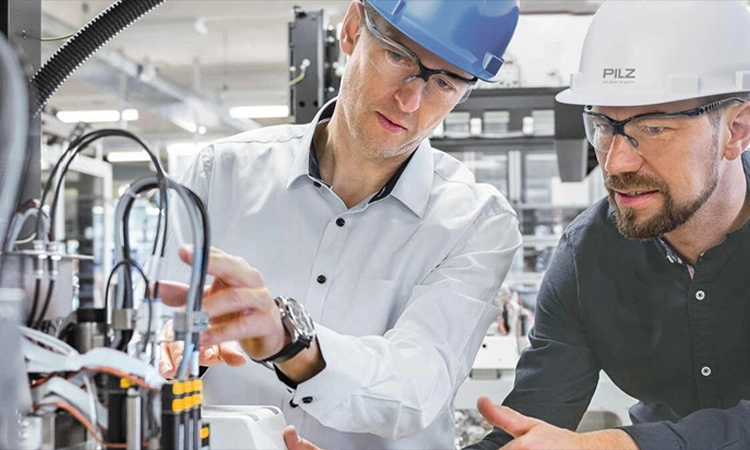
Well-planned compliance does not reduce productivity. In fact, it can improve productivity by ensuring that safety measures are practical, reliable, and suitable for the application. When safety is considered during machine design, organizations can provide safe access for setup, diagnostics, cleaning, and maintenance without creating unnecessary production stoppages.
Correctly engineered and validated safety functions help improve machine availability by reducing nuisance trips, recurring faults, and unplanned downtime. Identifying hazards during design also lowers lifecycle costs because modifications made at an early stage are generally more economical than retrofits carried out during commissioning or after customer acceptance.
Industrial security adds another important layer by protecting machinery against unauthorized access, manipulation, malware, and production disruption. A manufacturer that can demonstrate structured risk assessment, engineering calculations, verification, validation, and cybersecurity management creates significantly more confidence than one that provides only a CE declaration.
Compliance should therefore be viewed as an investment in productivity, operational resilience, and customer confidence, rather than merely as a legal expense.
Q. Industrial cybersecurity is becoming a critical requirement for connected machines. Why is it no longer sufficient to address functional safety and industrial security separately?
Functional safety ensures that a machine moves to or remains in a safe state when a fault or hazardous situation occurs. Industrial security ensures that unauthorized persons, software, or systems cannot manipulate that safe behaviour.
In a connected machine, these two areas can no longer be managed separately. A safety system may be correctly designed and validated, but its effectiveness can still be compromised if someone changes safety parameters, modifies controller logic, bypasses protective devices, installs unauthorized firmware, or misuses remote-maintenance access.
Manipulated sensor data, corrupted configuration files, or blocked safety-related communication can also create hazardous situations.
The EU Machinery Regulation recognizes that digital connections and communication must not create risks to machine safety. The Cyber Resilience Act complements this by requiring connected products to be secure by design and supported throughout their lifecycle. IEC 62443 provides a structured framework for areas such as security risk assessment, network segmentation, zones and conduits, secure product development, and secure operation.
At Pilz, we summarize this with the statement,“No Safety without Security.” Safety protects people from the machine, while industrial security protects the machine and its safety functions from manipulation. Both must therefore be addressed through one coordinated risk-management and lifecycle process.
![Pilz]() Q. What are the most common challenges organizations face when implementing European safety and security standards, and how can Pilz help simplify this journey?
 Q. What are the most common challenges organizations face when implementing European safety and security standards, and how can Pilz help simplify this journey?
One of the biggest challenges organizations face is navigating the complexity of European regulations and harmonized standards. Requirements such as the EU Machinery Regulation, ISO 12100, ISO 13849, IEC 62443, and increasingly the cybersecurity-related requirements of the Cyber Resilience Act (CRA) demand a structured approach covering both functional safety and industrial security throughout the machine lifecycle.
The convergence of Safety and Security has become a critical concern. As machines become more connected, organizations must not only protect personnel from operational hazards but also safeguard systems against cyber threats that could impact machine safety, availability, and data integrity.
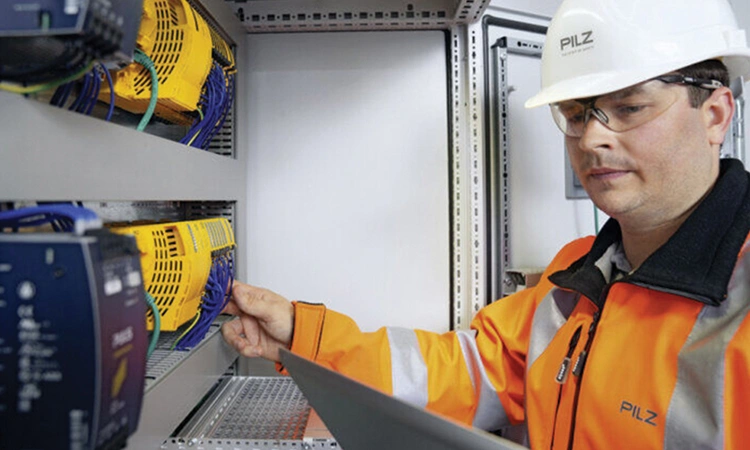
Pilz simplifies this journey through a combination of consulting, engineering expertise, training, and lifecycle services. Our approach starts with evaluating machinery against applicable regulations and standards, providing customers with a clear overview of compliance status and a prioritized roadmap for improvement.
Through our Machinery Safety Evaluation services, organizations receive practical recommendations that help them address gaps efficiently and move toward conformity in a structured manner.
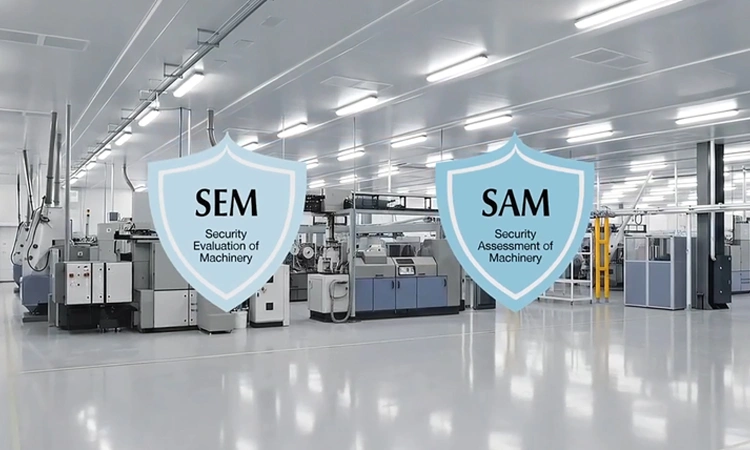
To address the growing importance of industrial cybersecurity, Pilz has introduced Security Evaluation of Machinery (SEM) and Security Assessment of Machinery (SAM) services. SEM provides a rapid assessment of the industrial security status of individual machines or entire machine fleets, helping identify critical security gaps and prioritize actions.
SAM delivers a comprehensive security risk assessment based on IEC 62443, including analysis of network architecture, interfaces, potential attack paths, and long-term mitigation strategies. These services support organizations in meeting emerging European requirements while strengthening operational resilience.
Ultimately, Pilz serves as a trusted partner throughout the machine lifecycle, helping customers achieve compliance, improve machine availability, reduce risk, and create safer and more secure production environments with confidence.
![Pilz-Machine]() Q. As Industry 4.0 and smart manufacturing continue to evolve, what new safety and security risks do organizations need to prepare for, and how is Pilz helping customers future-proof their operations?
 Q. As Industry 4.0 and smart manufacturing continue to evolve, what new safety and security risks do organizations need to prepare for, and how is Pilz helping customers future-proof their operations?
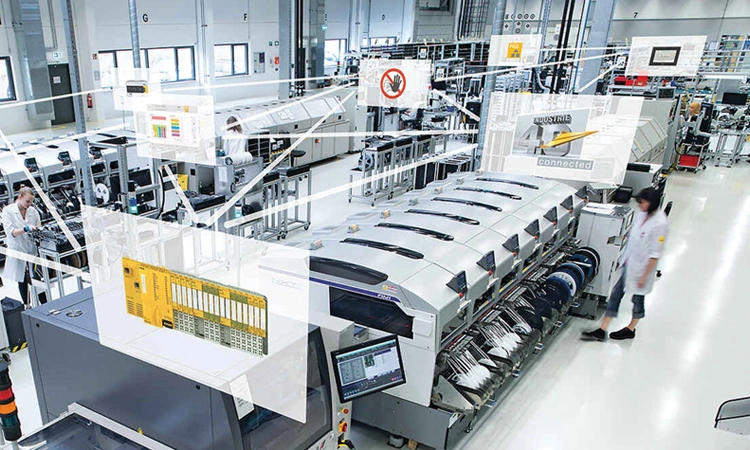
Industry 4.0 is connecting machinery with enterprise networks, cloud platforms, remote-service systems, mobile devices, and external suppliers. While this creates significant business value, it also increases the number of possible entry points for cyberattacks.
Organizations must prepare for risks arising from insecure remote access, weak user-access controls, outdated operating systems and firmware, unpatched third-party components, unauthorized software changes, and insufficient separation between IT and OT networks. Supply-chain vulnerabilities, manipulated machine data, and ransomware-related interruptions can also affect safety, production availability, and product quality.
Future-proofing therefore requires much more than installing a firewall. Organizations need proper asset identification, network segmentation, controlled remote access, role-based permissions, secure update processes, backup and recovery, vulnerability monitoring, and incident-response planning. These measures must be reviewed periodically because machinery, networks, software, and cyber threats continue to change.
Pilz supports customers through machinery security evaluations and detailed security risk assessments based on IEC 62443. We examine vulnerabilities, interfaces, network architecture, and potential attack paths before recommending appropriate technical and organizational measures. We also provide industrial security training covering IT and OT responsibilities, defence in depth, network segmentation, and regulatory requirements.
A machine that is secure at commissioning may not remain secure throughout its operating life, so industrial security must be managed as a continuous lifecycle responsibility.
![SEM SAM]() Q. Looking ahead, what do you believe will be the biggest changes in safety, security, and regulatory compliance over the next five years, and how can organizations partner with Pilz to stay ahead of these developments?
 Q. Looking ahead, what do you believe will be the biggest changes in safety, security, and regulatory compliance over the next five years, and how can organizations partner with Pilz to stay ahead of these developments?
Over the next five years, I expect functional safety and industrial security to become increasingly integrated. Cybersecurity will become a normal part of machinery conformity, rather than an optional activity managed separately by the IT department.
Manufacturers will have greater responsibility throughout the product lifecycle, including vulnerability handling, security updates, component support, incident reporting, and change management.
Software will also receive the same compliance attention as hardware. Software versions, remote updates, configuration changes, and artificial-intelligence functions will require greater control, verification, and traceability.
At the same time, global customers will expect more than a CE declaration. They will increasingly ask OEMs to provide evidence of secure development, machinery and security risk assessments, validation, network architecture, and lifecycle support.
This means that safety and security knowledge will need to converge. Machine designers will require a better understanding of industrial security, while IT and cybersecurity teams will need to understand functional safety and the operational requirements of machinery.
Organizations should begin preparing now by conducting compliance-gap assessments, identifying connected products, reviewing the support status of software and components, and developing a long-term safety and security roadmap.
Pilz can support this journey through machinery safety, industrial security, engineering, validation, international compliance, and workforce training.
In my view, the next competitive differentiator will not be automation alone. It will be the ability to demonstrate that automation is safe, secure, resilient, and compliant throughout its lifecycle.
For Indian machine builders, European compliance should not be seen as a barrier to export. It is an opportunity to improve engineering maturity, reduce lifecycle risks, and establish credibility as a trusted global supplier.
At Pilz, our role is to convert complex safety and security requirements into practical, validated, and sustainable solutions.
Overall, the article is magazine-ready after these corrections. The content is technically strong, professional, and aligned with current EU machinery safety and cybersecurity discussions.