


Q. Pilz is globally recognised for its “Spirit of Safety” philosophy. How is Pilz supporting various industries in India to become safer and more productive?
Pilz is a German automation technology company, with a long heritage of engineering innovation and a clear mission: “Safety for human, machine and the environment.”
Over the decades, Pilz has helped define modern machine safety with its innovative products & comprehensive services. In India, the same ethos has been carried forward – we have been living “The Spirit of Safety” in the Indian market for the last 15 years—creating awareness about machine safety, building local competence, and supporting our customers with uncompromising safety solutions.
We believe modern automation can only be truly reliable when it is both functionally safe and protected against unauthorised access or manipulation. That’s why Pilz combines technology with lifecycle support—consulting, system implementation, validation and training—so customers can implement safety and security consistently from concept and design through commissioning and operation.
Importantly, we position safety as a productivity enabler—better diagnostics, smarter zoning, quicker restart after stoppages, and consistent compliance documentation. For operators, this means safer human machine interaction and higher availability; for integrators and OEMs, it means faster commissioning and easier replication of proven safety architectures.
Q. How do Pilz solutions like Industrial Access Management and the key in pocket concept enable safer and more efficient warehouse operations?
Today, a large share of incidents and downtime happens during access, intervention, troubleshooting, and maintenance. Pilz focuses strongly
on this operational reality. Industrial Access Management brings a structured approach to access: controlling who can
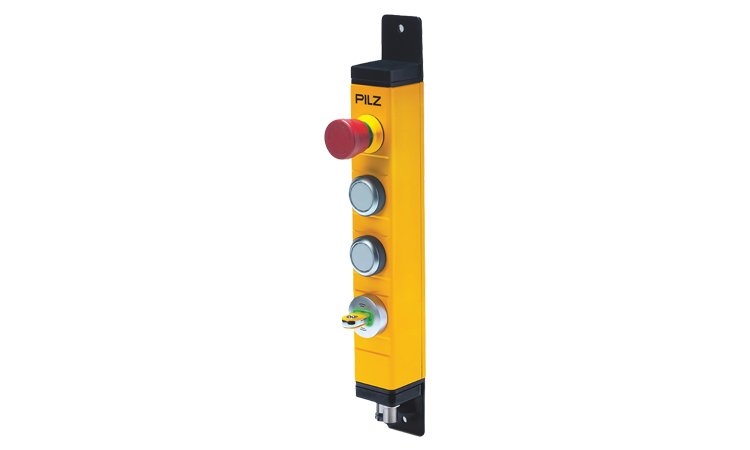
enter which zone, when, and under what machine conditions. The key in pocket concept is especially valuable because it supports safe interventions by ensuring the authorized person retains control of access authorization during the task. It reduces unsafe behaviors, prevents unintended restart scenarios, and creates a discipline that warehouse operation teams can adopt consistently.
Complementing this, our Safety Gate Systems such as PSEN mgate create standardized, robust access points for areas like palletizer cells, conveyor intersections, AS/RS aisles, and restricted maintenance zones—improving both safety and availability. Instead of ad-hoc guarding and inconsistent processes, the shopfloor gains an engineered, repeatable “safe access experience.” New technologies like IO-Link Safety enables standardized point to point safe communication from controller to field sensors—supporting up to PL e (SIL 3) while delivering faster commissioning and richer diagnostics for higher uptime.
Q. What common safety gaps do you still see as companies increase automation levels?
As automation expands with robotics, autonomous systems, and digital connectivity, Pilz India continues to observe several recurring safety gaps across industries.
One major gap is treating cybersecurity as an IT issue rather than a safety concern. Connected machines with weak access control or unsecured remote connections can expose operators to real physical risk. Pilz India addresses this by integrating industrial security directly into safety concepts through role-based access and protected communication.
Another frequent issue is outdated risk assessments. Production lines evolve, but safety documentation often does not. Pilz India promotes risk assessment as a living process that must be updated and validated whenever machines or processes change.
Many organizations also view safety as a one-time hardware purchase instead of a lifecycle responsibility. Without regular validation, diagnostics review, and structured change management, safety performance can silently degrade over time.
Additional gaps include mixing standard control with safety control, inadequate management of operating modes and permissions, under-engineered robot safety, and incomplete compliance documentation—especially for export-oriented OEMs.
Pilz India emphasizes that successful automation projects embed safety into both system architecture and organizational culture from day one.
Q. Looking ahead, how do you see the future of safe automation and industrial security evolving in the country?
The future of safety lies in deeper integration of Safety + Security, decentralized automation, autonomous mobility, real-time diagnostics, and identity-based access control.
Manufacturers must prepare for regulations that embed cybersecurity into safety compliance, modular architectures that support rapid change, and lifecycle-driven safety management rather than one-time certification.
Pilz India is enabling this transition through certified technology, digital-ready platforms, and comprehensive services—helping customers build automation systems that are not only safe, but also resilient, productive, and future-ready.