

Understanding Tribology – The Science Behind Friction, Wear and Lubrication

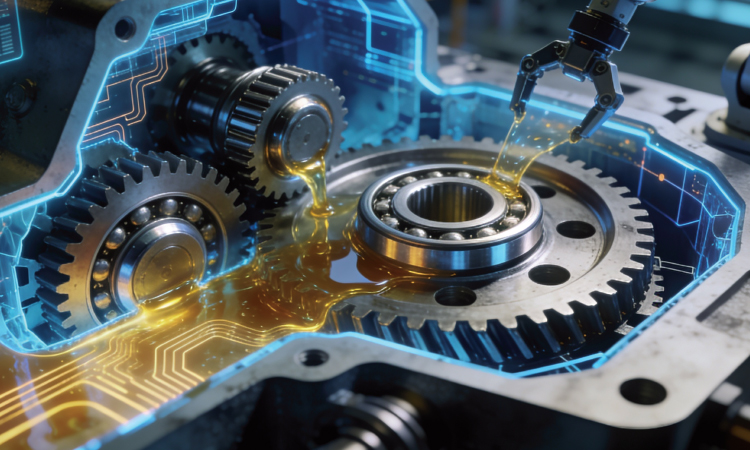
In the world of engineering and manufacturing, countless machines operate around the clock, driving industries, economies, and technological advancement. Whether it is a high-speed spindle in a CNC machine, a gearbox in a wind turbine, a bearing in an electric motor, or an engine in an automobile, the performance and longevity of these systems depend significantly on a scientific discipline that often remains behind the scenes-Tribology.
Derived from the Greek word tribos, meaning “rubbing,” tribology is the science and engineering of interacting surfaces in relative motion. It encompasses the study of friction, wear, and lubrication, helping engineers understand how surfaces behave when they come into contact. Though often overlooked, tribology plays a critical role in improving equipment reliability, reducing energy consumption, extending component life, and enhancing overall operational efficiency.
The Three Pillars of Tribology
Tribology is built upon three fundamental concepts: friction, wear, and lubrication.
Friction
Friction is the resistance encountered when two surfaces move against each other. While friction is essential in certain applications such as braking systems and clutches, excessive friction can lead to energy losses, heat generation, and component degradation. In industrial machinery, friction accounts for a significant percentage of energy consumption. Reducing friction through proper design and lubrication not only enhances efficiency but also lowers operating costs and environmental impact. Engineers classify friction into several categories, including static friction, kinetic friction, rolling friction, and fluid friction. Understanding these mechanisms enables designers to select appropriate materials, coatings, and lubricants for specific applications.
Wear
Wear refers to the gradual removal or deformation of material from a surface due to mechanical action. It is one of the primary causes of machine failure and maintenance expenditure across industries.
Common forms of wear include:
• Abrasive Wear: Occurs when hard particles or rough surfaces scratch softer materials.
• Adhesive Wear: Results from material transfer between contacting surfaces under pressure.
• Corrosive Wear: Caused by chemical reactions between surfaces and their environment.
• Fatigue Wear: Develops due to repeated cyclic loading that creates surface cracks and eventual material removal.
• Erosive Wear: Produced by the impact of particles or fluids against a surface.
Understanding wear mechanisms helps engineers develop strategies to improve component durability and minimize downtime.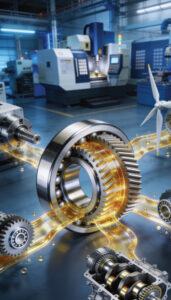
Lubrication
Lubrication is the application of a substance-typically oil, grease, or a solid lubricant-to reduce friction and wear between moving surfaces.
The primary functions of lubricants include:
• Reducing friction
• Minimizing wear
• Dissipating heat
• Preventing corrosion
• Sealing against contaminants
• Enhancing component life
Modern lubricants contain sophisticated additive packages that improve oxidation resistance, load-carrying capability, thermal stability, and corrosion protection. The effectiveness of lubrication depends on factors such as viscosity, operating temperature, load, speed, and environmental conditions.
Why Tribology Matters
Tribology has a profound impact on industrial productivity and sustainability. Studies have shown that a substantial percentage of machinery failures can be traced to lubrication-related issues and wear-induced damage.
The benefits of effective tribological practices include:
• Increased machine reliability
• Reduced maintenance costs
• Improved energy efficiency
• Extended equipment lifespan
• Enhanced product quality
• Lower environmental footprint
In manufacturing plants, even minor improvements in friction reduction can translate into significant energy savings and productivity gains over time.
Tribology in Manufacturing
Modern manufacturing relies heavily on tribological principles.
Machine Tools
Machine tools operate under demanding conditions involving high speeds, heavy loads, and precision movements. Tribology plays a critical role in spindle bearings, guideways, ball screws, and cutting operations. Proper lubrication ensures smooth motion, reduced vibration, and consistent machining accuracy. Advanced lubricants and coatings help minimize wear while extending service intervals.
Metal Cutting
During machining operations, intense friction develops between the cutting tool and workpiece. This interaction generates heat, affects tool life, and influences surface finish. Cutting fluids and advanced tool coatings are tribological solutions designed to reduce friction, control temperature, and improve machining performance.
Bearings
Bearings are among the most tribology-dependent components in industrial machinery. Their performance depends on maintaining an appropriate lubricating film that separates moving surfaces. Advanced bearing technologies now incorporate specialized coatings, optimized surface finishes, and condition monitoring systems to improve reliability and service life.
Tribology in the Automotive Industry
The automotive sector is one of the largest beneficiaries of tribological advancements. Every moving component in a vehicle-from engines and transmissions to wheel bearings and braking systems-relies on tribological principles. Modern engine oils are engineered to reduce friction while meeting increasingly stringent emissions and fuel-efficiency standards. Lower friction translates directly into improved fuel economy and reduced carbon emissions. Electric vehicles also present new tribological challenges. High-speed electric motors, specialized gearboxes, and lightweight materials require innovative lubrication solutions capable of handling unique operating conditions.
Emerging Technologies in Tribology
As industries embrace digitalization and sustainability, tribology continues to evolve.
Advanced Surface Engineering
Surface treatments and coatings are increasingly used to improve wear resistance and reduce friction.
Popular technologies include:
• Diamond-like carbon (DLC) coatings
• Ceramic coatings
• Thermal spray coatings
• Nitriding and carburizing
• Laser surface texturing
These technologies create surfaces that can withstand extreme operating environments while improving efficiency.
Smart Lubricants
Researchers are developing intelligent lubricants that can adapt to changing operating conditions. Nanotechnology is enabling the creation of lubricants containing nanoparticles that reduce friction, enhance load-carrying capacity, and improve thermal performance. Self-healing lubricants capable of repairing microscopic surface damage are also emerging as a promising area of research.
Condition Monitoring
Industry 4.0 is transforming tribology through predictive maintenance and real-time monitoring.
Modern sensors can continuously monitor:
• Lubricant condition
• Particle contamination
• Viscosity changes
• Temperature variations
• Wear debris generation
By analyzing this data, maintenance teams can identify potential failures before they occur, reducing unplanned downtime and maintenance costs.
Artificial Intelligence and Data Analytics
AI-driven systems are increasingly used to optimize lubrication schedules, predict wear patterns, and improve equipment performance. Machine learning algorithms can analyze vast amounts of operational data to identify trends that would be impossible to detect through traditional inspection methods. Sustainability and Tribology
Sustainability has become a major focus across industries, and tribology plays a crucial role in achieving environmental goals. Reducing friction directly lowers energy consumption, while minimizing wear decreases the need for replacement components and raw materials. Environmentally friendly lubricants derived from biodegradable and renewable sources are gaining popularity. These products help reduce environmental impact while maintaining high performance. Furthermore, improved tribological design contributes to longer equipment life cycles, supporting circular economy principles and resource conservation.
Challenges Ahead
Despite significant advances, tribology continues to face challenges.
Industries increasingly demand:
• Higher operating speeds
• Greater load capacities
• Smaller component sizes
• Longer maintenance intervals
• More sustainable solutions
Meeting these requirements requires ongoing innovation in materials science, lubricant chemistry, surface engineering, and predictive technologies. Engineers must also address the tribological demands of emerging technologies such as electric mobility, hydrogen-powered systems, advanced robotics, and renewable energy equipment.
Conclusion
Tribology may operate behind the scenes, but its influence extends across virtually every sector of modern industry. By understanding and controlling friction, wear, and lubrication, engineers can improve machine performance, increase reliability, reduce energy consumption, and extend equipment life. As manufacturing evolves toward greater precision, automation, and sustainability, the importance of tribology will only continue to grow. Advances in surface engineering, smart lubricants, condition monitoring, and artificial intelligence are opening new possibilities for enhancing efficiency and reliability.
In essence, tribology is far more than the study of rubbing surfaces-it is a foundational science that enables modern machinery to perform efficiently, economically, and sustainably. For industries striving to achieve higher productivity and lower operating costs, mastering the principles of tribology is no longer optional; it is a strategic
necessity.