

Process Control and Valve Automation : Driving Precision, Safety and Efficiency in Modern Industry

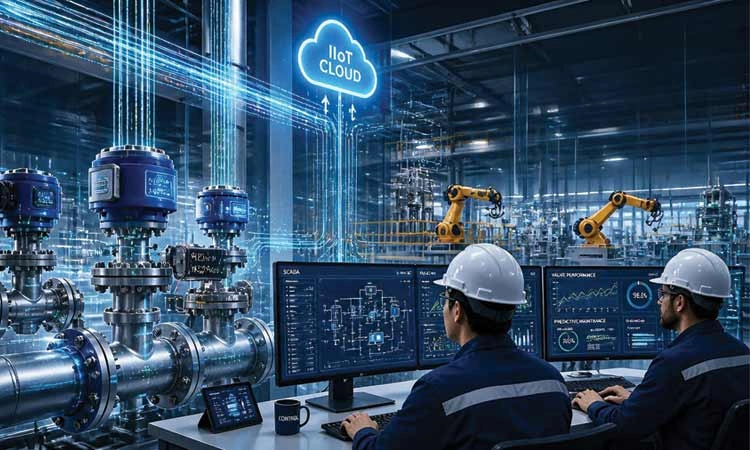
In today’s highly competitive manufacturing environment, industries are under constant pressure to improve productivity, reduce energy consumption, ensure consistent product quality, and comply with increasingly stringent environmental and safety regulations. At the heart of achieving these objectives lies an efficient process control system, supported by intelligent valve automation. Whether in oil and gas, chemical processing, pharmaceuticals, food and beverage, water treatment, power generation, or pulp and paper, process control and automated valves have become indispensable elements of modern industrial operations. No industrial process can consistently deliver high-quality output without accurate regulation of flow, pressure, temperature, and level. Automated valves, integrated with sophisticated control systems, provide the precision and responsiveness needed to keep critical processes operating within desired parameters. As industries embrace digitalization, Industrial Internet of Things (IIoT), and smart manufacturing, valve automation is evolving from a simple actuation function into an intelligent, data-driven asset that enhances operational efficiency and reliability.
The Importance of Process Control
Process control refers to the continuous monitoring and regulation of industrial processes to maintain desired operating conditions. Sensors measure process variables such as flow, pressure, temperature, pH, level, and composition, while controllers compare these measurements with predefined set points. Based on this comparison, corrective actions are taken automatically to maintain process stability.
Without effective process control, industries would experience inconsistent product quality, excessive energy consumption, equipment failures, safety risks, and increased production costs.
Valves: The Final Control Element
While sensors provide information and controllers make decisions, control valves execute those decisions. Often referred to as the “final control element,” automated valves regulate the movement of liquids, gases, steam, and slurries throughout industrial plants.
Control valves continuously adjust their opening position according to commands received from the controller, thereby regulating process variables with remarkable precision.
Various valve types serve different applications:
Globe Valves offer excellent throttling characteristics and are widely used for precise flow control.
Ball Valves provide quick quarter-turn operation and are ideal for on-off service as well as certain modulating applications.
Butterfly Valves are lightweight, economical, and suitable for handling large flow volumes in water treatment, HVAC, and process industries.
Gate Valves are primarily used for isolation rather than precise control, making them suitable for fully open or fully closed applications.
Diaphragm Valves are preferred in pharmaceutical, biotechnology, and food industries where contamination-free operation is essential.
Plug Valves, Needle Valves, and Knife Gate Valves address specialized applications involving abrasive media, high-pressure systems, or viscous fluids.
Selecting the appropriate valve depends on fluid characteristics, pressure, temperature, required flow capacity, control accuracy, and maintenance considerations.
Valve Automation: Beyond Manual Operation
Historically, valves were operated manually using handwheels or levers. While adequate for simple systems, manual operation limits responsiveness, repeatability, and safety in complex industrial environments.
Valve automation replaces manual intervention with electric, pneumatic, hydraulic, or electro-hydraulic actuators capable of receiving remote commands from control systems.
This enables operators to control hundreds or even thousands of valves from a central control room while continuously monitoring their status.Automated valves improve operational efficiency by enabling:
- Remote operation
- Faster response times
- Precise positioning
- Reduced human error
- Improved plant safety
- Automated emergency shutdown
- Continuous monitoring
- ZPredictive maintenance
Types of Valve Actuators
Valve actuators convert control signals into mechanical movement that opens, closes, or modulates valves.
Pneumatic Actuators remain the most widely used because of their simplicity, fast response, and suitability for hazardous environments. Powered by compressed air, they are especially common in chemical plants, refineries, and process industries.
Electric Actuators are increasingly popular due to improved positioning accuracy, ease of installation, lower maintenance, and seamless integration with digital control systems. They are particularly useful where compressed air is unavailable.
Hydraulic Actuators generate high operating torque and are used for large valves or high-pressure applications such as oil and gas pipelines and offshore installations.
Electro-Hydraulic Actuators combine the precision of electric control with the power of hydraulic systems, making them suitable for demanding industrial applications.
Each actuator type offers distinct advantages depending on environmental conditions, safety requirements, operating speed, and torque demands.
 Intelligent Valve Positioners
A significant advancement in valve automation is the adoption of smart valve positioners.
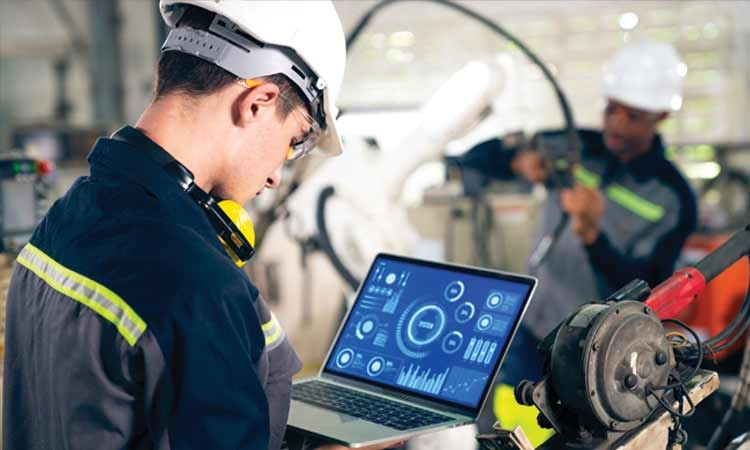
Unlike conventional positioners, intelligent positioners continuously monitor valve movement, actuator performance, air supply, friction, travel deviation, and operating conditions.
They automatically compensate for wear, optimize valve positioning, and provide valuable diagnostic information to maintenance teams.
Modern digital positioners support communication protocols such as HART, FOUNDATION Fieldbus, Profibus PA, and Ethernet-based industrial networks, enabling seamless integration with plant control systems.
Digital Process Control
Industries are rapidly transitioning from conventional analog instrumentation to fully digital process control architectures. Advanced DCS and PLC systems now integrate with thousands of field devices, collecting real-time data for continuous optimization. Operators can visualize complete process conditions through graphical Human-Machine Interfaces (HMIs), receive instant alarms, generate reports, and remotely control plant operations. Artificial intelligence and advanced analytics are increasingly being applied to identify process inefficiencies, optimize energy usage, and predict equipment failures before they occur. Digital twins are also being used to simulate plant performance, allowing engineers to test control strategies and optimize operations without interrupting production.
Industrial Applications
Process control and valve automation play a crucial role across diverse industries. In oil and gas facilities, automated valves regulate crude oil flow, natural gas distribution, refining operations, and emergency shutdown systems. Chemical plants rely on accurate control of reactant flows, temperatures, and pressures to ensure product consistency and safe operation. Power plants use automated valves to regulate steam, feedwater, cooling water, and fuel supply while maximizing thermal efficiency. Pharmaceutical manufacturing requires extremely precise control over sterile processes, clean-in-place (CIP) systems, and batch production to maintain product quality and regulatory compliance. Food and beverage manufacturers depend on sanitary automated valves for hygienic processing, ingredient dosing, pasteurization, and packaging. Water and wastewater treatment plants employ automated valves for filtration, chemical dosing, pressure regulation, and distribution network management.
Safety and Regulatory Compliance
Safety is one of the primary reasons for adopting automated process control. Emergency Shutdown (ESD) systems, Safety Instrumented Systems (SIS), and automated isolation valves respond within seconds to hazardous process conditions. These systems help prevent equipment damage, environmental incidents, and accidents involving personnel. Compliance with international standards such as IEC 61511, IEC 61508, and functional safety requirements has made reliable valve automation an integral part of modern industrial safety strategies.
Predictive Maintenance and Asset Management
Maintenance practices are also evolving through intelligent valve automation.
Instead of relying solely on scheduled maintenance, industries increasingly employ condition-based and predictive maintenance.
Smart valves continuously report operational parameters including:
- Number of operating cycles
- Stem travel
- Valve signature
- Air consumption
- Actuator performance
- Friction changes
- Response time
- Seat wear
Maintenance software analyzes this information to identify developing problems long before failures occur.
Predictive maintenance reduces unplanned downtime, lowers maintenance costs, extends equipment life, and improves plant availability.
 Energy Efficiency and Sustainability
Efficient process control contributes directly to sustainability goals.
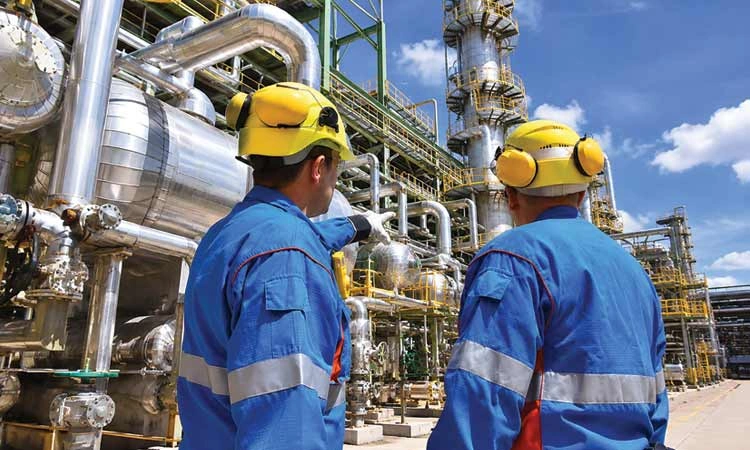
Optimized valve control reduces unnecessary pumping, minimizes steam losses, lowers compressed air consumption, and improves overall energy efficiency.
Accurate process regulation also reduces raw material waste, enhances product yield, and lowers greenhouse gas emissions.
Modern electric actuators consume significantly less energy than older technologies and contribute to reduced carbon footprints.
As industries pursue net-zero targets, intelligent process control is becoming a strategic investment rather than simply an operational necessity.
Emerging Trends
The future of process control and valve automation is being shaped by several transformative technologies:
- Artificial intelligence for adaptive process optimization
- IIoT-enabled connected field devices
- Wireless instrumentation for flexible deployment
- Edge computing for faster decision-making
- Cloud-based asset management platforms
- Digital twins for process simulation
- Cybersecure industrial communication networks
- Self-diagnosing smart valves and actuators
These innovations are making industrial plants more autonomous, resiliet, and data-driven.
Conclusion
Process control and valve automation have evolved far beyond basic flow regulation. They now form the intelligent backbone of modern industrial operations, enabling manufacturers to achieve higher productivity, consistent quality, enhanced safety, and greater sustainability. Smart valves, advanced actuators, digital controllers, and integrated analytics are transforming traditional plants into connected, self-optimizing production facilities. Investments in advanced valve automation are no longer limited to improving operational efficiency-they are essential for ensuring long-term competitiveness, regulatory compliance, and resilient industrial growth in an increasingly automated world.