Engineering the Future of Heat Transfer & Process Technology

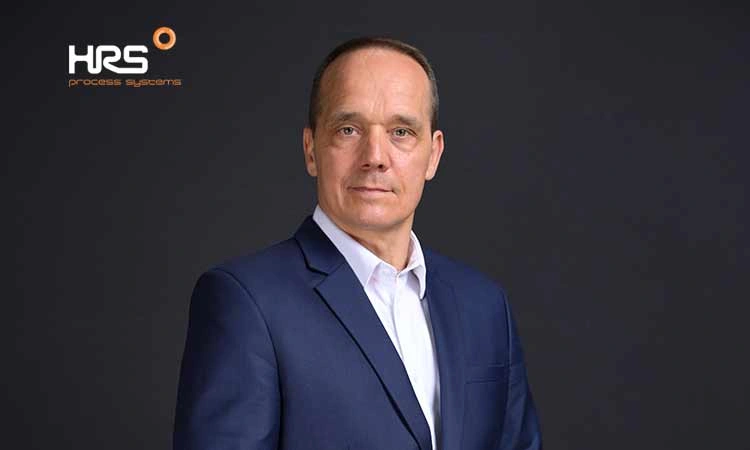
Group CEO
HRS Process Solutions
As industries demand greater energy efficiency, resource optimisation and smarter process control, HRS Process Systems is evolving beyond conventional heat-transfer equipment to deliver integrated, application-specific process technology solutions. By combining deep engineering expertise, advanced heat-transfer technologies, digitalisation and lifecycle thinking, HRS is helping industries improve performance, sustainability and long-term value, reveals an interview with Christoph Michel, Group CEO, HRS Process Solutions. Excerpts:
Q. HRS Process Systems has established a presence in heat transfer technology and process engineering. How would you describe the company’s evolution, core strengths, and distinctive value proposition in today’s competitive industrial equipment market?
HRS has evolved from being a specialist heat exchanger manufacturer into a broader process engineering and technology solutions group. At the heart of this journey has been a consistent focus on understanding heat transfer at a deeper engineering level and translating that knowledge into practical solutions for demanding industrial processes.
Our strength lies in combining heat transfer expertise, process engineering capability, application knowledge and manufacturing experience. Through our businesses and technologies, we address applications ranging from heating and cooling to evaporation, sterilisation, pasteurisation, heat recovery and integrated process systems.
What differentiates HRS is our ability to look beyond an individual piece of equipment. We work with customers to understand the complete process, identify the technical challenges and engineer a customized solution that is appropriate for their application, operating conditions and long-term requirements.
Our global presence also gives us an important advantage. We can combine technology and engineering experience developed across different markets and industries while adapting solutions to local requirements.
Going forward, we continue to see HRS not simply as an equipment supplier, but as an engineering and technology partner helping industries address increasingly complex requirements around process performance, resource utilisation, automation, sustainability and lifecycle value.
 Q. What are the key innovations shaping the next generation of heat exchangers? How is HRS advancing technologies such as corrugated tube, plate, and other specialised heat exchangers to deliver improved thermal performance, reliability, and operational efficiency?
The next generation of heat exchangers will be shaped by a combination of thermal engineering, advanced design, materials, process understanding and digitalisation. The objective is not simply to transfer more heat, but to achieve the required process performance within the customer’s real operating environment.
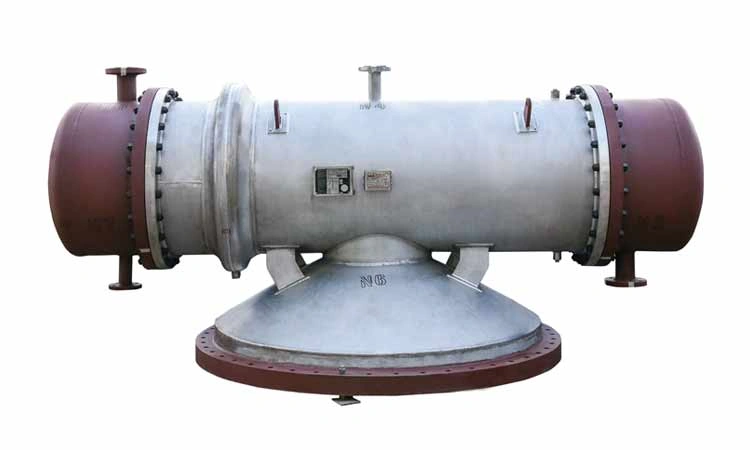
At HRS, corrugated tube technology remains an important area of expertise. Corrugation enables enhanced turbulence and heat transfer characteristics, while supporting solutions for applications where fouling, viscosity, temperature differences or challenging process fluids need careful consideration.
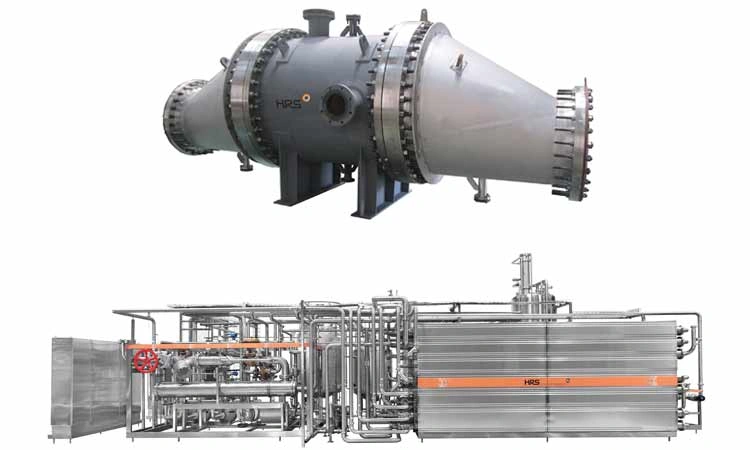
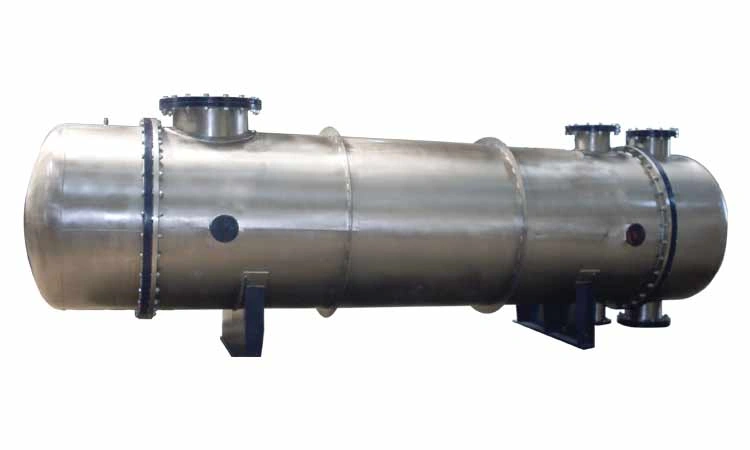
At the same time, plate heat exchangers provide important advantages in applications requiring compact designs, high heat-transfer performance and flexibility. Specialised shell-and-tube and other engineered configurations further expand the range of applications that can be addressed.
We are increasingly looking at heat exchangers as part of an integrated thermal system rather than an isolated component. This means considering process conditions, fluid characteristics, fouling behaviour, control philosophy, cleaning requirements, maintenance and future operating scenarios during the design stage.
The future will also involve greater use of simulation, data and intelligent monitoring to understand equipment performance under actual operating conditions. This combination of engineering fundamentals and digital capability will allow us to develop more reliable, application-specific and adaptable heat-transfer solutions.
 Q. With industries focusing on energy conservation and reducing total cost of ownership, how does HRS help customers optimise energy consumption, minimise lifecycle costs, and improve the overall efficiency of their heating, cooling, evaporation, and heat recovery processes?
Energy and lifecycle economics have become integral to industrial process design. For us, the starting point is to understand the complete thermal balance of a process rather than evaluating an individual heat exchanger in isolation.
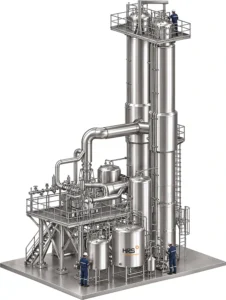
Our approach is to identify where heat is generated, where it is required, where it can be recovered, and where thermal losses or inefficiencies may occur. This can involve heat recovery systems, optimised heat exchanger arrangements, evaporation technologies, mechanical vapour recompression and integrated thermal systems, depending on the application.
However, lifecycle cost is broader than energy consumption alone. Equipment reliability, fouling behaviour, cleaning requirements, maintenance accessibility, downtime, operating conditions and expected service life can have a significant impact on the economics of an installation.
We therefore work towards solutions that balance capital investment, operating requirements, maintenance and long-term process performance.
Our objective is not to prescribe a particular technology, but to engineer the right combination of technologies for the application. In many cases, the greatest opportunity comes from looking at the process holistically and recovering value that may otherwise be lost.
As industrial customers increasingly evaluate investments through total cost of ownership, this systems-level approach will become even more important.
Q. Industrial customers often face diverse process conditions and application-specific challenges. How does HRS approach the design, engineering, and integration of customised heat exchanger solutions and process systems to meet complex customer requirements?
There is no universal heat exchanger solution for every industrial process. The same nominal duty can behave very differently depending on the fluid properties, viscosity, suspended solids, temperature profile, pressure, fouling tendency, required residence time and operating cycle.
Our engineering process therefore begins with the application, not with a predetermined product.
We work closely with customers to understand their process objectives and operating conditions. Our engineers then evaluate the appropriate heat-transfer technology, materials, geometry, configuration, control philosophy and cleaning requirements.
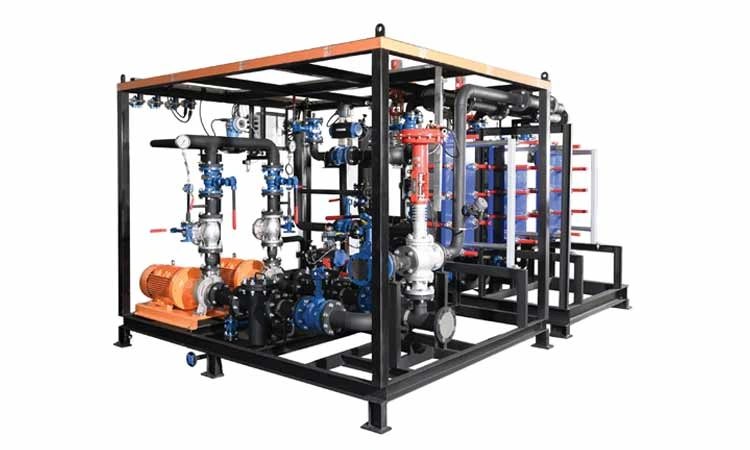
Where required, we combine different technologies to develop integrated systems. This could involve heat exchangers, evaporation systems, sterilisation or pasteurisation equipment, pumps, valves, instrumentation, automation and associated process equipment.
Another important consideration is future operation. Industrial plants evolve, and production requirements can change. A well-engineered system should therefore provide an appropriate balance between today’s requirements and tomorrow’s operating scenarios.
Our global engineering experience allows us to bring knowledge from multiple industries and applications into the design process. At the same time, our local teams provide the market and application understanding required to execute projects effectively.
Ultimately, customisation is not about making every solution unique. It is about engineering the right solution for the specific process and application, with as little complexity as necessary and the right lifecycle economics.
 Q. HRS serves demanding process industries, including food and beverage, pharmaceuticals, and chemicals. What specific engineering considerations are essential for hygienic design, process safety, product quality, and regulatory compliance in these sectors?
In these industries, heat transfer cannot be separated from product quality, process safety and regulatory requirements. Equipment must perform consistently while meeting the specific hygienic, material and process requirements of the application.
For hygienic applications, design considerations include appropriate material selection, surface finishes, drainability, cleanability, minimisation of dead zones and compatibility with cleaning and sterilisation procedures. The equipment must also maintain the required process conditions without adversely affecting the product.
For pharmaceutical and other highly controlled applications, traceability, documentation, validation requirements and process consistency become particularly important. In chemical applications, material compatibility, pressure, temperature, corrosion resistance, safety and containment requirements may be the dominant considerations.
We therefore approach engineering with a strong understanding of both process requirements and compliance requirements.
Automation and instrumentation also play an important role because repeatability and continuously controlled operating conditions are critical to maintaining product quality and process safety.
Ultimately, regulatory compliance should not be treated as an additional step at the end of engineering. It needs to be incorporated into the design philosophy from the beginning. This is one reason why application engineering and close collaboration with customers are so important to our approach.
Q. How is HRS incorporating automation, intelligent process control, and data-driven technologies into its process equipment and turnkey solutions? What benefits can customers expect in terms of monitoring, consistency, productivity, and operational decision-making?
Industrial equipment is increasingly becoming part of a connected production environment. For HRS, automation is therefore not simply about controlling individual machines; it is about improving the visibility, consistency and controllability of the overall process.
Our process systems increasingly incorporate sophisticated instrumentation, automated sequences, control systems and integrated process monitoring. Depending on the application, this can cover parameters such as temperature, pressure, flow rates, product conditions, cleaning cycles and other critical operating variables.
The next step is to use this operational information more effectively. Data can provide greater visibility into equipment performance, process stability and deviations from expected operating conditions. This can support faster decision-making and, where appropriate, predictive approaches to maintenance and optimisation.
For customers, the benefits can include greater process consistency, improved monitoring, reduced manual intervention, better traceability and improved utilisation of equipment.
We also see digitalisation as an enabler rather than an objective in itself. The technology must solve a real operational problem and generate measurable value.
Our direction is therefore towards increasingly intelligent systems in which process equipment, automation and engineering expertise work together to provide customers with better control over their operations.
 Q. Sustainability is increasingly influencing industrial process design. What solutions and technologies is HRS developing to support heat recovery, resource conservation, reduced emissions, and more sustainable operations across industries?
Sustainability in industrial processing increasingly needs to be addressed through engineering rather than treated as a separate initiative. Thermal processes are particularly important because heating, cooling and evaporation can represent significant portions of a plant’s resource requirements.
HRS technologies can contribute through heat recovery, thermal integration, efficient evaporation, improved heat transfer and optimisation of process conditions. The exact solution depends on the process, but the underlying principle is to make better use of resources already present within the system.
For example, heat that would otherwise be rejected from one part of a process may potentially be recovered and utilised elsewhere. In evaporation applications, technologies such as mechanical vapour recompression can provide opportunities to improve the utilisation of thermal energy.
We also consider water consumption and cleaning requirements, equipment life, maintenance and process losses when looking at sustainability. A solution that performs well thermally but requires excessive maintenance or creates operational losses is not necessarily sustainable over its complete lifecycle.
Our objective is therefore to help customers move towards more resource-conscious process systems, where thermal energy, water, raw materials and equipment capacity are utilised as effectively as possible.
We believe the strongest sustainability solutions are those that also make sound engineering and economic sense for the customer.
 Q. Could you elaborate on HRS’s manufacturing infrastructure, engineering expertise, quality management practices, and testing capabilities? How do these strengths contribute to delivering dependable and high-performance equipment for critical industrial applications?
Engineering capability ultimately has to be supported by manufacturing discipline and quality systems. At HRS, we consider these capabilities as interconnected rather than separate functions.
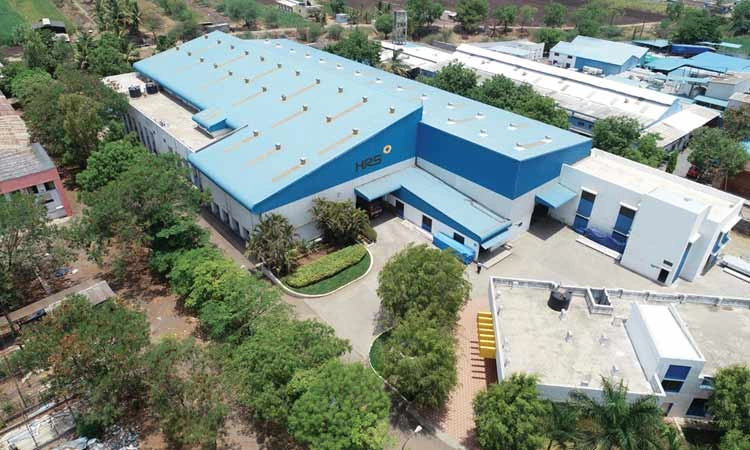
Our manufacturing operations with three plants in India and additional ones globally are supported by experienced engineering teams, established quality processes and application-specific manufacturing expertise. This enables us to maintain control over critical stages of equipment development, from engineering and material selection through fabrication, assembly, inspection and testing.
Testing is particularly important for process equipment because performance in a laboratory or design calculation needs to translate into reliable operation in the customer’s plant. Depending on the technology and application, appropriate testing and validation processes are therefore incorporated into project execution.
Our global organisation also allows us to draw upon engineering and manufacturing experience developed across different markets industries and applications.
Quality, in our view, is not simply about meeting a specification. It is about creating equipment that performs consistently under the conditions for which it was designed and can be supported throughout its operating life.
This combination of engineering knowledge, manufacturing capability, quality management and testing discipline is fundamental to the trust our customers place in HRS for critical process applications.
Q. Beyond supplying equipment, how does HRS support customers throughout the lifecycle of their installations—from application evaluation and commissioning to maintenance, performance optimisation, and technology upgrades?
Our relationship with a customer does not end when equipment is delivered. For process equipment, the real measure of success is how effectively the solution performs throughout its operating life.
Our involvement therefore begins during application evaluation and engineering. Understanding the customer’s process correctly at the beginning helps establish the foundation for reliable operation.
During installation and commissioning, technical support is important to ensure that the equipment is integrated correctly and operating in accordance with the intended process conditions. Once the plant is operational, service, maintenance and technical support help customers sustain performance.
We also recognise that industrial plants evolve. Production volumes can change, products can change, regulations can develop and customers may introduce new process requirements. In such situations, equipment may need modification, optimisation or upgrading rather than complete replacement.
Our lifecycle approach therefore includes technical support, maintenance, performance evaluation, upgrades and application engineering.
The broader objective is to build long-term partnerships. When we understand how a customer’s process operates over time, we are better positioned to identify opportunities for improvement and support their future requirements.
That long-term perspective is particularly important to us as HRS continues to develop from an equipment supplier into a comprehensive process technology solutions partner.
 Q. Looking ahead, what are HRS’s strategic priorities for the Indian and global markets? Which emerging sectors, technology developments, and investment areas do you see as important for the company’s next phase of growth, and how is HRS preparing to address them?
Our next phase of growth will be driven by a combination of technology development, market expansion, engineering capability and even deeper customer partnerships.
India is an important market for us, not only because of its scale and industrial growth, but also because Indian customers increasingly demand sophisticated, reliable and locally supported process technologies. We see opportunities across food and beverage, dairy, pharmaceuticals, chemicals, environmental applications and other process industries.
Globally, we see several important themes emerging: further process automation, resource efficiency, advanced thermal management, industrial decarbonisation, heat recovery, water and waste management, and the need for more flexible and intelligent production systems.
Our strategy is not to pursue every emerging technology simply because it is new. We want to focus on technologies where HRS’s engineering capabilities and heat-transfer expertise can create meaningful customer value.
This includes continued development of our core heat-transfer technologies, process systems, evaporation technologies, automation capabilities and application engineering expertise.
We are also investing in our people, manufacturing capabilities, digital tools and global collaboration because technology leadership ultimately depends on engineering talent.
Our ambition is clear: to continue to strengthen HRS as a globally recognised process technology solutions and engineering partner, while building even stronger local capabilities in the markets we serve.