
All-in-One Controllers for Process Control in the Chemical Industry
How All-in-One Controllers Are Simplifying Chemical Plant Automation
Compact, Intelligent Platforms Powering Precision and Safety
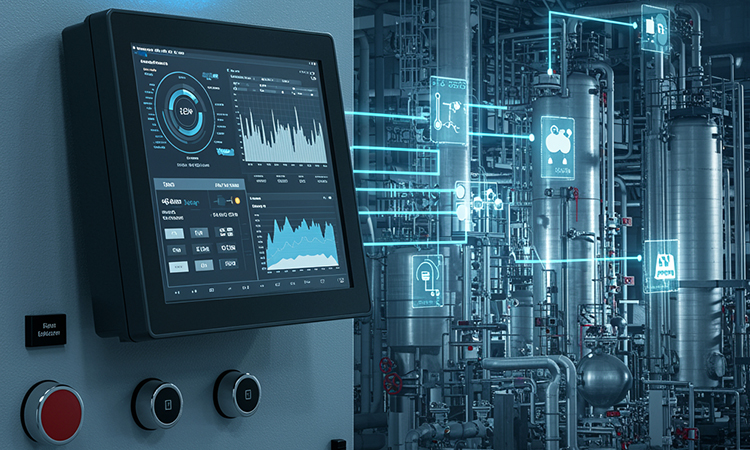
The chemical industry operates in an environment where precision, reliability, and safety are paramount. From controlling reaction temperatures and pressures to regulating flow rates and chemical compositions, process control systems are the backbone of safe and efficient plant operations. Traditionally, these systems relied on multiple separate devices such as programmable logic controllers (PLCs), distributed control systems (DCS), data acquisition units, and operator interfaces. However, the latest technological trend is the emergence of all-in-one controllers—integrated platforms that combine several control and monitoring functions within a single compact system.
All-in-one controllers are designed to simplify process automation while enhancing reliability and operational visibility. By integrating control logic, data acquisition, communication interfaces, and operator displays into a unified system, these controllers offer chemical plants a powerful solution to manage complex processes with greater efficiency. As the chemical industry increasingly embraces digital transformation, such integrated controllers are becoming an essential component of modern process plants.
The Need for Integrated Process Control
Chemical manufacturing involves highly dynamic processes where even minor deviations can affect product quality or lead to safety hazards. Maintaining stable process parameters is therefore critical. Traditional automation architectures often required multiple devices performing separate functions—one system for control, another for monitoring, and yet another for data logging or communication.
This fragmented architecture sometimes resulted in higher installation costs, complicated wiring, and challenges in system integration. All-in-one controllers address these limitations by consolidating multiple functionalities into a single unit. This integrated approach reduces system complexity, improves reliability, and makes installation and maintenance significantly easier.
In modern chemical plants, where process variables must be constantly monitored and controlled, integrated controllers provide a streamlined solution that enhances operational efficiency.
Combining PLC, HMI, and Data Logging
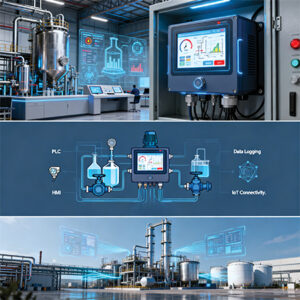
One of the defining characteristics of all-in-one controllers is their ability to combine PLC capabilities, human-machine interface (HMI), and data logging within a single platform.
The PLC component executes control logic, ensuring that pumps, valves, heaters, and other equipment operate according to defined parameters. The built-in HMI provides operators with a graphical interface to monitor process conditions, view alarms, and make adjustments when required.
Additionally, integrated data logging capabilities allow these controllers to continuously record process parameters such as temperature, pressure, flow, and pH levels. This data can later be analysed for process optimisation, quality assurance, and regulatory compliance.
By consolidating these functions into one system, all-in-one controllers eliminate the need for multiple standalone devices and reduce the complexity of automation architectures.
Compact Design and Space Efficiency
Space constraints are common in chemical plants, particularly in control panels where multiple automation devices must be accommodated. All-in-one controllers are designed with compact footprints that integrate several functions into a single enclosure.
This compact design helps reduce panel size and simplifies wiring. Fewer interconnections between separate devices also mean lower chances of wiring errors and improved system reliability.
For small and medium-sized chemical processing units, pilot plants, and skid-mounted systems, the space-saving nature of these controllers is a significant advantage. Even large plants can benefit from their modular expansion capabilities, enabling flexible deployment across different sections of the facility.
Enhanced Connectivity and Communication
Modern chemical plants rely heavily on connectivity to ensure seamless data exchange between equipment, control systems, and enterprise management platforms. All-in-one controllers are therefore equipped with multiple communication interfaces supporting industrial protocols.
Ethernet, Modbus, OPC UA, and other industrial communication standards allow these controllers to integrate with supervisory control systems, distributed control networks, and industrial IoT platforms. This connectivity ensures that process data can be shared across the plant and even accessed remotely when necessary.
Remote monitoring capabilities enable engineers and plant managers to view system performance, diagnose issues, and implement corrective actions without needing to be physically present on the shop floor. This feature is particularly valuable for large chemical complexes and multi-site operations.
Improved Process Reliability and Safety
Safety is a critical concern in the chemical industry, where hazardous substances and high-energy reactions are common. Reliable process control systems are essential for preventing accidents and maintaining safe operating conditions.
All-in-one controllers are designed with robust hardware and advanced diagnostics to ensure dependable operation in demanding industrial environments. Built-in alarm management systems allow operators to receive immediate notifications when process parameters exceed predefined limits.
Some advanced controllers also support redundant communication paths and fail-safe mechanisms, ensuring that control functions remain operational even in the event of component failures. These features contribute to improved plant safety and reduced risk of process disruptions.
Integration with Industry 4.0 and Smart Manufacturing
As chemical plants move toward Industry 4.0, the role of intelligent automation systems is becoming increasingly important. All-in-one controllers are well suited for this transition because they combine control, monitoring, and connectivity within a single digital platform.
These controllers can collect large volumes of process data and transmit it to cloud-based analytics systems or plant management software. Advanced analytics tools can then analyse the data to identify inefficiencies, detect anomalies, and optimise process parameters.
In smart chemical plants, such data-driven insights enable predictive maintenance, energy optimisation, and improved production planning. All-in-one controllers therefore serve as key enablers of digital transformation in the chemical sector.
Simplified Maintenance and Lifecycle Management
Another advantage of integrated controllers is simplified maintenance. When multiple functions are consolidated within a single device, the number of components requiring maintenance is significantly reduced.
Modern controllers also feature built-in diagnostic tools that help technicians quickly identify faults and resolve issues. Firmware updates and configuration changes can often be performed remotely, minimising downtime and improving system availability. In addition, integrated platforms simplify system documentation and lifecycle management. With fewer devices to manage, engineering teams can focus on process optimisation rather than troubleshooting complex hardware configurations.
Applications Across Chemical Processing
All-in-one controllers are being widely used across different segments of the chemical industry. Applications include reactor control, batch processing, distillation column management, chemical dosing systems, and utilities monitoring.
In specialty chemical production, where small batches and frequent product changes are common, these controllers offer flexible programming and quick reconfiguration. In continuous processing plants, they provide stable control and real-time monitoring of critical parameters.
Their versatility also makes them suitable for ancillary systems such as water treatment units, boiler control, and environmental monitoring systems within chemical facilities.
The Road Ahead
As automation technology continues to advance, all-in-one controllers are expected to become even more powerful and versatile. Future developments may include deeper integration with artificial intelligence, advanced process modelling, and digital twin technologies.
With increasing emphasis on efficiency, safety, and sustainability, chemical manufacturers are seeking automation solutions that deliver maximum performance with minimal complexity. All-in-one controllers perfectly align with this requirement by combining multiple capabilities within a single intelligent platform.
In essence, these integrated systems represent the next stage in process automation—enabling chemical plants to operate more efficiently, respond quickly to changing conditions, and maintain the highest standards of safety & quality.