

How to Contain Harmonics?
Managing Power Quality Challenges in Modern Industrial Facilities

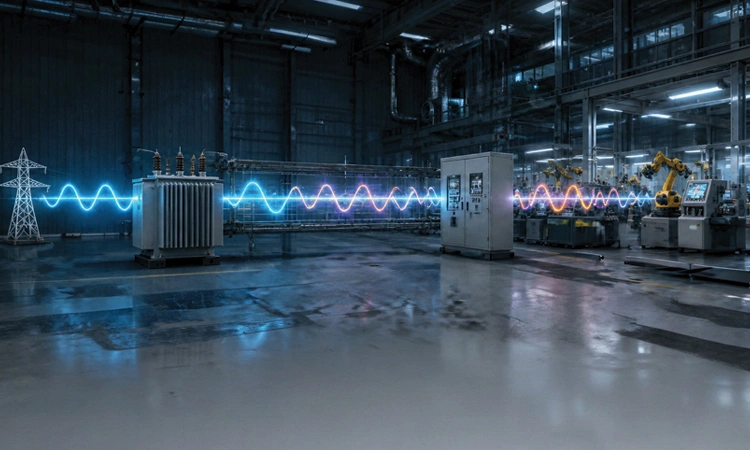
As manufacturing plants become increasingly automated and energy-intensive, maintaining power quality has emerged as a critical operational priority. Among the various power quality issues confronting industries today, harmonics rank as one of the most pervasive and potentially damaging. While often invisible to plant personnel, harmonics can significantly affect equipment performance, reduce energy efficiency, increase maintenance costs, and shorten the life of critical electrical assets.
The growing use of variable frequency drives (VFDs), automation systems, switch-mode power supplies, LED lighting, robotics, UPS systems, and renewable energy installations has dramatically increased harmonic distortion levels in industrial power networks. Consequently, understanding and containing harmonics has become essential for ensuring reliable, efficient, and safe plant operations.
Understanding Harmonics
In an ideal electrical system, voltage and current waveforms follow a pure sinusoidal pattern at a fundamental frequency of 50 Hz or 60 Hz. However, modern electronic equipment often draws current in a non-linear manner, distorting the waveform.
These distortions create additional frequency components known as harmonics. Harmonic frequencies are integer multiples of the fundamental frequency. For example, in a 50 Hz system, the third harmonic occurs at 150 Hz, the fifth at 250 Hz, and the seventh at 350 Hz.
When multiple harmonic frequencies combine with the fundamental waveform, the result is a distorted electrical signal that can negatively impact system performance.
![How-to-Contain-Harmonics]() Why Harmonics Are Increasing
Why Harmonics Are Increasing
 Why Harmonics Are Increasing
The rapid adoption of power electronic devices is the primary reason for rising harmonic levels in industrial facilities.
Unlike conventional motors and resistive loads, modern electronic equipment draws current in short pulses rather than smooth sinusoidal waves. Common harmonic-generating equipment includes:
- Variable Frequency Drives (VFDs)
- Servo drives
- Uninterruptible Power Supplies (UPS)
- Battery charging systems
- Welding equipment
- Industrial automation systems
- Data centers
- LED lighting systems
- Solar inverters
As industries accelerate digitalization and automation initiatives, the number of non-linear loads continues to grow, making harmonic management increasingly important.
The Hidden Costs of Harmonics
Many facilities underestimate the financial impact of harmonic distortion until operational problems begin to surface.
Excessive harmonics can cause overheating in transformers, cables, motors, generators, and switchgear. Increased thermal stress reduces equipment life and elevates maintenance requirements.
Transformers are particularly vulnerable because harmonic currents generate additional losses that produce excess heat. In severe cases, transformer derating or premature replacement may become necessary.
Motors exposed to harmonic distortion may experience increased vibration, torque pulsations, insulation degradation, and reduced efficiency.
Electrical conductors carrying harmonic-rich currents can also overheat, increasing energy losses and creating potential fire hazards.
Impact on Sensitive Equipment
Harmonics can interfere with the operation of sensitive electronic devices and control systems.
Industrial automation networks, programmable logic controllers (PLCs), instrumentation systems, and communication equipment may experience malfunctions when exposed to severe harmonic distortion.
Voltage distortion can lead to nuisance tripping of circuit breakers, unexpected shutdowns, inaccurate measurements, and unreliable operation of protective devices.
In critical manufacturing environments where uptime is essential, these disruptions can result in costly production losses.
Measuring the Problem
Effective harmonic mitigation begins with accurate assessment.
Power quality analyzers are commonly used to measure Total Harmonic Distortion (THD), which quantifies the extent of waveform distortion present in an electrical system.
Utilities, consultants, and facility engineers often conduct harmonic studies to identify sources of distortion and determine their impact on system performance.
Modern power monitoring systems provide continuous harmonic measurement and trend analysis, enabling plant operators to identify emerging issues before they escalate into major problems.
Routine monitoring is particularly important in facilities where new equipment is frequently added or production processes change over time.
Passive Harmonic Filters
One of the most widely used methods for controlling harmonics is the installation of passive harmonic filters.
These systems utilize combinations of capacitors, inductors, and resistors designed to absorb specific harmonic frequencies and prevent them from propagating through the electrical network.
Passive filters are relatively simple, reliable, and cost-effective for many applications. They are particularly suitable for facilities with predictable and stable harmonic loads.
In addition to reducing distortion, passive filters can improve power factor and enhance overall system efficiency.
However, careful design is essential to avoid resonance conditions that may inadvertently amplify harmonic levels.
![How-to-Contain]() Active Harmonic Filters: The Modern Solution
Active Harmonic Filters: The Modern Solution
 Active Harmonic Filters: The Modern Solution
As industrial electrical systems become more complex, Active Harmonic Filters (AHFs) are gaining popularity.
Unlike passive filters that target specific frequencies, active filters continuously monitor electrical waveforms and inject compensating currents that cancel harmonic distortion in real time.
This dynamic approach enables active filters to respond effectively to changing load conditions and multiple harmonic frequencies simultaneously.
Active filters offer several advantages:
- Broad-spectrum harmonic reduction
- Improved power factor correction
- Adaptability to varying loads
- Reduced risk of resonance
- Enhanced power quality performance
Many modern industrial facilities are increasingly adopting active filtering solutions as part of comprehensive energy management strategies.
Harmonic Mitigation Through Equipment Selection
Preventing harmonics at the source is often more effective than correcting them later.
Equipment manufacturers now offer harmonic-reducing technologies integrated directly into electrical equipment. Examples include:
- Low-harmonic VFDs
- Multi-pulse rectifiers
- Active front-end drives
- Harmonic-mitigating transformers
- Improved power conversion systems
Selecting equipment with built-in harmonic suppression capabilities can significantly reduce distortion levels throughout the facility.
Although initial investment costs may be higher, long-term operational benefits often justify the expenditure.
Transformer and System Design Considerations
Electrical system design plays a major role in harmonic containment.
Transformers intended for harmonic-rich environments are often designed with enhanced thermal capabilities and specialized winding configurations. K-rated transformers, for example, are specifically engineered to handle non-linear loads without excessive heating.
Proper conductor sizing, neutral management, grounding practices, and load balancing can further reduce harmonic-related issues.
Engineers must also consider future expansion plans when designing electrical infrastructure to ensure harmonic levels remain within acceptable limits as facilities grow.
The Role of Power Quality Monitoring
Modern power quality monitoring systems provide continuous visibility into electrical system performance.
Advanced digital meters and intelligent monitoring platforms can track harmonic levels, energy consumption, voltage stability, and equipment health in real time.
Data analytics and predictive maintenance tools enable facility managers to identify trends, diagnose problems, and optimize system performance proactively.
As Industry 4.0 initiatives gain momentum, integrated power quality monitoring is becoming a standard component of smart manufacturing environments.
Compliance with Standards
Several international standards provide guidance for harmonic control and power quality management.
Standards such as IEEE 519 establish recommended limits for harmonic distortion and help ensure compatibility between electrical systems and utility networks.
Compliance with these standards helps organizations avoid operational problems while demonstrating responsible power management practices.
Many utilities also impose harmonic limits on large industrial consumers to protect overall grid stability.
The Future of Harmonic Management
The increasing electrification and digitalization of industry will continue to drive demand for advanced harmonic mitigation technologies.
Artificial intelligence, smart grids, digital twins, and predictive analytics are expected to play growing roles in power quality management. Future systems will be capable of automatically detecting harmonic disturbances, predicting their impact, and implementing corrective actions with minimal human intervention.
As renewable energy integration, electric vehicle charging infrastructure, and automation technologies expand, maintaining high power quality will become even more critical.
Conclusion
Harmonics are an unavoidable by-product of modern industrial operations, but their impact can be effectively controlled through proper planning, monitoring, and mitigation. From passive and active filtering solutions to intelligent equipment selection and continuous power quality monitoring, industries now have a wide range of tools available to contain harmonic distortion.
Organizations that proactively address harmonics can improve equipment reliability, enhance energy efficiency, reduce maintenance costs, and ensure uninterrupted operations. In an era where productivity and uptime are paramount, effective harmonic management has become an essential component of modern industrial power systems.