

Innovations in In-Plant Materials Handling: Driving Efficiency, Safety, and Smart Manufacturing

In today’s highly competitive manufacturing environment, efficient material movement within the plant has become as critical as the production process itself. In-plant materials handling encompasses the movement, storage, control, and protection of materials, components, and finished goods throughout the manufacturing and warehousing cycle. As industries strive to improve productivity, reduce operational costs, and enhance workplace safety, innovations in materials handling are reshaping factory floors across the globe.
The rise of Industry 4.0, automation, artificial intelligence (AI), robotics, and smart logistics has transformed conventional material handling systems into intelligent, interconnected ecosystems. These innovations are enabling manufacturers to achieve greater efficiency, flexibility, traceability, and sustainability while responding rapidly to changing market demands.
The Evolution of Materials Handling
Traditionally, materials handling relied heavily on manual labor, forklifts, pallet trucks, and fixed conveyor systems. While these methods served industries for decades, they often involved inefficiencies, bottlenecks, safety risks, and limited flexibility.
Modern manufacturing facilities are now embracing smart handling technologies that facilitate seamless movement of materials with minimal human intervention. Today’s innovations focus on optimizing workflows, reducing waste, improving inventory visibility, and ensuring worker safety.
The shift toward lean manufacturing and just-in-time production has further accelerated the adoption of advanced materials handling solutions that support continuous flow and real-time decision-making.
![in-plant materials handling (Smart Manufacturing)]() Autonomous Mobile Robots (AMRs): Transforming Internal Logistics
Autonomous Mobile Robots (AMRs): Transforming Internal Logistics
 Autonomous Mobile Robots (AMRs): Transforming Internal Logistics
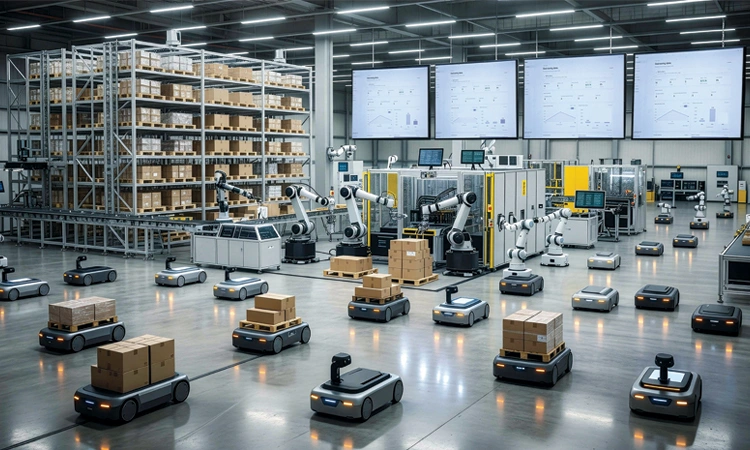
Among the most significant innovations in in-plant materials handling is the emergence of Autonomous Mobile Robots (AMRs). Unlike traditional Automated Guided Vehicles (AGVs), which follow predefined routes, AMRs use advanced sensors, cameras, LiDAR, and AI algorithms to navigate dynamically through factory environments.
AMRs can transport raw materials, work-in-progress components, and finished products between production cells, warehouses, and dispatch areas without requiring fixed infrastructure. Their ability to adapt to changing layouts and avoid obstacles makes them ideal for modern flexible manufacturing facilities.
Manufacturers are increasingly deploying fleets of AMRs that communicate with each other and with central management systems, enabling efficient traffic management and optimized material flow.
Next-Generation Automated Guided Vehicles
While AMRs are gaining popularity, Automated Guided Vehicles continue to evolve. Modern AGVs feature improved navigation systems, laser guidance, wireless communication, and sophisticated fleet management software.
These vehicles are now capable of handling heavier loads, operating continuously with minimal supervision, and integrating seamlessly with enterprise resource planning (ERP) and manufacturing execution systems (MES). Advanced AGVs are particularly effective in repetitive transportation tasks, reducing labor dependency and improving operational consistency.
Smart Conveyor Systems
Conveyors remain the backbone of many materials handling operations, but today’s systems are far more intelligent than their predecessors.
Smart conveyors are equipped with sensors, programmable controls, and IoT connectivity that enable real-time monitoring of product movement. These systems can automatically adjust speed, detect jams, reroute products, and communicate with other equipment throughout the production line.
Modular conveyor designs have also gained popularity, allowing manufacturers to reconfigure layouts quickly to accommodate new products or changing production requirements. This flexibility is especially valuable in industries characterized by frequent product variations and shorter production runs.
Automated Storage and Retrieval Systems (ASRS)
Space optimization has become a major priority for manufacturers and warehouse operators. Automated Storage and Retrieval Systems (ASRS) address this challenge by maximizing vertical storage capacity while improving inventory accessibility.
These systems use computer-controlled mechanisms to automatically store and retrieve materials from designated locations. High-density storage configurations reduce floor space requirements, while automation minimizes picking errors and retrieval times.
Modern ASRS solutions integrate with warehouse management software, providing real-time inventory visibility and supporting faster order fulfillment. The result is improved storage efficiency, reduced labor costs, and enhanced inventory accuracy.
Artificial Intelligence and Predictive Analytics
Artificial Intelligence is increasingly influencing materials handling operations. AI-powered systems analyze large volumes of operational data to identify inefficiencies, predict equipment failures, and optimize workflows.
Predictive analytics helps organizations anticipate maintenance requirements before breakdowns occur, minimizing downtime and improving equipment utilization. AI can also optimize routing for AMRs and AGVs, balance workloads across facilities, and improve inventory positioning.
Machine learning algorithms continuously refine operational parameters based on historical performance, enabling ongoing improvements in efficiency and resource utilization.
![in-plant materials handling (Plant Materials Handling)]() Internet of Things (IoT) and Real-Time Visibility
Internet of Things (IoT) and Real-Time Visibility
 Internet of Things (IoT) and Real-Time Visibility
The Internet of Things has introduced unprecedented levels of connectivity within materials handling environments. Sensors installed on conveyors, forklifts, pallets, storage systems, and transport vehicles generate continuous streams of operational data.
This real-time visibility enables managers to monitor equipment performance, track material movement, and identify bottlenecks instantly. IoT-enabled systems provide valuable insights into inventory levels, equipment health, and workflow efficiency.
By connecting previously isolated systems, manufacturers can create highly responsive materials handling networks capable of adapting quickly to changing production demands.
Advanced Forklift Technologies
Forklifts remain indispensable in many industrial facilities, but significant innovations have improved their safety and productivity.
Modern forklifts incorporate collision avoidance systems, operator assistance technologies, telematics, and automated speed controls. Integrated sensors can detect pedestrians and obstacles, reducing the risk of workplace accidents.
Electric forklifts are increasingly replacing internal combustion models due to lower operating costs, reduced emissions, and improved energy efficiency. Lithium-ion battery technology further enhances performance by providing faster charging times and longer operational life.
Robotics in Material Handling
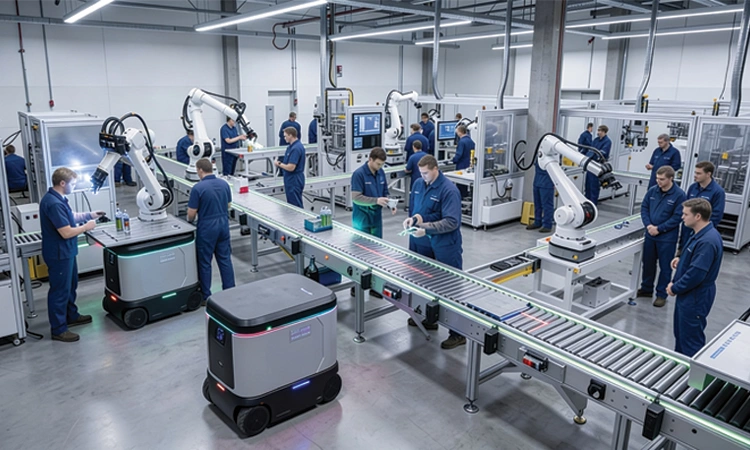
Industrial robots are playing an expanding role in materials handling applications. Robotic palletizers, depalletizers, pick-and-place systems, and collaborative robots (cobots) are helping manufacturers improve throughput while maintaining high levels of accuracy.
Cobots, in particular, are gaining traction because they can safely work alongside human operators without extensive safety barriers. These systems handle repetitive or physically demanding tasks, allowing workers to focus on higher-value activities.
Advancements in machine vision and AI are enabling robots to identify, sort, and manipulate a wider variety of products with greater precision and flexibility.
Digital Twins and Simulation Technology
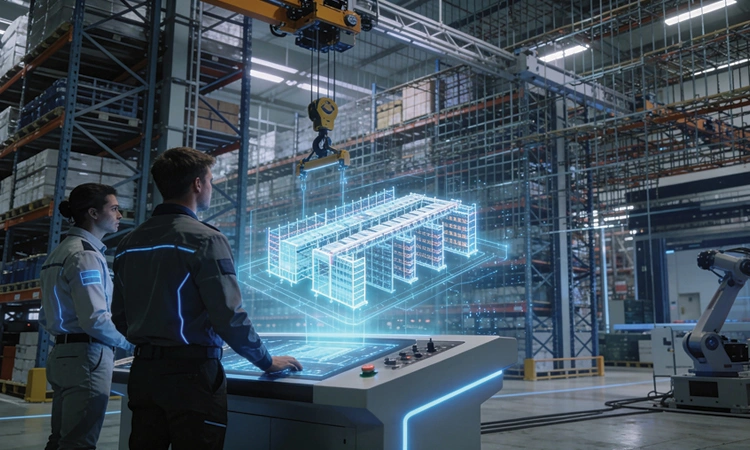
Digital twin technology is emerging as a powerful tool for optimizing materials handling operations. A digital twin creates a virtual representation of a facility, allowing engineers to simulate workflows, evaluate layout changes, and test operational scenarios before implementation.
Manufacturers can analyze equipment utilization, identify bottlenecks, and predict system performance under varying conditions. This capability reduces implementation risks and supports more informed investment decisions.
Simulation tools also assist in capacity planning and process optimization, helping organizations maximize the effectiveness of their materials handling infrastructure.
Enhancing Workplace Safety
Safety remains a primary driver of innovation in materials handling. Smart safety systems now combine sensors, AI, wearable technology, and real-time monitoring to protect workers.
Wearable devices can alert employees when they enter hazardous zones, while AI-powered surveillance systems identify unsafe behaviors and potential collision risks. Automated handling solutions reduce the need for manual lifting and repetitive motions, helping prevent workplace injuries.
The integration of safety technologies not only protects personnel but also improves productivity by reducing accident-related disruptions.
![in-plant materials handling]() Sustainability and Green Materials Handling
Sustainability and Green Materials Handling
 Sustainability and Green Materials Handling
Environmental sustainability has become an important consideration in materials handling strategies. Companies are adopting energy-efficient equipment, electric vehicles, regenerative conveyor systems, and optimized routing algorithms to reduce energy consumption.
Advanced warehouse designs maximize storage density and minimize transportation distances, reducing overall carbon footprints. Reusable packaging systems and automated waste management solutions further contribute to sustainability goals.
As regulatory pressures and environmental awareness continue to grow, green materials handling technologies are expected to become increasingly prevalent.
The Road Ahead
The future of in-plant materials handling lies in greater automation, intelligence, and connectivity. Technologies such as AI, robotics, IoT, digital twins, and autonomous vehicles will continue to evolve, creating smarter and more agile manufacturing environments.
Organizations that embrace these innovations will benefit from improved productivity, enhanced safety, lower operating costs, and greater responsiveness to market demands. In an era where manufacturing competitiveness depends heavily on operational excellence, advanced materials handling systems have become strategic assets rather than mere support functions.
As factories become increasingly interconnected and data-driven, the materials handling systems of tomorrow will play a pivotal role in shaping the future of smart manufacturing.