

Understanding Precision Planetary Gearboxes
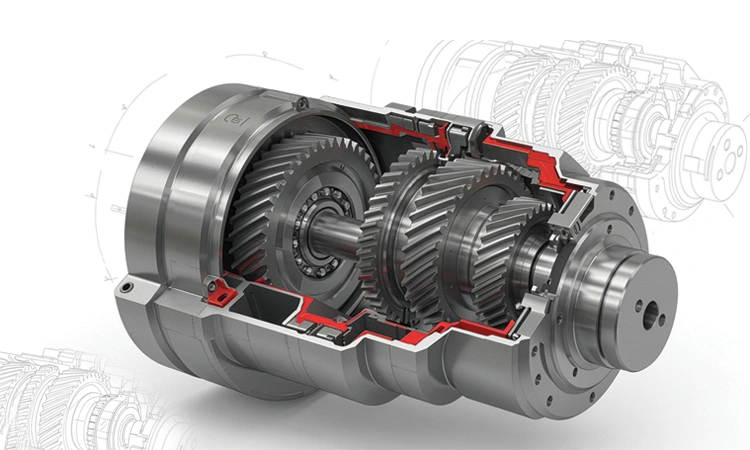
In today’s manufacturing and automation landscape, where higher speeds, tighter tolerances, and uncompromising accuracy are the norm, the role of motion transmission systems has become increasingly critical. Among the various gearbox technologies available, precision planetary gearboxes stand out for their compactness, efficiency, load-handling capability, and exceptional positional accuracy. Widely used in robotics, CNC machine tools, automation systems, packaging machinery, and aerospace applications, these gearboxes have become a backbone of modern precision engineering.
What Is a Planetary Gearbox?
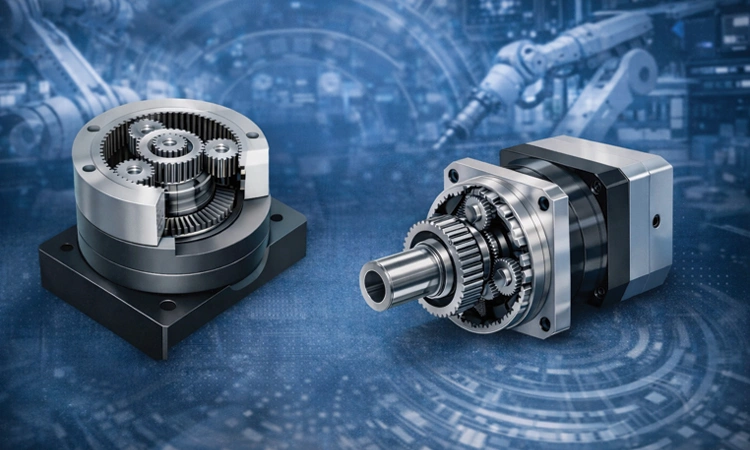
A planetary gearbox derives its name from its gear arrangement, which resembles the motion of planets around the sun. The basic system consists of three primary components: a sun gear at the center, multiple planet gears that rotate around the sun gear, and an outer ring gear that encases the assembly. The planet gears are mounted on a planet carrier, which acts as the output in many configurations.
This unique geometry allows the gearbox to distribute load evenly across multiple gear teeth simultaneously. As a result, planetary gearboxes can transmit significantly higher torque compared to conventional spur or helical gearboxes of similar size, while maintaining a compact footprint.
What Makes a Planetary Gearbox “Precision”?
While standard planetary gearboxes are used in many industrial applications, precision planetary gearboxes are designed and manufactured to meet far stricter performance parameters. Precision, in this context, primarily refers to low backlash, high torsional rigidity, excellent repeatability, and smooth motion control.
Backlash—defined as the lost motion between mating gear teeth—is a critical concern in positioning systems. Precision planetary gearboxes typically offer backlash values as low as 1–5 arc minutes, making them ideal for servo-driven systems where accurate positioning and rapid direction changes are essential. This level of precision is achieved through advanced gear tooth profiles, tight manufacturing tolerances, preloaded bearings, and optimized assembly processes.
Key Design Features and Construction
The superior performance of precision planetary gearboxes stems from several deliberate design choices. One of the most important is the use of case-hardened alloy steels for gears, which ensures high surface hardness, wear resistance, and long service life. Gear teeth are ground rather than merely cut, resulting in better surface finish and accurate tooth geometry.
Bearings play an equally critical role. Precision planetary gearboxes often use tapered roller bearings or angular contact bearings, preloaded to eliminate axial play and enhance stiffness. The gearbox housing is typically machined from high-strength steel or aluminum alloys, providing structural rigidity while maintaining thermal stability.
Additionally, many precision planetary gearboxes are modular in construction, allowing multiple stages to be combined to achieve higher reduction ratios without compromising efficiency or accuracy.
Performance Advantages
One of the most notable advantages of precision planetary gearboxes is their high torque density. Because multiple planet gears share the load, the gearbox can transmit high torque within a compact envelope. This makes them especially valuable in applications where space is limited, such as robotic joints or compact machine tools.
Another critical benefit is high efficiency. Precision planetary gearboxes typically achieve efficiencies of 95% or higher per stage. This reduces energy losses, heat generation, and operating costs, while also enabling better dynamic performance in servo systems.
The torsional rigidity of these gearboxes ensures minimal elastic deformation under load, which directly translates to better positioning accuracy and surface finish in machining applications. High rigidity is particularly important in applications involving frequent acceleration, deceleration, or reversing motion.
Role in Servo and Motion Control Systems
Precision planetary gearboxes are most commonly paired with servo motors and, increasingly, high-performance stepper motors. In such systems, the gearbox acts as a torque multiplier while maintaining precise control over position, speed, and acceleration.
In CNC machines, for example, these gearboxes are used in rotary axes, tool changers, and feed drives, where accurate interpolation and repeatability are non-negotiable. In robotics, they enable smooth, controlled motion in articulated arms, ensuring consistent path accuracy even under varying payloads.
The low inertia of precision planetary gearboxes also enhances system responsiveness, allowing motors to accelerate and decelerate rapidly without inducing vibration or overshoot.
Applications Across Industries
The versatility of precision planetary gearboxes has led to their adoption across a wide range of industries. In machine tools, they are used for spindle drives, rotary tables, and indexing heads. In automation and packaging, they ensure precise synchronization of conveyors, pick-and-place systems, and carton handling equipment.
The robotics sector relies heavily on precision planetary gearboxes for joint actuation, where compact size and high torque are critical. In aerospace and defense, these gearboxes are used in actuation systems, radar positioning, and unmanned platforms, where reliability and accuracy are paramount.
Even in emerging sectors such as medical devices and semiconductor manufacturing, precision planetary gearboxes play a vital role in enabling ultra-precise, repeatable motion under clean and controlled conditions.
Selecting the Right Precision Planetary Gearbox
Choosing the right gearbox involves careful consideration of several factors. These include required output torque, input speed, reduction ratio, allowable backlash, torsional rigidity, duty cycle, and environmental conditions. Over-specifying can lead to unnecessary cost, while under-specifying may compromise performance or lifespan.
It is also essential to consider mounting configuration, shaft options, and compatibility with the selected motor. Many manufacturers offer motor-specific adapters, ensuring optimal alignment and ease of installation.
Equally important is evaluating the manufacturer’s engineering expertise, quality standards, and after-sales support, as precision gearboxes are long-term investments in system performance and reliability.
![Machine Tools]() Design Considerations for Robotics, Machine Tools, and Automation
Design Considerations for Robotics, Machine Tools, and Automation
 Design Considerations for Robotics, Machine Tools, and Automation
While the fundamental principles of precision planetary gearboxes remain the same, design priorities vary significantly across sectors such as robotics, machine tools, and industrial automation. In robotics, especially articulated and collaborative robots, the gearbox must offer extremely low backlash, high torsional rigidity, and compact dimensions to ensure accurate path control and smooth joint motion. Weight reduction is another critical consideration, as lighter gearboxes reduce inertia and energy consumption while improving robot speed and payload capacity. Additionally, the gearbox must withstand frequent start-stop cycles and rapid reversals without compromising accuracy or service life.
In machine tools and automation systems, the emphasis shifts toward stiffness, load-bearing capability, and thermal stability. Machine tool applications demand gearboxes that can maintain positional accuracy under continuous load and vibration, particularly in rotary axes, indexing heads, and feed drives. High torsional rigidity minimizes deflection during cutting operations, directly impacting surface finish and dimensional accuracy. In automation and packaging machinery, where cycles are fast and repetitive, designers prioritize high efficiency, durability, and low maintenance, ensuring consistent performance over millions of cycles. Across all these sectors, close integration between the gearbox, motor, and control system is essential to achieve optimal dynamic performance and long-term reliability.
Trends and Future Developments
As Industry 4.0 and smart manufacturing gain momentum, precision planetary gearboxes are evolving to meet new demands. There is a growing emphasis on lighter materials, higher power density, and improved noise and vibration characteristics. Advanced simulation tools and digital twins are being used to optimize gear geometry and predict performance under real-world operating conditions. Integration with sensors for condition monitoring and predictive maintenance is another emerging trend. By tracking parameters such as temperature, vibration, and load, manufacturers can enhance uptime and reduce unplanned downtime.
Conclusion
Precision planetary gearboxes represent a perfect blend of mechanical ingenuity and manufacturing excellence. Their ability to deliver high torque, compact size, exceptional accuracy, and long-term reliability makes them indispensable in modern motion control systems. As industries continue to push the boundaries of speed, precision, & automation, the importance of understanding and selecting the right precision planetary gearbox will only grow.
For engineers, system integrators, and machine builders, a deep appreciation of how these gearboxes work—and what sets precision designs apart—can be the key to achieving superior machine performance and sustained competitive advantage.