

The Indian Machine Tool Industry – Present Status & Future Trends
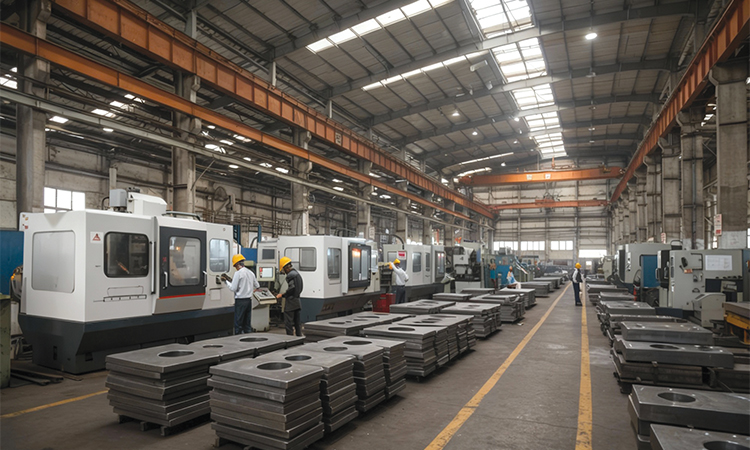
The machine tool industry is often regarded as the “mother industry” of manufacturing — a vital enabler of industrial growth and technological advancement. Every sector that produces physical goods — from automotive and aerospace to defense, railways, construction, and consumer durables — depends directly on the precision, versatility, and performance of machine tools. In India, the machine tool industry has evolved from modest beginnings into a globally recognized manufacturing hub, reflecting the nation’s growing industrial maturity, policy support, and appetite for innovation. Today, as India aims to become a global manufacturing powerhouse under the “Make in India” and “Atmanirbhar Bharat” initiatives, the machine tool sector stands poised at a crucial inflection point — balancing challenges with remarkable opportunities.
The Current Landscape
The Indian machine tool industry has witnessed steady growth over the past decade, propelled by increasing industrialization, rising domestic demand, and an expanding base of end-user industries. According to recent estimates, the Indian machine tool market is valued at around USD 2.5–3 billion, with a domestic production value exceeding INR 10,000 crore. India ranks among the top 10 machine tool producers globally and among the top 5 in Asia.
The industry primarily comprises manufacturers of metal-cutting and metal-forming machines. Metal-cutting machines — including lathes, machining centers, drilling, milling, and grinding machines — constitute about 75% of total production, while the remaining 25% comes from metal-forming machines such as presses, shears, and bending equipment. The key production clusters are located in Bengaluru, Pune, Rajkot, Coimbatore, and Ludhiana — regions that have emerged as hubs for design, manufacturing, and innovation.
The Indian Machine Tool Manufacturers’ Association (IMTMA) has played a vital role in shaping the industry’s ecosystem through policy advocacy, technology transfer, skill development, and the organization of the flagship IMTEX exhibitions, which serve as a platform for global collaboration and technology exchange.
Drivers of Growth
Several interlinked factors have contributed to the growth momentum of the machine tool industry in India:
Rising Industrial Investments:
Rapid expansion in core sectors such as automotive, aerospace, defense manufacturing, and renewable energy has led to increased demand for high-precision, automated, and digitally integrated machine tools. The government’s focus on manufacturing localization under programs like Make in India and the Production Linked Incentive (PLI) schemes has provided a strong impetus.
Technological Upgradation:
Indian manufacturers are steadily transitioning from conventional machines to CNC (Computer Numerical Control) and digitally controlled equipment. CNC machine tools now account for over 60% of domestic production, a figure that continues to rise as the industry embraces automation, robotics, and data-driven manufacturing.
Growing MSME Participation:
The machine tool sector is characterized by a large number of small and medium enterprises (SMEs) that contribute significantly to domestic production. Many of these firms are now upgrading capabilities through technology adoption, partnerships, and skill development programs.
Government Initiatives and Infrastructure Push:
Mega projects such as Gati Shakti, the National Infrastructure Pipeline (NIP), and sector-specific missions in defense and railways are expected to generate sustained demand for metal-cutting and forming equipment.
Export Potential:
India’s machine tools are being exported to over 65 countries, with major markets in the Middle East, Africa, and Southeast Asia. As the global supply chain seeks alternatives to China, India is well-positioned to attract OEM collaborations and outsourcing opportunities.
Technological Shifts and Smart Manufacturing
The next chapter of the Indian machine tool industry is being written around Industry 4.0 — where digitalization, data integration, and smart automation redefine the production ecosystem. Machine tools are no longer just mechanical devices but intelligent systems capable of self-diagnosis, predictive maintenance, and real-time performance monitoring.
1 Smart CNC Systems:
Advanced CNC controls equipped with sensors, analytics, and IoT connectivity are enabling manufacturers to track productivity metrics, tool wear, and energy usage, thereby optimizing overall equipment efficiency (OEE).
2 Additive Manufacturing Integration:
The convergence of subtractive and additive manufacturing technologies is gaining traction. Hybrid machines that combine 3D printing and milling functions are making inroads into aerospace, medical, and tooling industries.
3 Automation and Robotics:
Automation is no longer confined to large-scale factories. Cobots (collaborative robots) and robotic loading-unloading systems are being integrated into mid-size machining setups to improve productivity, consistency, and safety.
4 Data Analytics and AI:
Machine learning algorithms are being used to predict process deviations, optimize cutting parameters, and prevent downtime. AI-based systems can also enhance quality assurance through automated inspection and defect detection.
5 Sustainable Manufacturing:
Environmental consciousness is influencing machine design, with energy-efficient drives, regenerative braking systems, and eco-friendly coolant systems becoming standard. Manufacturers are increasingly emphasizing the circular economy through component reusability and refurbishment.
Challenges and Bottlenecks
Despite its progress, the Indian machine tool industry faces several structural and operational challenges that need strategic attention:
Import Dependence on High-End Machines:
A significant portion of India’s demand for advanced multi-axis machining centers, precision grinders, and specialized forming machines continues to be met through imports from Japan, Germany, Taiwan, and Korea.
Technology Gaps:
Indigenous R&D still lags behind global benchmarks in high-precision, high-speed, and digitally integrated systems. Bridging this gap requires higher investment in research and collaboration between academia and industry.
Skilled Manpower Shortage:
With increasing automation, the need for multi-skilled operators, mechatronics experts, and digital system integrators is critical. Training programs and technical education must keep pace with technological evolution.
Volatile Raw Material and Component Costs:
Fluctuations in the prices of steel, electronics, and imported components affect profitability. Localization of critical components remains a work in progress.
Limited Access to Finance for MSMEs:
Small and medium firms often struggle with working capital, technology financing, and export credit, which constrains growth and modernization.
The Road Ahead – Emerging Trends and Future Outlook
The Indian machine tool industry is on the cusp of transformation, driven by innovation, digitalization, and global collaboration. The coming decade will witness accelerated shifts across several dimensions:
(a) Indigenous Technology Development:
Focused R&D initiatives, supported by the government and industry associations, are expected to yield indigenous designs for high-speed machining, composite materials, and precision automation. Centers such as the Advanced Machine Tool Testing Facility (AMTTF) and the Additive Manufacturing Centre at IMTMA’s Bengaluru campus are contributing significantly.
(b) Integration with Global Value Chains:
With multinational companies expanding their sourcing bases in India, local firms have an opportunity to become key suppliers for machine tool components, assemblies, and turnkey systems. Joint ventures and technical collaborations will deepen this integration.
(c) Expansion of Metal Forming Segment:
The forming segment, though smaller in volume, is projected to grow faster, especially due to the rise in electric vehicle (EV) manufacturing, white goods, and packaging industries that rely on high-precision stamping and forming solutions.
(d) Rise of Smart Factories:
As Industry 4.0 becomes mainstream, the demand for interconnected machine tools capable of real-time communication within a digital factory environment will surge. The future machine tool will be an intelligent node in a larger ecosystem rather than an isolated workstation.
(e) Export Competitiveness:
By enhancing precision, reliability, and after-sales support, Indian manufacturers can capture a larger share of emerging markets. The government’s export promotion policies and FTAs will further strengthen competitiveness.
(f) Sustainability and Green Manufacturing:
Carbon-neutral factories, recycling of metal waste, and adoption of renewable energy sources in machine tool plants will define the next phase of responsible growth.
Conclusion
The Indian machine tool industry stands at a defining juncture — its trajectory shaped by technology, talent, and tenacity. From producing simple lathes to sophisticated CNC machining centers and digitally intelligent systems, the sector has come a long way. Yet, the journey ahead promises even greater transformation as India aligns its industrial vision with global benchmarks in quality, precision, and productivity.
As manufacturers adopt smart technologies, build R&D capabilities, and strengthen partnerships, India’s machine tool industry is poised not only to meet domestic demand but also to establish itself as a credible alternative in the global manufacturing ecosystem. With a strong foundation, policy support, and a culture of innovation, the future of the Indian machine tool industry looks both dynamic and determined — ready to power the nation’s next industrial leap.