
Safety compliance is often associated with regulations, inspections, audits, and certifications. While these are important, true safety goes much deeper. It is about creating systems, processes, and a culture that help prevent incidents before they occur. Most industrial facilities operate with the advantage of being connected to a larger support ecosystem. Emergency services, specialist contractors, spare parts, medical assistance, and management teams are usually within reach.
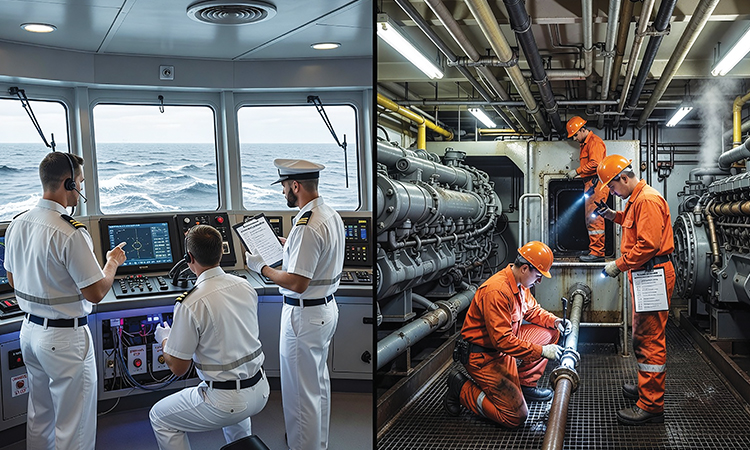
Ships, however, operate in an environment unlike almost any other industrial asset. A vessel may spend weeks at sea, far from external support, while navigating changing weather conditions, multiple regulatory jurisdictions, and operational risks. The crew must be prepared to deal with machinery failures, fires, navigation challenges, medical emergencies, and environmental risks using the resources available onboard. In many ways, a ship is a factory, power plant, transportation system, workplace, and living accommodation combined into a single asset. These unique conditions have shaped one of the most structured safety management systems found in any industry.
Complex Regulatory Landscape
Another aspect that makes maritime safety distinctive is the global nature of shipping operations. A manufacturing plant or industrial facility typically operates within a single regulatory framework. Ships, however, routinely move between countries, continents, and regulatory jurisdictions. During a single voyage, a vessel may be required to comply with international regulations, flag state requirements, port state regulations, coastal state rules, and local operational procedures. The foundation of maritime safety is provided by international conventions developed under the framework of the International Maritime Organization (IMO), which establish common standards for ship safety, environmental protection, and crew welfare. These standards create a globally accepted baseline that enables ships to operate across international waters.
However, compliance does not stop there. Ports and national administrations often impose additional requirements relating to safety, security, environmental protection, emissions, pilotage, cargo handling, reporting procedures, and emergency preparedness. Regional regulations may also apply in specific areas, requiring ship operators to remain constantly aware of changing compliance obligations. The challenge becomes even greater as vessels trade across diverse operating environments, from the Arctic and North Atlantic to the Indian Ocean, the Persian Gulf, Southeast Asia, and congested coastal waters. Each region presents its own combination of weather conditions, navigational risks, environmental sensitivities, infrastructure capabilities, and regulatory expectations. For ship operators, safety management therefore extends beyond maintaining a vessel’s physical condition. It requires continuous monitoring of regulatory developments, operational risks, and local requirements across multiple geographies. This dynamic operating environment has encouraged the maritime industry to adopt robust risk management processes, strong documentation practices, and a culture of continuous compliance.
Compliance as a Foundation
The maritime sector operates under a comprehensive framework of international regulations and industry standards. These requirements cover vessel design, maintenance, crew competence, emergency preparedness, environmental protection, and operational procedures. However, experience has shown that compliance alone does not guarantee safety. Many incidents across industries occur despite the presence of procedures and documentation. What often makes the difference is whether safety is embedded into day-to-day operations and decision-making. The maritime industry has increasingly moved from a compliance-driven approach to a risk-based approach, where organisations focus not only on meeting requirements but also on understanding and managing the risks behind them.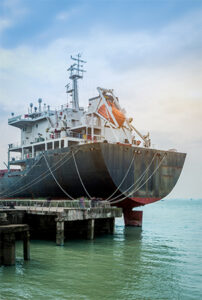
The Importance of Safety Culture
One of the most significant lessons from maritime operations is the importance of safety culture. A well-designed safety management system is only effective when people believe in it and actively follow it. Crew members are encouraged to report hazards, share lessons learned, and raise concerns without fear of blame. When safety becomes part of everyday behaviour rather than an administrative requirement, organisations are better equipped to prevent incidents and respond effectively when challenges arise.
The nature of risk continues to evolve. New technologies, automation, digital systems, alternative fuels, and increasing environmental expectations are changing the way assets are designed and operated. The maritime industry is currently undergoing a major transformation driven by digitalisation and decarbonisation. While these developments create opportunities for greater efficiency and sustainability, they also introduce new safety challenges that must be understood and managed. This experience is familiar to many industrial sectors. As organisations adopt new technologies, maintaining a balance between innovation and safety becomes increasingly important.
The Role of Independent Assurance
An important aspect of maritime safety is the role played by independent organisations called Classification Societies which verify compliance with recognised standards and provide technical assurance throughout the lifecycle of an asset. Among these organisations is the Indian Register of Shipping (IRS), an internationally recognised classification society established in 1975. IRS works with shipowners, shipyards, offshore operators, ports, and government agencies to support safety, quality, and reliability in maritime operations. Its activities include inspections, certification, technical assessments and risk management support. Beyond traditional shipping, IRS also supports emerging areas such as decarbonisation, renewable energy, digitalisation and advanced shipbuilding technologies. The maritime industry operates in one of the world’s most demanding environments. Its approach to safety has evolved through decades of experience, continuous learning, and international cooperation. While the challenges at sea may differ from those faced by shore-based industries, the underlying lessons remain the same: understand risk, build strong systems, encourage a positive safety culture, and never stop improving.
Beyond Compliance
Perhaps the most important lesson from the maritime industry is that safety should never be viewed as a box-ticking exercise. Regulations and standards provide a necessary framework, but lasting safety performance comes from leadership, competence, discipline, and continuous improvement. The most successful organisations are those that see compliance as the starting point rather than the final objective. The maritime industry operates in one of the world’s most demanding environments. Its approach to safety has evolved through decades of experience, continuous learning, and international cooperation. While the challenges at sea may differ from those faced by shore-based industries, the underlying lessons remain the same: understand risk, build strong systems, encourage a positive safety culture, and never stop improving. In an increasingly complex world, compliance remains important. But the organisations that truly excel are those that move beyond compliance and make safety an integral part of the way they operate. 
About the Author:
Santosh Patil, the author, is currently VP & Head Corporate Affairs – Indian Register of Shipping and has over 25 years’ experience in maritime and shipping industry. The views expressed by the author are his own. maritime operations is the importance of safety culture. A well-designed safety management system is only effective when people believe in it and actively follow it. Crew members are encouraged to report hazards, share lessons learned, and raise concerns without fear of blame.
When safety becomes part of everyday behaviour rather than an administrative requirement, organisations are better equipped to prevent incidents and respond effectively when challenges arise. The nature of risk continues to evolve. New technologies, automation, digital systems, alternative fuels, and increasing environmental expectations are changing the way assets are designed and operated. The maritime industry is currently undergoing a major transformation driven by digitalisation and decarbonisation. While these developments create opportunities for greater efficiency and sustainability, they also introduce new safety challenges that must be understood and managed. This experience is familiar to many industrial sectors. As organisations adopt new technologies, maintaining a balance between innovation and safety becomes increasingly important.
The Role of Independent Assurance
An important aspect of maritime safety is the role played by independent organisations called Classification Societies which verify compliance with recognised standards and provide technical assurance throughout the lifecycle of an asset. Among these organisations is the Indian Register of Shipping (IRS), an internationally recognised classification society established in 1975. IRS works with shipowners, shipyards, offshore operators, ports, and government agencies to support safety, quality, and reliability in maritime operations. Its activities include inspections, certification, technical assessments and risk management support. Beyond traditional shipping, IRS also supports emerging areas such as decarbonisation, renewable energy, digitalisation and advanced shipbuilding technologies. The maritime industry operates in one of the world’s most demanding environments. Its approach to safety has evolved through decades of experience, continuous learning, and international cooperation. While the challenges at sea may differ from those faced by shore-based industries, the underlying lessons remain the same: understand risk, build strong systems, encourage a positive safety culture, and never stop improving.
Beyond Compliance
Perhaps the most important lesson from the maritime industry is that safety should never be viewed as a box-ticking exercise. Regulations and standards provide a necessary framework, but lasting safety performance comes from leadership, competence, discipline, and continuous improvement. The most successful organisations are those that see compliance as the starting point rather than the final objective.
The maritime industry operates in one of the world’s most demanding environments. Its approach to safety has evolved through decades of experience, continuous learning, and international cooperation. While the challenges at sea may differ from those faced by shore-based industries, the underlying lessons remain the same: understand risk, build strong systems, encourage a positive safety culture, and never stop improving. In an increasingly complex world, compliance remains important. But the organisations that truly excel are those that move beyond compliance and make safety an integral part of the way they operate.
About the Author:
Santosh Patil, the author, is currently VP & Head Corporate Affairs – Indian Register of Shipping and has over 25 years’ experience in maritime and shipping industry. The views expressed by the author are his own.