

What’s New in Machine Tool Automation?
AI, Digital Twins & Robotics Are Redefining What Machine Tools Can Do

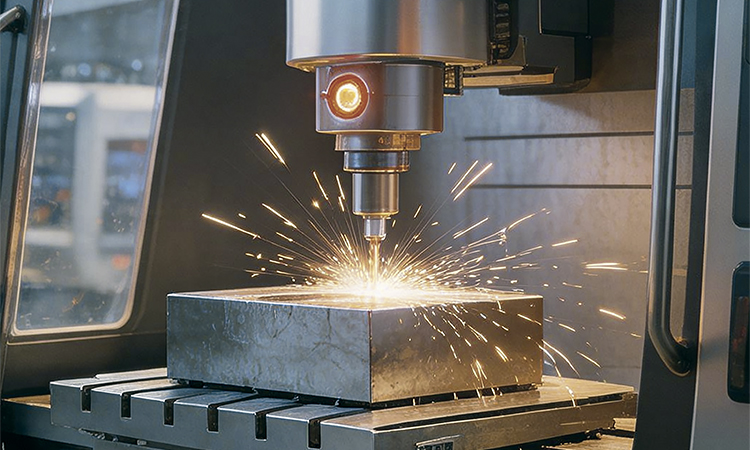
Machine tool automation is undergoing a profound transformation, moving far beyond conventional CNC programming and mechanized handling. Today’s advancements are rooted in intelligence, connectivity, and adaptability, driven by the convergence of artificial intelligence (AI), Industrial Internet of Things (IIoT), robotics, and digital engineering. The modern machine tool is no longer just a precision device-it is becoming an intelligent, self-optimising system within a fully integrated manufacturing ecosystem. This article explores the latest developments shaping machine tool automation and how they are redefining productivity, quality, and competitiveness in manufacturing.
AI-Driven Adaptive Machining
One of the most significant developments in machine tool automation is the integration of AI directly into machining operations. Earlier, automation focused on executing predefined programs, but now machines can adapt in real time based on sensor inputs and process conditions. Modern CNC systems use AI algorithms to continuously monitor parameters such as vibration, temperature, cutting forces, and spindle load. Based on this data, they automatically adjust feeds, speeds, and toolpaths to optimize performance and maintain quality.
This capability leads to several advantages:
• Improved surface finish consistency
• Reduced tool wear and breakage
• Minimized downtime due to fewer process interruptions
AI-driven machining is also changing the role of operators. Instead of reacting to alarms, operators now focus on analyzing data trends and refining process strategies, making manufacturing more knowledge-intensive.
Digital Twins as Operational Backbones
Digital twin technology has evolved from a simulation tool into a central pillar of machine tool automation. A digital twin is a dynamic virtual replica of a machine or process that continuously updates using real-time data.
In today’s environment, digital twins integrate the entire manufacturing chain-from design and process planning to machining and inspection-creating a closed-loop system.
The benefits include:
• Virtual commissioning before physical setup
• Accurate toolpath validation and clash detection
• Continuous process optimization through feedback loops
 Digital twins also enable remote collaboration and training through mixed-reality environments, reducing dependency on highly experienced operators. Over time, as real machining data feeds back into the model, the digital twin becomes increasingly accurate, making each production cycle smarter than the previous one.
Autonomous and Robotised Machining Cells
Automation in machine tools has moved from simple mechanization to fully autonomous production systems. Robot-tended CNC cells are now capable of performing complex operations such as part loading, unloading, inspection, and even process adjustments.
Modern robotic systems are evolving into multi-machine orchestrators that can:
• Manage multiple CNC machines simultaneously
• Execute production queues autonomously
• Integrate vision systems for quality verification
These developments support the concept of “lights-out manufacturing,” where machines operate continuously without human intervention. However, practical deployment still requires robust integration and contextual awareness. As industry practitioners note, the key challenge lies not in robotic capability, but in enabling systems to adapt to real-world variability on the shop floor.
Hybrid Manufacturing Integration
Another breakthrough in machine tool automation is the rise of hybrid manufacturing systems that combine additive and subtractive processes in a single platform.
These machines allow manufacturers to:
• Build near-net shapes using additive techniques
• Finish critical surfaces using precision machining
Hybrid systems enable the production of complex geometries such as internal channels, lattice structures, and conformal cooling features-previously impossible with traditional machining alone. This integration reduces material waste, minimizes setups, and shortens lead times, making it especially valuable in aerospace, medical, and high-performance engineering sectors.
Predictive and Prescriptive Maintenance
Maintenance strategies in machine tool automation have shifted from reactive to predictive and now toward prescriptive approaches. Using IIoT sensors, machines continuously monitor parameters such as vibration, temperature, and hydraulic conditions. AI models analyze this data to predict potential failures before they occur, enabling timely maintenance interventions. The next step is prescriptive maintenance, where systems not only detect issues but also recommend or automatically execute corrective actions.
This evolution results in :
• Reduced unplanned downtime
• Increased machine availability
• Lower maintenance costs
Digital twins further enhance maintenance by simulating potential failures and testing solutions virtually before implementation.
Smart Connectivity and Data Integration
A defining feature of modern machine tool automation is seamless connectivity across the manufacturing ecosystem. Machines, sensors, ERP systems, and inspection devices are interconnected, creating a unified data environment.
This integration enables:
• Real-time monitoring of production processes
• Automated quality tracking
• End-to-end visibility across the supply chain
Factories are increasingly adopting cloud-based and edge computing platforms to process and analyze large volumes of data. The result is a shift from isolated machining operations to fully coordinated, data-driven production systems.
Software-Defined Automation
Automation is no longer confined to hardware upgrades. The emergence of software-defined automation allows manufacturers to enhance machine capabilities through software updates rather than physical modifications.
This approach offers several advantages:
• Faster deployment of new features
• Lower capital investment
• Greater flexibility in adapting to changing production needs
Combined with wireless connectivity, software-defined automation enables dynamic reconfiguration of production systems, making factories more agile and responsive.
Human–Machine Collaboration and XR Technologies
While automation reduces manual intervention, human expertise remains essential. The focus is now on enhancing collaboration between humans and machines through advanced interfaces.
Technologies such as augmented reality (AR) and extended reality (XR) are being used for:
• Remote troubleshooting and maintenance
• Operator training and skill development
• Visualization of complex processes
For example, XR-assisted maintenance can significantly reduce downtime by enabling remote experts to guide on-site technicians in real time, supported by digital twin simulations. This approach not only improves efficiency but also helps address the industry’s skills gap by making knowledge more accessible.
Sustainability-Driven Automation
Sustainability is becoming a critical driver of machine tool automation. Modern systems are designed to optimize resource usage and minimize environmental impact.
Key developments include:
• Energy-efficient machine designs
• Minimum Quantity Lubrication (MQL) systems
• Coolant recycling and dry machining techniques
Manufacturers are also increasingly tracking carbon footprint metrics at the component level, making sustainability a measurable and integral part of production. Automation plays a crucial role in achieving these goals by ensuring precise control over processes and reducing waste.
The Shift Toward Autonomous Smart Factories
The cumulative impact of these innovations is the emergence of autonomous smart factories. These facilities are characterized by:
• Self-optimising production systems
• Real-time decision-making capabilities
• Minimal human intervention
Industrial AI, digital twins, and IIoT are enabling factories to move from pilot projects to full-scale implementation, delivering measurable improvements in productivity and cost efficiency. In such environments, machine tools are no longer standalone assets but integral components of an intelligent, interconnected ecosystem.
Conclusion: From Automation to Intelligence
Machine tool automation is evolving from mechanisation to intelligence. The integration of AI, digital twins, robotics, and connectivity is transforming machining into a dynamic, adaptive process. The future of machine tools lies in their ability to learn, predict, and optimize in real time. Manufacturers that embrace these advancements will gain a significant competitive advantage through improved quality, reduced costs, and enhanced flexibility. Ultimately, the cutting edge in machining is no longer defined solely by mechanical precision-it is defined by data, intelligence, and the seamless integration of digital and physical worlds.