Keeping tabs on emissions, Horiba India
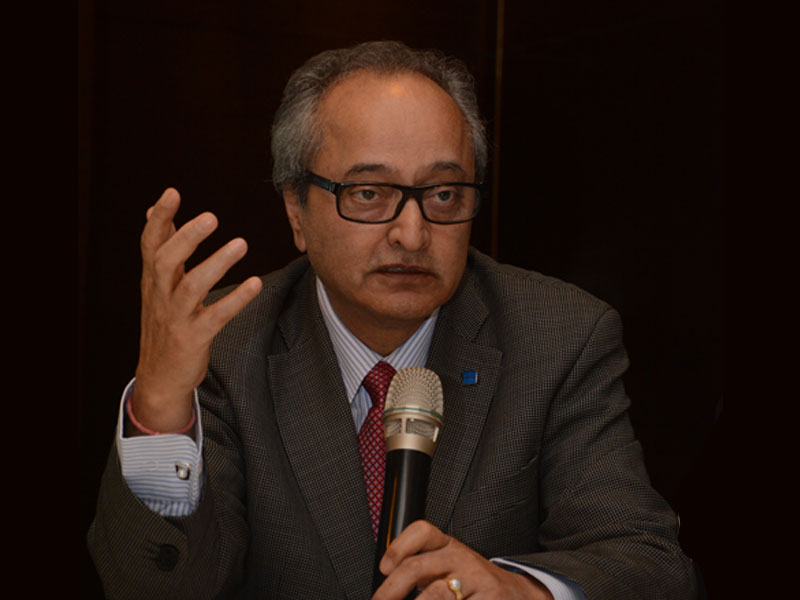
Horiba India, engaged in the production of testing and monitoring systems for automotive and engineering applications, recently unveiled a new product for industrial emission monitoring. On this occasion, Huned Contractor spoke to Dr. Jai Hakhu, the Chairman of the company about the company’s products, plans and strategies
Q. Could you brief us about Horiba India?

Horiba India Private Limited is a wholly-owned subsidiary of Horiba Japan, which is headquartered at Kyoto. Horiba was established in 1953. Listed at the Tokyo Stock Exchange, the company’s business operations are spread across the globe. With sales revenues of USD 1,400+ million, Horiba has employee strength of over 6,800. The automotive segment contributes largest to its sales revenues to the tune of about 37%. Globally it commands 80% market share of emission measurement systems. Apart from the automotive sector, Horibia is also engaged in analyzers pertaining to process and environment, medical, semiconductor and scientific segments.
Horiba India was started in 2006 as a separate legal entity and is engaged in five business verticals – automotive test systems, process and environment, medical, semiconductor and scientific. The headquarters are in New Delhi and we have been growing steadily at an average growth rate of more than 15% every year. With a workforce of about 300 employees, Horiba India’s sales revenues were about Rs 200 crore as on December 2015. Our vision is to grow the revenues to Rs 500 crore by 2020. Approximately a year back, the company set up the Horiba India Technical Center at Chakan to provide emission and engine testing services for the automotive sector.
Q. What is the new product that you have now launched?
We have introduced a flagship product range called the ‘ENDA – 5000’ series, a stack gas monitor system that is useful for compliance monitoring of the exhaust gas from the stack of a stationary source. It will be important for meeting the tighter Central Pollution Control Board (CPCB) norms. The product has been brought to India after recording grand success in Japan and China. It would be particularly effective in highly polluting industries like electric power, cement, iron and steel, pharmaceutical, fertilizers, refiners, pesticides, textiles and tanneries, to name a few. Since the system is designed to handle harsh process conditions it can be extremely useful for any industry that emits gaseous pollutants into the atmosphere to monitor its degree of pollution as prescribed by the pollution control boards.
Q. What is the pricing and target set for this product?
Based on the application the cost of product would be in the range of Rs 15-20 lakhs. Though a new entrant in this segment in India, Horiba is targeting to gain 20% market share in the next couple of years.
Q. What led to the launch of this product?
The central and the state pollution control boards have prescribed standards for various pollutants emitted by the industries as notified by the Environment Protection Act 1986. In such case, the compliance monitoring needs to be strengthened and needs to more accurate to ensure that emissions are within the stipulated norms. Therefore, the stack gas analyzer has become a necessity for such industries.
Q. What are the technical features of the Enda 5000?
These systems have a smaller footprint and use cross-flow modulated non-dispersive infrared (NDIR) detection with a magnet-pneumatic detection method that is inherently drift-free. The ENDA-5000 series are superior continuous analysis systems that are perfect in the difficult field of exhaust gas measurement, where measurement errors cannot be tolerated. The series features a new intuitive touch panel that makes every operation available with the touch of a single button. The ENDA-5000 series systems are also designed for faster, more efficient maintenance. They are ideal for a variety of uses, including monitoring steam boiler, refuse incinerator, and electric power generation plant emissions to assure pollution standards are being met.
Some of its salient features include:
- The innovative optical technology enables ENDA-5000 series measure up to five components which can be arranged any combination.
- The interference correcting sensor uses a unique interference filter to compensate for the influence of interference by other gases.
- In addition to the alert functions available in the past, the ENDA-5000 series feature extra alert functions. A continuous checking process can prevent the unit from stopping due to a failure, reducing the risk of failed measurements and assuring consistent operation.
- Corrections of SO2 measurements using wet base methods of the past took a great deal of time – about 15 minutes – but with the ENDA-5000 series’ dry base method, correction takes only three minutes.
- The ENDA-5000 series uses magneto-pneumatic detection to measure O2. Since the sample gas does not come into direct contact with the detector, there is no deterioration due to corrosion, which enables long-term stable operation. What’s more, thanks to our innovative technology in which ambient air is used as a carrier gas, there is no need for a carrier gas supply, which translates into lower costs.
Q. What is your test center at Chakan engaged in?
We are a leading supplier in the fields of engine test systems, driveline test systems, brake test systems, wind tunnel balances and emissions test systems. More than just the world’s leading supplier of emissions testing systems, Horbia ATS is able to provide total solutions to its customers, with full turnkey capability. From simple engine testing to sophisticated dynamic research and development for engines and drivelines – Horiba has a complete portfolio.
We not only supply the testing equipment to major automotive OEMs but our test center also provides a facility for OEMs to test their engines for emission levels.
Q. Why do you think the ENDA 5000 series will witness good sales in India?
So far there wasn’t much regulation about emissions in various industrial sectors, except for the automotive industry. But now that the CPCB has laid down tighter norms so that all industries will have to submit reports about emissions in 15-minute cycles, there will be a need for precision-driven emission monitoring systems. Granted that many large-scale industries did have such systems but the role was perfunctory and the equipment installed was not up to the mark. With accurate monitoring and reporting now being a mandatory factor, a company like Horiba, which is known for its quality systems across the world, will surely stand a good chance in the market. Also, Horiba is not new to India. We have been selling our products for over 25 years now and the brand is well-known.