
Industrial Flow Measurement Technologies Driving Precision, Efficiency and Process Reliability in Modern Manufacturing
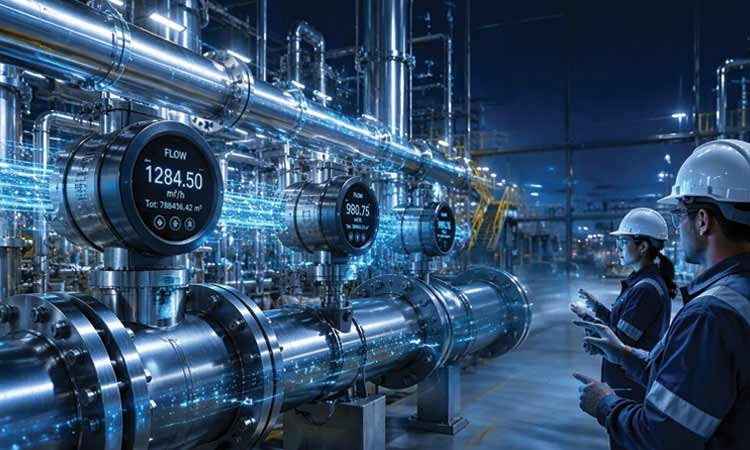
n today’s highly automated industrial environment, accurate measurement of process variables is fundamental to achieving operational excellence. Among these variables, flow measurement occupies a position of critical importance, as it directly influences product quality, process efficiency, energy consumption and plant safety. Whether it is measuring the flow of water in a treatment plant, steam in a power station, chemicals in a refinery, gases in a pharmaceutical facility or milk in a dairy processing unit, reliable flow measurement ensures that industrial processes operate within specified parameters.
Why Flow Measurement Matters
Flow measurement is the process of determining the quantity of liquid, gas or steam moving through a pipeline over a specified period. Accurate flow data enables industries to maintain process consistency, optimise resource utilisation, improve product quality and comply with environmental and safety regulations.
Incorrect flow measurements can have serious consequences. Overdosing chemicals, underfeeding raw materials, excessive fuel consumption or inaccurate custody transfer measurements can lead to significant financial losses and operational inefficiencies. Consequently, selecting the right flow measurement technology for each application is essential.
Beyond measuring flow rates, modern instruments also provide valuable insights into process performance, helping operators detect abnormalities, identify inefficiencies and improve overall plant productivity.
Evolution of Flow Measurement Technologies
Early flow measurement relied on mechanical devices such as positive displacement meters and turbine meters. Although reliable in many applications, these instruments required regular maintenance due to moving parts that were susceptible to wear.
Advances in electronics, sensor technology and digital signal processing have transformed flow measurement. Today’s instruments often contain no moving parts, resulting in higher reliability, longer service life and lower maintenance costs.
Modern flow meters incorporate microprocessors, digital communication protocols and self-diagnostic capabilities that continuously monitor instrument health while delivering highly accurate measurements under varying process conditions.
Types of Industrial Flow Meters
The choice of flow meter depends on the process fluid, operating pressure, temperature, required accuracy and installation conditions.
Electromagnetic Flow Meters are widely used for measuring conductive liquids such as water, wastewater, slurries and chemicals. Since they have no moving parts, they offer excellent reliability, low maintenance and minimal pressure loss. Their ability to handle dirty and abrasive fluids makes them popular in municipal and industrial water treatment plants.
Ultrasonic Flow Meters measure flow using sound waves. Transit-time ultrasonic meters are suitable for clean liquids, while Doppler ultrasonic meters can measure fluids containing suspended solids or air bubbles. Clamp-on ultrasonic flow meters are especially valuable because they can be installed externally without interrupting production, making them ideal for retrofit projects.
Coriolis Flow Meters are regarded as one of the most accurate flow measurement technologies available. Instead of measuring volume, they directly measure mass flow, making them particularly suitable for chemical processing, pharmaceutical manufacturing, food production and custody transfer applications. Many Coriolis meters also provide density and temperature measurements simultaneously.
Vortex Flow Meters operate by detecting vortices generated when fluid flows past a bluff body. They are commonly used for measuring steam, gases and clean liquids in industries where reliability and moderate accuracy are required.
Thermal Mass Flow Meters are extensively employed for gas flow measurement. They directly measure mass flow without requiring separate pressure and temperature compensation, making them particularly suitable for compressed air systems, natural gas distribution and industrial gas applications.
Differential Pressure Flow Meters, using orifice plates, Venturi tubes or flow nozzles, remain among the most widely used flow measurement methods due to their simplicity, versatility and established industrial standards.
 Smart Flow Measurement Systems
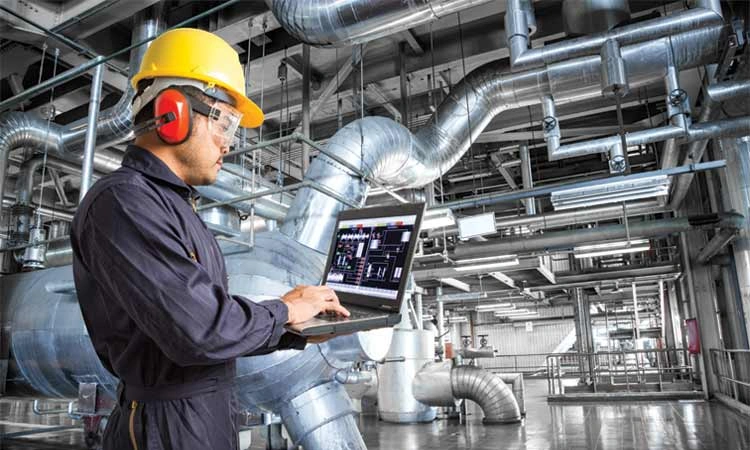
Modern flow meters have evolved into intelligent field instruments capable of much more than measuring flow.
Embedded microprocessors continuously analyse measurement quality, sensor health and operating conditions. Self-diagnostic features alert operators to sensor fouling, air entrainment, empty pipelines, electronic faults or abnormal operating conditions before they affect production.
Digital displays provide operators with instant access to flow rates, totalised flow, alarm status and diagnostic information, reducing troubleshooting time and improving maintenance efficiency.
Many smart flow meters support remote configuration, calibration verification and firmware updates, reducing the need for on-site maintenance.
Integration with Industrial Automation
Flow measurement technologies play a central role in digital manufacturing.
Today’s smart flow meters communicate seamlessly with Distributed Control Systems (DCS), Supervisory Control and Data Acquisition (SCADA) systems and Manufacturing Execution Systems (MES) using industrial communication protocols such as HART, FOUNDATION Fieldbus, Modbus, PROFINET, EtherNet/IP and Profibus.
Continuous real-time flow data enables automatic process adjustments, production monitoring and advanced process optimisation.
When integrated into IIoT platforms, flow measurement data becomes accessible across multiple production facilities, allowing centralised asset management, remote diagnostics and enterprise-wide performance analysis.
Cloud connectivity further enables predictive analytics, enabling engineers to identify long-term trends and optimise process performance.
AI and Predictive Analytics
Artificial Intelligence is adding another dimension to industrial flow measurement.
Machine learning algorithms analyse historical flow data together with pressure, temperature and equipment operating parameters to identify patterns that may indicate process inefficiencies or equipment degradation.
AI systems can detect gradual changes in pump performance, pipeline fouling, valve malfunction or sensor drift long before these issues become visible through conventional monitoring.
Predictive analytics allows maintenance teams to schedule interventions before failures occur, reducing downtime while extending equipment life.
AI also assists in optimising process parameters, reducing energy consumption and improving overall production efficiency.
Energy Management and Sustainability
Energy efficiency has become a strategic objective across industries, and flow measurement technologies contribute significantly to sustainability initiatives.
Accurate monitoring of steam, compressed air, cooling water, fuel gas and process fluids enables manufacturers to identify leaks, minimise wastage and optimise energy usage.
Flow measurement also supports water conservation by monitoring consumption, recycling systems and wastewater treatment processes.
Improved resource utilisation not only lowers operating costs but also reduces environmental impact and supports corporate sustainability goals.
Applications Across Industries
Industrial flow measurement technologies serve virtually every manufacturing sector.
In oil and gas, they ensure accurate custody transfer, pipeline monitoring and refinery operations. Chemical industries depend on precise flow control for batching, mixing and reaction processes. Pharmaceutical manufacturers require hygienic flow meters that comply with stringent regulatory standards while ensuring product consistency.
Food and beverage manufacturers use sanitary flow meters for ingredient dosing, beverage production and cleaning systems. Power plants rely on accurate steam and cooling water measurement to maximise efficiency, while water and wastewater treatment facilities employ electromagnetic and ultrasonic flow meters for distribution, filtration and treatment processes.
Mining, pulp and paper, textiles and semiconductor manufacturing also rely heavily on specialised flow measurement solutions designed to meet their unique process requirements.
Future Outlook
The future of industrial flow measurement lies in greater intelligence, connectivity and autonomy. Wireless sensors, edge computing, cloud-based analytics and AI-driven diagnostics will continue to transform flow meters into intelligent assets capable of supporting self-optimising industrial processes.
As industries pursue higher productivity, better quality and sustainable operations, flow measurement technologies will remain indispensable. More than simply measuring the movement of fluids, modern flow meters provide the real-time intelligence needed to optimise processes, conserve resources and improve decision-making. In the era of digital manufacturing, industrial flow measurement has become a strategic enabler of efficiency, reliability and operational excellence.