

How EXOR is Rewiring India’s Manufacturing DNA
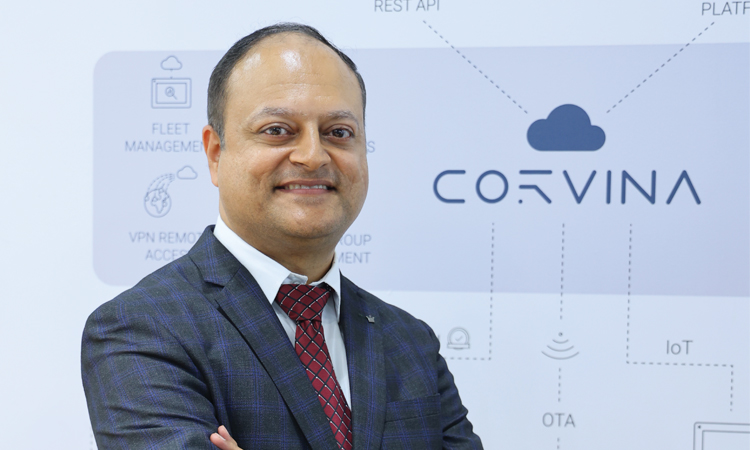
General Manager - EXOR India & Head of Sales
Middle East & China
As the race toward Industry 4.0 intensifies, the real differentiator is no longer mere automation—but intelligent, connected, and adaptive manufacturing ecosystems. In this evolving landscape, EXOR stands out by translating the promise of digitalization into practical, scalable, and high-impact solutions tailored for India’s diverse industrial fabric. By seamlessly converging edge computing, IIoT, and cloud-driven analytics, EXOR is enabling manufacturers—especially SMEs—to leapfrog legacy constraints and unlock measurable gains in productivity, efficiency, and resilience. This cover story delves into how EXOR’s unified hardware-software architecture and “edge-first” philosophy are not just modernizing factories, but fundamentally reshaping how decisions are made, value is created, and competitiveness is sustained in the new industrial era. Excerpts from an interaction with the leadership at EXOR India:
Q1 EXOR has been at the forefront of industrial digitalization—how do you define your core mission in enabling Industry 4.0, especially in emerging markets like India?At EXOR India, our core mission is simple: empower Indian manufacturers to turn factories into smart, resilient operations that compete globally without breaking the bank. In markets like ours, where SMEs dominate and resources are tight, Industry 4.0 isn’t about fancy buzzwords—it’s about practical digitalization that boosts uptime, cuts waste, and scales with growth. We’re bridging the gap for Indian plants in different processes like textiles, pharma, packaging, food processing etc. by delivering rugged, affordable edge solutions via Exor’s XPlatform — a unified IoT enabled ecosystem that integrates HMIs, gateways, and IPCs for seamless connectivity — and CORVINA, our cloud platform enabling real-time data visualization, analytics, and predictive maintenance. These tools work hand-in-glove with local engineering manpower and skill sets, ensuring quick deployment and measurable ROI.
Q2 The shift from centralized automation to decentralized, edge-driven architectures is accelerating—how is EXOR shaping this transition at a strategic level?
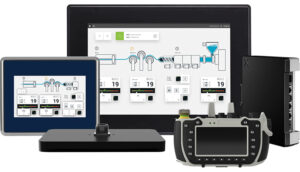
We’re leading this shift strategically by embedding intelligence right at the edge—think about our eX200 & eX700 HMIs and MicroEdge and xEdge gateway series that process data locally, reducing latency and dependency on cloud. In India, where connectivity can be patchy, we’ve partnered with local integrators to deploy hybrid models: centralized oversight via CORVINA.io cloud, but edge autonomy for critical ops. This isn’t just tech; it’s a roadmap we’ve rolled out in many places, training teams to think “decentralized by default.”
Q3 Your ‘intelligent edge platforms’ go beyond data collection to real-time decision-making—how do you see this redefining the role of control systems on the shop floor?
Our xPlatform turn HMIs from passive screens into proactive brains—running AI models for predictive maintenance or adaptive scheduling on-device. On the Indian shop floor, this redefines controls from reactive firefighting to autonomous teams. For example, a machine spots a vibration anomaly, adjusts RPMs instantly, and alerts the operator and manager via teams, telegram message. It frees engineers for value-add, slashing downtime and increasing production.
Q4 With solutions like the CORVINA platform and X Platform ecosystem, how is EXOR bridging the traditionally siloed worlds of IT and OT?
Our CORVINA platform and xPlatform ecosystem serve as the vital link, using CORVINA APIs & intuitive Node-RED tools to unite IT analytics with OT operations effortlessly. For Indian factories battling data disconnects, this means an engineering plant in south now overlays live production metrics onto their SAP system, improving throughput by 25-30%. We make IT-OT teamwork natural and powerful, unlocking insights that drive smarter decisions every day.
Q5 Edge computing is often described as a ‘new mindset’ rather than just a technology—what cultural and organizational shifts must manufacturers embrace to fully leverage it?
Spot on—it’s a mindset shift from “top-down control” to “empowered edges.” Indian manufacturers must move from siloed operators to cross-skilled teams, embracing data literacy via quick upskilling. Organizationally, it’s about agile pilots over big-bang overhauls—start with one line, measure wins, scale. The cultural win? Operators owning decisions build pride and retention in our talent-hungry market.
Q6 In practical terms, how do EXOR’s IIoT and edge solutions transform critical production phases—can you share measurable gains in productivity, flexibility, or cost efficiency?
Taking an example from a plant in Maharashtra, our IIoT gateways on the machine enabled real-time product parameters like length, surface roughness based quality are measured and adjusted; boosting productivity by 20-25% (increase in OEE). Flexibility jumped too — recipe changes now take minutes, not hours. Cost-wise, energy savings hit 15-18% via predictive shutdowns, and cut scrap by 10-15%, saving in lakhs annually. These aren’t lab stats; they’re live from the factory floor.
Q7 Indian manufacturers often operate with legacy systems—how does EXOR ensure seamless integration while enabling future-ready digital transformation?
Connecting legacy systems is our specialization, having a wonderful software like JMobile for our gateways & HMIs, which supports over 220 protocols out-of-box, retrofitting PLCs from the ‘90s into CORVINA without forklift upgrades. We use “brownfield blueprints”: assess site, deploy edge nodes as translators, then layer AI. A Pune-based auto parts maker integrated 20-year-old Siemens PLC in weeks, now IIoT-ready. It’s evolution, not revolution — future-proof without capex shocks.
 Q8 In a crowded automation landscape, what differentiates EXOR’s hardware-software stack—from HMIs and IPCs to IoT gateways—in delivering a unified digital architecture?
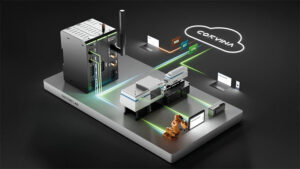
Our stack is “born unified” —fanless, IP66/67/69K HMIs with built-in IIoT, running Linux kernel, all orchestrated by CORVINA’s no-code flows. Unlike fragmented rivals, it’s one ecosystem and India-tuned durability (up to 70°C heat, dust-proof, etc.). Clients love the TCO, hardware lasting 10+ years, future software updates free, delivering true digital threads from sensor to cloud.
Q9 With the convergence of AI, 5G, and IIoT shaping smart factories, what emerging trends will define the next decade of industrial automation?
The next decade is expected to be AI-orchestrated twins for zero-defect lines, 5G slicing for ultra-reliable wireless edges, and generative AI for auto-optimizing recipes. In India, expect “swarm intelligence”—meshed devices self-healing networks—and sustainable AI. We’re prepping with CORVINA’s AI toolkit, eyeing 5G to make factories smart and hyper-flexible.
Q10 Looking ahead, do you see industrial automation evolving into fully software-defined manufacturing ecosystems—and what role will EXOR play in that journey?
Yes, 100%—automation will be software-defined, like SDN in telecom: configs via code, hardware as interchangeable appliances. EXOR will be the enabler, with xPlatform as the neutral orchestrator—industrial standard, edge AI models anyone can deploy. In India, we’ll drive this via local ecosystems, skilling engineers, turning into “Smart Make in India.”