Engineering Sustainable Heat transfer Solutions for a Greener Tomorrow
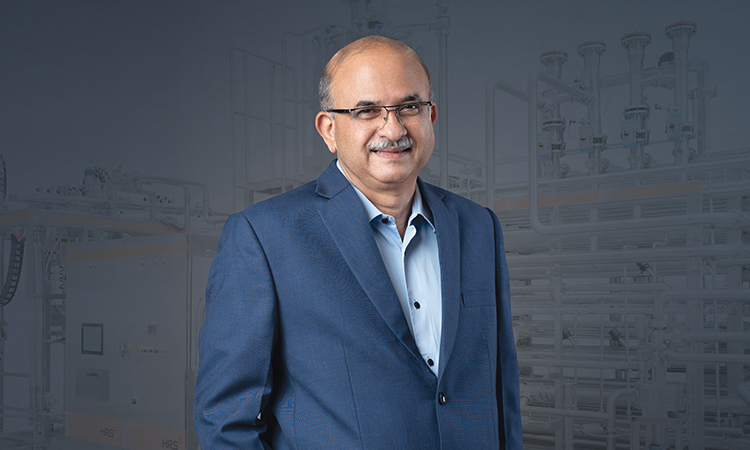
Chairman & Managing Director HRS Process Systems Ltd.
At the heart of every energy-efficient process lies intelligent heat transfer—and none understands this better than HRS Process Systems Ltd. (HRS PSL). Under the visionary leadership of V. Gokul Das, HRS has evolved into a name synonymous with innovation, sustainability, and engineering excellence in process systems. With pioneering futuristic products, the company continues to redefine efficiency benchmarks across industries.
From chemical process to enabling waste-to-energy and clean hydrogen projects to ensuring hygienic and energy-efficient food processing, HRS PSL’s sustainable ethos permeates every aspect of its operations. Guided by its enduring philosophy—“Once a customer, customer for life”—the company stands as a trusted partner to industries worldwide, translating technology into tangible environmental and economic value. Excerpts from an interview with Engineering Review:
Q1 You often describe “sustainable growth” as the ethos of HRS India. Can you expand on how sustainability shapes your long-term strategic roadmap—not just in product design but in manufacturing, partnerships, and market positioning?
The key to long term strategy is enabling sustainable growth. At HRS partnering with customers on one hand, and vendors on the other, is key to our growth. Sustainability inherently means “Sustainable relationship” with all stake holders, including our employees. We believe delivering on our commitments enables us win business and customer loyalty. We understand customer requirement and expectation from process and provide solutions which help customer deliver quality product over decades. Many of our product development or application engineering is in partnership with our customers. Our growth plans are based on these foundations.
Q2 Ecoflux corrugated-tube heat exchangers and products like UNICUS® and ROTEX were developed at your R&D centre in Murcia. What upcoming innovations or next-generation technologies are you most excited about, especially for thermo-sensitive aliments and pharmaceuticals?
HRS has always focused on innovative products and application engineering to enable our customers have effective energy utilization while processing. We are working on scraped surface heat exchanger for viscous and particulates for the food processing and allied industry. These are also useful in nutraceutical and probiotic processing.
Application engineering is key to enabling new process. We are working in many areas for thermal processing of heat sensitive products. Two prominent segments of our focus today are municipal sludge processing and clean energy applications.
We are working with one of India’s biggest municipal corporations for pasteurization of municipal sludge for enabling further conversion to energy. We are currently executing similar heat transfer solution for companies in Australia and Singapore. Globally HRS has built application for processing of food waste, meat processing industry waste and other kinds of waste to energy solutions. Our heat exchanger finds applications in pasteurization (thermal treatment) of these wastes before they are processed to produce energy.
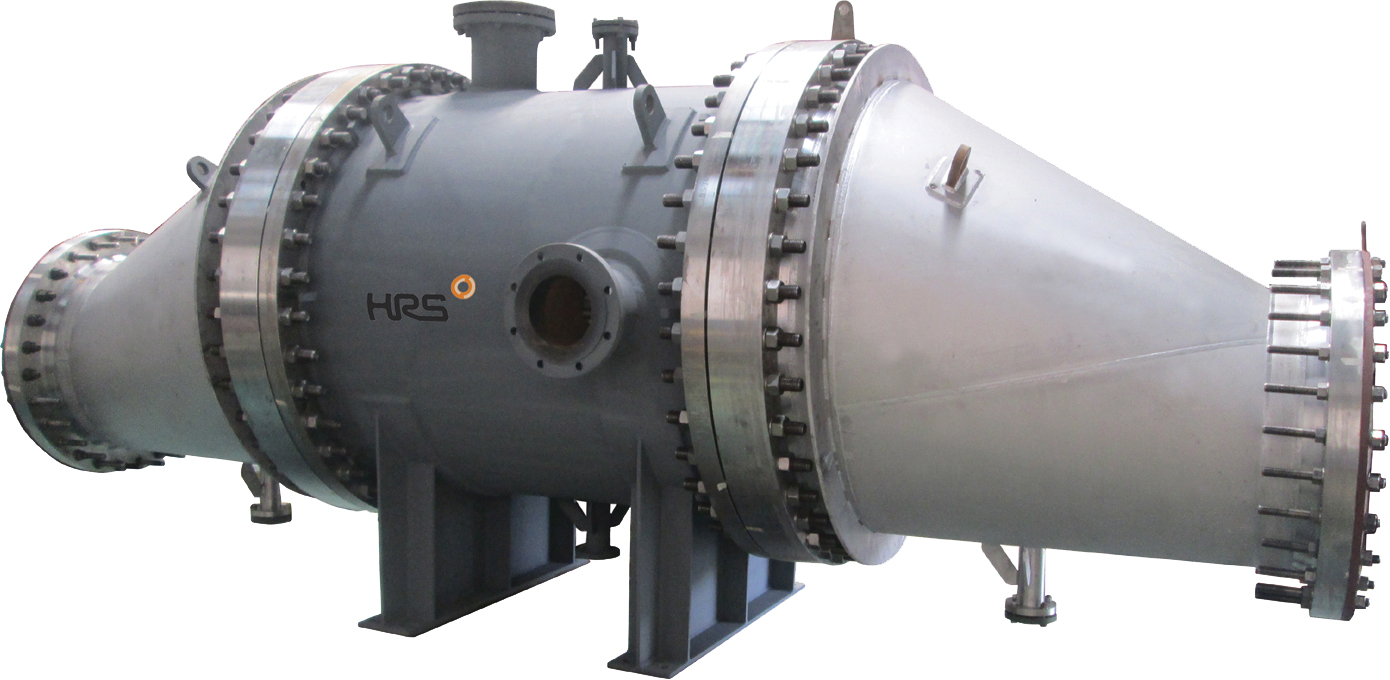
On clean energy front, HRS is working on energy efficient heat exchangers for green hydrogen. We have supplied our Ecoflux* heat exchangers to an EPC company in India with global operations; for their green hydrogen plant. This is the first indigenously designed electrolyzer green hydrogen plant. Our heat exchangers are used for hydrogen and oxygen gas cooling and other heat recovery process. The pilot units have been very successful and we are working on various commercial models, some in operation.
 Q3 From your 2020–21 outlook you expected mid-2021 growth across segments like pharma, agrochem and food. As of now, how has the demand trajectory evolved in India and in your export zones? And which segments are leading post-pandemic recovery?
Post pandemic recovery had spurt in demand in various product segments, whereby many companies including HRS; rode the wave of growth. We have seen one of the highest growths in our business in chemical process and food industries segment. However, 2024 was a year of correction globally; and we were also impacted. Currently we observe growth in demand in both domestic and export segments.
Free trade agreements (FTA) with various countries will produce the spurt in need and better movement for Indian manufacture goods in these markets. We believe recent GST reduction will help further growth in demand for our products and services in domestic as well as global markets.
Q4 You emphasized “Once a customer, customer for life” alongside educating clients on design and total cost of ownership. Can you share a recent example where this customer-embedded approach led to measurable value or new market wins?
“Once a customer, customer for life” has been out moto right from day one. We are very proud and happy to state that our business growth is attributed to this very philosophy. Every year we receive business from customers who have been with us in the past and the share is increasing day by day. We also experience the goodwill of the customers who share the experience and thereby we have new customer business.
Some of our recent foray into clean energy solutions, sludge pasteurization, nutraceuticals, dairy, amongst others, has been attributed to such relationship. One of our customers asked us to design solution for concentration of a fruit plant byproduct to recover value added material. The plant is in commissioning now.
Q5 Globally and domestically, heat exchangers remain a competitive space. What do you consider HRS’s unique value—technically, operationally or financially—that keeps you ahead of conventional shell-and-tube or plate competitors?
In today’s world, all markets are very competitive. To sustain and grow one needs to have a value preposition which is backed by good track record. At HRS we have always believed in committing what we can deliver and delivering on the commitments. This has helped us keep a step ahead of our competitor. Needless to say, we need to provide workable solution of best quality and competitive price.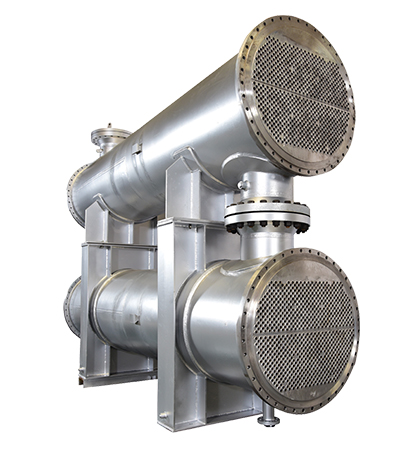
Our products and solutions are designed to deliver on the customer requirements time and again. We also innovate our production processes to ensure we have better quality products at competitive price. We strive to be technically agile, operationally efficient and financially stable to be able to service all our customers.
Q6 You’ve supplied heat exchangers in high-alloy steels and exotic metals across industries like chemical, oil, pharma and food. How do you evaluate and decide material-grade selection for new applications—and do you foresee demand growth in any particular alloy category?
HRS has built manufacturing processes to fabricate heat exchanger in high alloy steels and exotic metals to service applications across industry spectrum. We have worked in various grades of stainless steel and materials like high nickel alloys, AL6XN, hastelloy, duplex, titanium and even tantalum. Customers value this expertise and with our knowledge of fluid compatibility with different materials, we guide customers on most suitable selection for their applications.
The customer then evaluates the best option and decides on material for their application. We foresee a demand growth in some of these alloys based on process requirement, whereby customer is looking at long-term solution and working on total cost of ownership over useful plant life.
Q7 With water scarcity and rising ambient temperatures, you highlighted air-cooling and heat recovery as future directions. How is HRS positioning itself for the broader shift toward sustainable thermal systems across sectors?
Water scarcity and rising ambient temperatures are a sign of global warming. Being in the heat transfer business we are at the forefront of working on solutions for enhancing thermal efficiency. Companies are looking at more efficient energy utilization and utility consumption, so that their energy cost can reduce with added benefit of reduction in environment impact. We design heat exchangers for efficient heat recovery with close loop water recycle solution for applications where water is scarce.
Both cooling media need attention – water needs to be conserved and air used for cooling purpose needs to work at lower temperature to reduce global warming. Ecoflux * Corrugated Tube Heat Exchanger provides more effective heat transfer, whereby we can balance the cost per unit area for heat transfer versus the utility requirement, thereby help in a small way in reducing global warming.
 Q8 You’ve cited costs of ownership, product flexibility and regulatory policies as key operational challenges. How are you tackling rising material costs, supply‐chain volatility or fluctuating regulatory norms—especially in India compared to export markets?
Navigating through operational challenges has been one of our priorities in the growth journey. We believe in managing material cost with better procurement practices advance business tracking and product flexibility in design. We also look at standardizing product processes and efficient managing of supply chain to keep cost in control. We are also working on enhancing throughput with small increment in cost which helps in reducing the total cost.
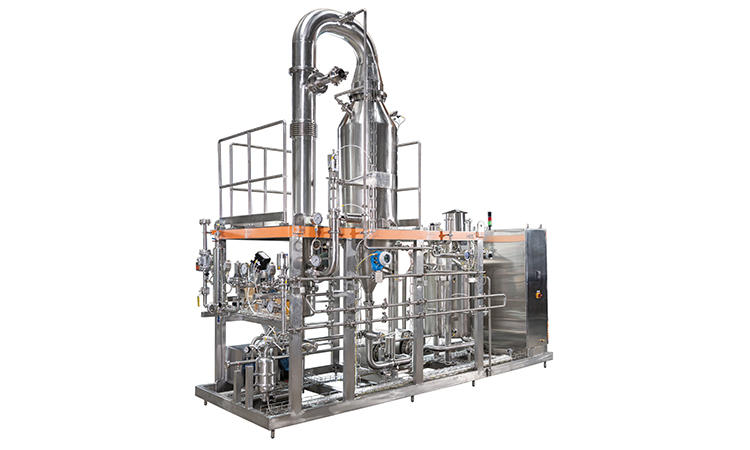
Q9 Products like the HRS Monobloc Aseptic Steriliser, Hygienic Piston Pump, and ParaDice systems reflect a strong thrust into hygienic food processing. How are you bridging engineering excellence with food-safety standards—and what’s next in that line?
Thermal processing is key to ensuring hygienic food products. The key to design is in ensuring no loss of taste or aroma in the process, inactivation of any pathogen and knowledge of heat sensitive product behaviour. We understand the requirements of various food-safety standards based on our global foot prints and design processes to comply with these standards. We are actively upgrading the process control system to ensure better control in maintaining the thermal treatment and avoid impact on product quality, with continuous monitoring and corrective action. We are also actively pursuing new equipment design for enhancing productivity and quality.
Q10 How do you balance technical innovation, customer engagement, and business growth? Could you share a leadership lesson or new initiative you believe will define HRS’s next decade?
Profitable business growth comes from customer engagement and innovation in product and services. At HRS we are investing in enabling our teams to have better understanding of customer (market) requirement and building sustainable solutions. We have the same passion for all customers – small or big – our solutions must satisfy their process requirement. We have to build processes that will help the global community, society as a whole and not just one customer. We firmly believe, innovation and value-add will define next decade of growth for HRS.