

Battery-Less Absolute Sensors: The Next Step in Industrial Automation
Why Battery, Less Sensors Are Gaining Ground in Smart Manufacturing

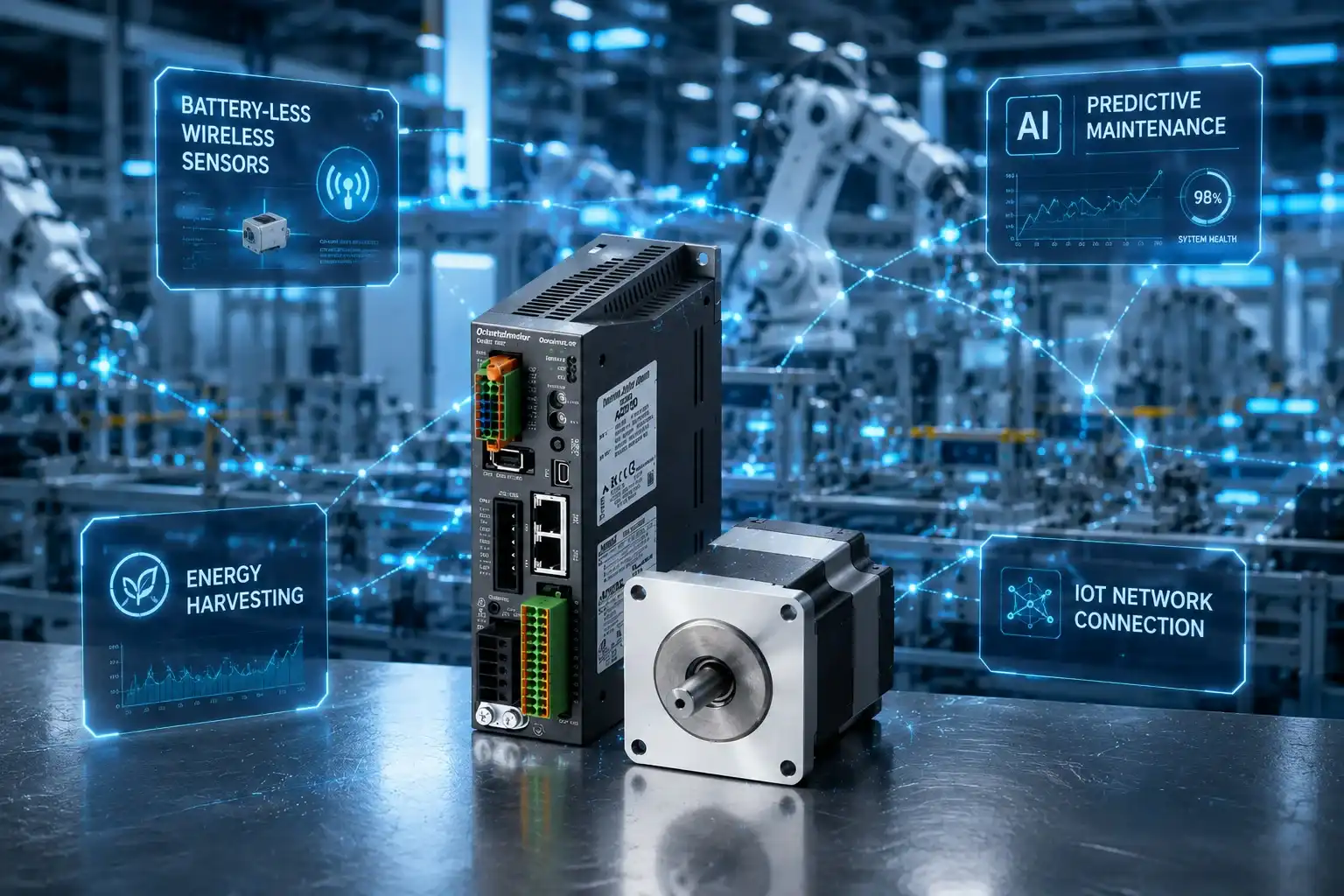
Traditional wired sensors often rely on batteries or complex energy-harvesting systems. Over time, these systems tend to create certain challenges, such as limited lifespans, environmental concerns, complex wiring, high maintenance costs, and restricted applications, further hindering their large-scale adoption and diffusion.
Battery-less sensors help overcome these bottlenecks.
The modern Battery-less sensors usually harvest ambient energy, light, motion, heat, or radio waves to operate, eliminating the need for battery replacement. This makes them attractive for widespread sensor networks, where changing batteries can be time-consuming, impractical, or costly. It proves to be more maintenance-friendly and a reliable solution that supports continuous operation while reducing overall system complexity.
The widespread adoption of battery-free sensors is driven by advancements in energy-harvesting technologies, increased industry awareness, and growing pressure for more sustainable, long-lasting solutions.
Moreover, the demand for smart factories, smart buildings, and industrial automation is boosting its demand, since battery-free sensors enable scalable deployment without high maintenance.
As per reports, the global battery-free sensors market size is projected to reach USD 369.5 million by 2033, growing at a CAGR of 28.5%. The integration of these sensors with advanced artificial intelligence (AI) and the increasing competitive pressure to achieve operational efficiency will further drive its market growth and demand.
That’s not all! The regulatory landscape is also evolving to support the adoption of battery-free sensor technologies. Regulations encouraging electronic waste reduction, energy efficiency, and sustainable solutions are creating favorable conditions for market growth.
But, despite strong growth potential, the battery-free sensors market faces several challenges. One of the key restraints is the limited energy availability, which can constrain the performance of sensors in data-intensive or long-range applications. The upfront cost of integrating energy harvesting components and the complexity of designing reliable passive sensing systems for harsh environments may deter adoption in cost-sensitive sectors.
However, as ongoing scientific research deepens and tech advances, the battery-free sensors market is likely to benefit from a broader range of applications and improved sensor functionalities, further driving market growth.
For more information visit: Oriental motor