
State-of-the-art Motion Control Systems Enhance Productivity and Precision
Why Motion Control Is at the Heart of Modern Smart Manufacturing

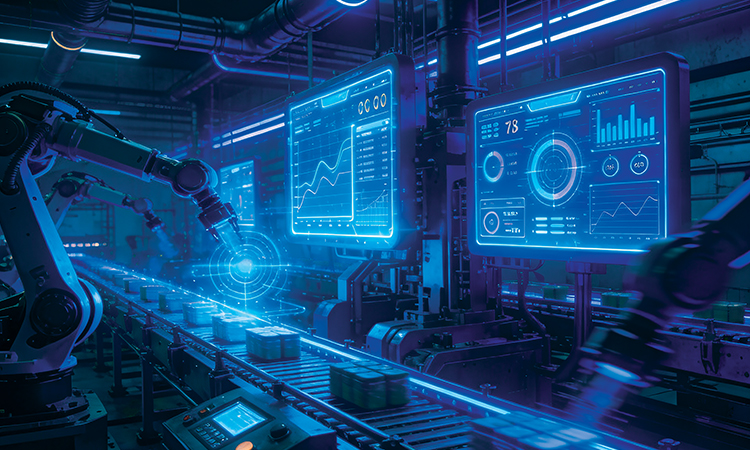
In the era of advanced manufacturing, motion control systems have become indispensable for achieving high productivity and exceptional precision. As industries move towards automation, digitalization, and smart factories, the demand for accurate, reliable, and high-speed motion systems has grown significantly. From CNC machine tools and robotics to semiconductor fabrication and packaging lines, state-of-the-art motion control technologies are redefining how machines operate and how products are made.
Understanding Motion Control Systems
Motion control systems are responsible for regulating the movement of machines and mechanical components. They control parameters such as position, speed, acceleration, and torque through an integrated network of controllers, drives, motors, and feedback devices like encoders and sensors. At its core, motion control ensures that every movement is precise and synchronized. Whether it is the cutting path of a machining center or the movement of a robotic arm, the system ensures that operations are carried out exactly as programmed. Modern motion control systems have evolved far beyond basic control functions, offering multi-axis coordination and real-time adjustments for complex industrial applications.
Precision as a Competitive Advantage
Precision is one of the most critical aspects of motion control systems. Today’s advanced systems can achieve extremely fine positioning accuracy, often at micron or sub-micron levels. This capability is essential in industries where tolerances are extremely tight, such as aerospace, medical devices, electronics, and precision engineering. High precision ensures that components are manufactured consistently and meet stringent quality standards. It eliminates variations that can lead to defects or product failure. Moreover, precision motion control enhances repeatability, enabling machines to return to the same position accurately over multiple cycles. This consistency is vital in high-volume production environments where uniformity is key.
Driving Productivity Through Speed and Synchronization
While precision is critical, productivity is equally important in modern manufacturing. State-of-the-art motion control systems are designed to deliver high-speed operations without compromising accuracy. This balance between speed and precision allows manufacturers to significantly reduce cycle times and increase output. Multi-axis synchronization is a major contributor to productivity. Advanced systems coordinate the movement of multiple machine components simultaneously, ensuring smooth and efficient operation. For example, in CNC machining, synchronized axes enable complex contouring and high-speed cutting, improving both efficiency and product quality. In automated production lines, motion control systems minimize idle time and optimize workflows. By ensuring seamless coordination between different stages of production, these systems help achieve higher throughput and better equipment utilization.
Integration with Industry 4.0
The integration of motion control systems with Industry 4.0 technologies has transformed their capabilities. Modern systems are equipped with connectivity features that allow them to communicate with other machines and centralized control platforms. This connectivity enables real-time monitoring, data collection, and analysis. With the help of advanced analytics and artificial intelligence, motion control systems can optimize performance and detect anomalies before they lead to failures. Predictive maintenance is a key benefit, allowing manufacturers to address potential issues proactively and avoid costly downtime. Smart motion systems can also adapt to changing conditions, automatically adjusting parameters to maintain optimal performance. This adaptability enhances both productivity and reliability, making motion control a cornerstone of smart manufacturing.
Enhancing Reliability and Reducing Waste
One of the significant advantages of advanced motion control systems is their ability to improve reliability and reduce waste. Precise control ensures that materials are processed correctly the first time, minimizing errors and reducing the need for rework. In addition, advanced technologies such as direct-drive motors and frictionless components reduce mechanical wear and tear. This leads to longer equipment life and lower maintenance requirements. Reduced vibration and smoother operation also contribute to better product quality and system stability. By minimizing scrap and improving consistency, motion control systems play a vital role in enhancing overall operational efficiency.
Flexibility for Modern Manufacturing Needs
Today’s manufacturing environment demands flexibility to accommodate varying product designs, customization requirements, and shorter production cycles. State-of-the-art motion control systems are highly programmable, allowing manufacturers to easily modify motion profiles and adapt to new requirements. This flexibility is particularly valuable in industries such as automotive and consumer electronics, where product designs frequently change. Motion control systems enable quick changeovers and efficient handling of different product variants, supporting mass customization without compromising efficiency. Scalable architectures also allow manufacturers to expand or upgrade their systems as needed, ensuring long-term adaptability and cost-effectiveness.
Energy Efficiency and Sustainability
Energy efficiency has become a key focus area in industrial operations, and motion control systems are contributing significantly to sustainability efforts. Modern systems are designed to optimize energy consumption through efficient drives, intelligent control algorithms, and regenerative technologies. For instance, regenerative braking allows energy generated during deceleration to be reused, reducing overall power consumption. Optimized motion profiles ensure that energy is used only when necessary, avoiding unnecessary consumption. These energy-saving features not only reduce operational costs but also help manufacturers meet environmental regulations and sustainability goals.
Applications Across Diverse Industries
State-of-the-art motion control systems are used across a wide range of industries, demonstrating their versatility and importance. In machine tools, they enable precise cutting, drilling, and milling operations. In robotics, they ensure accurate and repeatable movements for tasks such as assembly, welding, and material handling. In the semiconductor industry, motion control systems support ultra-precision positioning required for chip manufacturing and inspection. Packaging and logistics industries rely on motion control for high-speed, synchronized operations, while heavy engineering sectors use these systems to handle large and complex components with precision. Across all these applications, motion control serves as a critical enabler of productivity and quality.
Challenges in Implementation
Despite their numerous benefits, implementing advanced motion control systems comes with certain challenges. Achieving high precision requires careful selection and integration of components, including sensors, controllers, and mechanical elements. External factors such as temperature variations, vibration, and mechanical disturbances can affect system performance and must be managed effectively. Additionally, the complexity of modern motion systems requires skilled personnel for installation, operation, and maintenance. Manufacturers must also consider the cost of implementation and ensure that the benefits outweigh the investment. Proper planning, training, and system design are essential to overcome these challenges and maximize the potential of motion control systems.
The Future of Motion Control
The future of motion control systems is shaped by continuous innovation and technological advancements. Emerging trends such as AI-driven control algorithms, edge computing, and increased computational power are enhancing system capabilities. Miniaturization of components is enabling more compact and efficient designs, while advancements in sensor technology are improving accuracy and responsiveness. The integration of digital twins and simulation tools allows manufacturers to optimize system performance before implementation. As industries move towards fully autonomous and connected factories, motion control systems will play an even more critical role. They will not only execute precise movements but also contribute to decision-making processes, making manufacturing smarter and more efficient.
Conclusion
State-of-the-art motion control systems have become fundamental to modern manufacturing, enabling industries to achieve new levels of productivity and precision. By combining accuracy, speed, flexibility, and intelligence, these systems empower manufacturers to meet the demands of a competitive global market. As technology continues to evolve, motion control systems will remain at the forefront of industrial innovation, driving efficiency, improving quality, and supporting sustainable manufacturing practices. For organizations aiming to stay ahead, investing in advanced motion control is not just an option-it is a strategic necessity.