

Are We Self-Relaint in Cable Manufacturing
India Makes the Cables. But Who Makes the Materials Inside Them?

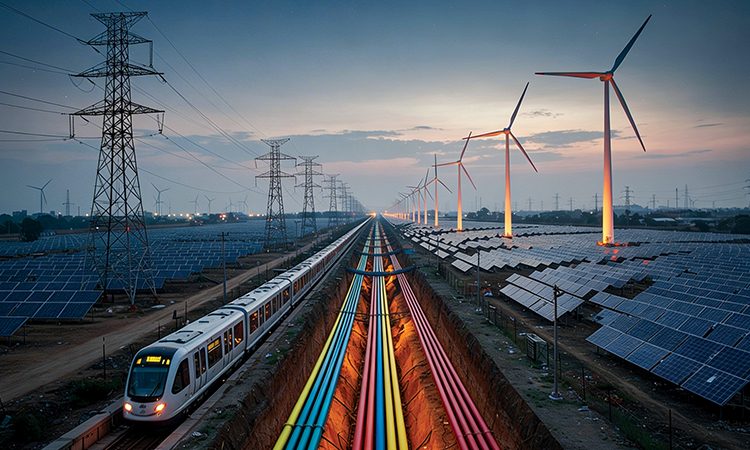
The cable and wire industry forms the backbone of modern infrastructure. From power transmission and telecommunications to industrial automation and consumer electronics, cables and wires play a critical role in connecting systems and enabling efficient energy and data transfer. In a rapidly developing economy like India, the demand for reliable cabling solutions has grown significantly with the expansion of power networks, urban infrastructure, renewable energy projects, and digital connectivity. Over the past two decades, India has made remarkable progress in strengthening its cable and wire manufacturing capabilities.
Today, the country is home to several globally competitive manufacturers supplying a wide range of products—from power cables and control cables to optical fiber and specialized industrial cables. While India has achieved a considerable degree of self-reliance in cable production, certain areas still rely on imported raw materials and advanced components. Nevertheless, the industry is steadily moving toward greater technological capability and global competitiveness.
A Rapidly Growing Industry
The Indian cable and wire industry has witnessed strong growth, driven by increasing electrification, infrastructure expansion, renewable energy installations, and industrial development. Government initiatives such as rural electrification, smart cities, railway modernization, and expansion of renewable energy capacity have further accelerated demand. Today, India produces a wide range of cables including low-voltage, medium-voltage, and high-voltage power cables, instrumentation cables, control cables, communication cables, and optical fiber cables. The industry also supplies specialized cables designed for demanding sectors such as oil & gas, defence, railways, automotive, and heavy engineering. Leading manufacturers such as Polycab India Limited, RR Kabel, Apar, KEI Industries Limited, and Finolex Cables Limited have expanded their production capacities significantly in recent years. Many of these companies have also invested heavily in research, testing facilities, and automation technologies to improve product quality and manufacturing efficiency.
Strength in Domestic Manufacturing
India today possesses a strong manufacturing base for cables and wires. Modern manufacturing plants equipped with advanced extrusion lines, stranding machines, insulation technologies, and testing laboratories are capable of producing cables that meet international standards.
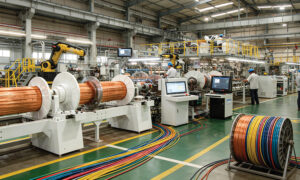
The industry manufactures a wide range of products including:
• Power transmission and distribution cables
• Building wires and household electrical cables
• Control and instrumentation cables
• Data and communication cables
• Fire-resistant and flame-retardant cables
• Specialty cables for industrial automation and robotics
With continuous investments in technology and quality assurance, Indian manufacturers are now capable of producing high-performance cables that meet the requirements of critical sectors such as power plants, metro rail systems, and renewable energy installations. Many manufacturers also comply with international standards such as IEC, UL, and BS specifications, allowing them to export their products to global markets.
Export Opportunities and Global Presence
The Indian cable and wire industry has steadily expanded its global footprint. Indian manufacturers today export cables to markets in the Middle East, Africa, Southeast Asia, Europe, and the Americas. Competitive pricing, improving product quality, and strong manufacturing capacity have helped Indian companies gain recognition in global markets. Large infrastructure projects in developing economies often rely on Indian cable suppliers due to their ability to deliver quality products at competitive costs. Exports are also supported by India’s strong engineering ecosystem and well-established supply chain networks for electrical equipment and components.
Raw Material Dependence
While India is largely self-reliant in cable manufacturing capabilities, the industry still depends on certain imported raw materials. Copper and aluminum are the primary conductors used in cable production, and fluctuations in global metal prices can significantly affect manufacturing costs. In addition, certain specialized insulation materials, polymers, and high-performance compounds used in advanced cable designs are often sourced from international suppliers. Semiconductor-based components used in smart and communication cables may also depend on imported technologies. However, efforts are underway to strengthen domestic supply chains and reduce dependence on imports through initiatives aligned with the broader “Make in India” vision.
Technological Advancements in Cable Design
The cable industry is also experiencing technological advancements as industries demand higher performance and reliability. Modern cables are designed to withstand extreme environmental conditions, electromagnetic interference, and mechanical stresses. For instance, fire-survival cables used in critical infrastructure such as airports, hospitals, and metro rail systems must continue functioning even during fires. Similarly, cables used in renewable energy installations must withstand ultraviolet exposure, temperature fluctuations, and mechanical vibrations. Advances in insulation materials, shielding techniques, and conductor design are helping manufacturers produce cables that offer higher efficiency, longer life, and improved safety. Automation and digital manufacturing technologies are also being adopted to improve quality control and production consistency.
Role in Emerging Sectors
The growth of several emerging sectors is creating new opportunities for the cable and wire industry. Renewable energy projects such as solar and wind farms require specialized power cables capable of operating under harsh outdoor conditions. Electric vehicle infrastructure is another important area where specialized charging cables and high-performance power cables are required. Similarly, data centers and telecommunications networks depend on high-speed communication cables and optical fiber systems. The rapid expansion of industrial automation and smart manufacturing also requires high-performance control cables and data transmission systems capable of supporting modern industrial networks.
Challenges Facing the Industry
Despite its strong growth, the cable and wire industry faces several challenges. One of the most significant issues is intense competition, particularly in the low-voltage and building wire segments where many small manufacturers operate. Price fluctuations in copper and aluminum can also affect profitability and make cost management difficult for manufacturers. Maintaining consistent quality across large production volumes remains another critical challenge. Additionally, the presence of substandard or counterfeit products in certain market segments can affect the reputation of the industry and create safety concerns. To address these challenges, industry stakeholders are focusing on improving quality standards, strengthening certification systems, and promoting awareness among buyers about the importance of certified products.
Moving Toward Greater Self-Reliance
India has already achieved substantial self-reliance in cable manufacturing capacity, and the industry continues to strengthen its technological capabilities. Investments in advanced manufacturing equipment, research and development, and testing infrastructure are helping manufacturers develop more sophisticated products. Government policies encouraging domestic manufacturing and infrastructure development are also expected to support further growth of the industry. With increasing demand from sectors such as renewable energy, smart infrastructure, electric mobility, and digital connectivity, the Indian cable and wire industry is poised for sustained expansion.
The Road Ahead
The future of the cable and wire industry in India looks promising. As the country continues to build modern infrastructure and expand its industrial base, the demand for high-quality cables will continue to grow. At the same time, the industry is expected to move toward greater innovation in areas such as fire-resistant cables, high-voltage transmission systems, smart cables with monitoring capabilities, and advanced communication networks. While some dependence on imported materials may remain, India’s strong manufacturing ecosystem, growing technological expertise, and expanding global presence indicate that the country is steadily moving toward greater self-reliance in cable manufacturing. In essence, the Indian cable and wire industry has evolved from a largely domestic supplier into a globally competitive manufacturing sector—one that will play a vital role in powering the nation’s infrastructure and industrial growth in the years to come.