

Digital Twins for Continuous Process Automation
How Digital Twins Are Transforming Continuous Process Industries

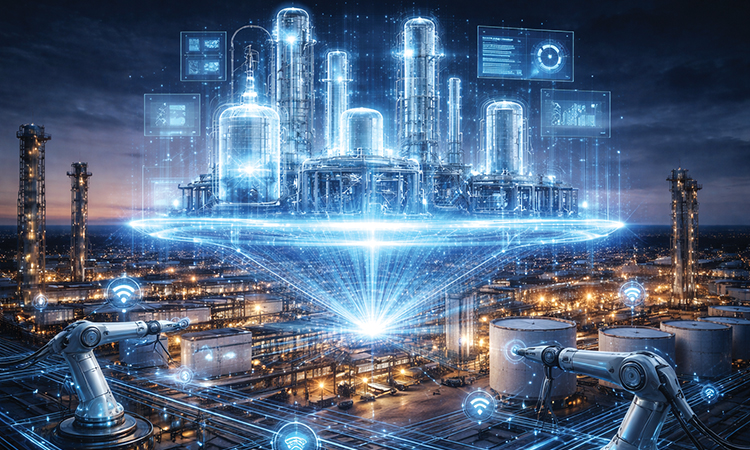
Revolutionising Industrial Operations Through Virtual Replication
The rapid pace of digital transformation is reshaping industries across the globe, and the process industries are no exception. Sectors such as chemicals, oil & gas, pharmaceuticals, food processing, and power generation rely heavily on continuous processes where precision, consistency, and operational stability are crucial. In such environments, even minor inefficiencies can lead to significant financial losses, safety risks, or production disruptions. One of the most promising technological innovations addressing these challenges is the concept of the digital twin.
A digital twin is a virtual replica of a physical system, process, or asset that continuously receives real-time data from the physical counterpart. By combining data analytics, simulation models, and advanced monitoring tools, digital twins provide a dynamic representation of how a system behaves under various conditions. In continuous process automation, digital twins are emerging as powerful tools for enhancing operational efficiency, predictive maintenance, and process optimisation.
Understanding the Digital Twin Concept
The concept of a digital twin involves creating a digital model that mirrors the behaviour of a physical system. Sensors installed in industrial equipment continuously collect data such as temperature, pressure, flow rates, vibration, and energy consumption. This data is transmitted to digital platforms where the virtual model is updated in real time.
Unlike traditional simulation models that operate in isolation, digital twins maintain a continuous connection with the physical system. This live connection allows engineers to monitor operations, simulate different scenarios, and evaluate process changes before implementing them in the actual plant.
For continuous process industries, where operations often run non-stop for extended periods, digital twins provide valuable insights that help maintain stability and improve performance.
Real-Time Monitoring and Process Visibility
One of the most important benefits of digital twins is enhanced visibility into industrial operations. Continuous processes involve complex interactions between equipment, raw materials, and environmental conditions. Monitoring these interactions in real time can be challenging with conventional automation systems.
Digital twins provide a unified platform where engineers can observe the behaviour of entire process systems through a virtual interface. Operators can visualise how reactors, pipelines, pumps, and heat exchangers interact within the process flow. Real-time dashboards display key parameters, enabling quick identification of abnormalities or inefficiencies.
This enhanced transparency allows plant operators to detect potential issues early and take corrective action before they escalate into major problems.
Process Optimisation Through Simulation
In continuous process industries, optimising production parameters is critical for achieving maximum efficiency. However, experimenting directly on operating plants can be risky and expensive. Digital twins provide a safe environment for testing different scenarios without affecting actual production.
Engineers can simulate variations in process conditions such as temperature profiles, feedstock composition, or equipment performance. The digital twin predicts how these changes will influence overall plant performance. By analysing the simulation results, operators can identify the most efficient operating conditions.
This capability enables continuous improvement in production efficiency, energy consumption, and product quality. In industries where margins are tight and energy costs are high, such optimisation can deliver significant economic benefits.
Predictive Maintenance and Asset Reliability
Another major advantage of digital twins in continuous process automation is their ability to support predictive maintenance strategies. Equipment such as pumps, compressors, turbines, and heat exchangers play critical roles in process industries, and unexpected failures can cause costly downtime.
Digital twins monitor the operating condition of these assets by analysing real-time sensor data and comparing it with expected performance models. When deviations from normal behaviour are detected, the system can generate early warnings indicating potential equipment deterioration.
Maintenance teams can then schedule inspections or repairs before a breakdown occurs. This predictive approach reduces unplanned downtime, extends equipment life, and improves overall plant reliability.
Enhancing Safety and Risk Management
Safety is a top priority in industries dealing with hazardous materials and high-pressure processes. Digital twins contribute significantly to improving safety by enabling detailed analysis of plant operations and potential risk scenarios.
Through simulation capabilities, engineers can evaluate how the system would respond to abnormal conditions such as sudden pressure changes, equipment failures, or process upsets. This allows them to design safer operating strategies and develop more effective emergency response plans.
Digital twins can also assist in operator training. By replicating plant operations in a virtual environment, new personnel can practice handling critical situations without exposing themselves or the facility to real risks.
Integration with Industrial IoT and Advanced Analytics
The effectiveness of digital twins depends heavily on their ability to collect and process large volumes of data from industrial systems. This is where Industrial Internet of Things (IIoT) technologies play a crucial role.
Sensors, smart instruments, and connected devices continuously feed operational data into the digital twin platform. Advanced analytics tools and machine learning algorithms then analyse this data to identify patterns, anomalies, and optimisation opportunities.
By integrating digital twins with IIoT and cloud computing platforms, organisations can build comprehensive digital ecosystems that support data-driven decision-making across the entire plant.
Applications Across Process Industries
Digital twins are increasingly being adopted across various continuous process industries. In chemical plants, they are used to model reactors, distillation columns, and complex chemical processes. In oil and gas facilities, digital twins help optimise pipeline operations, refinery processes, and offshore platforms.
Power generation plants use digital twins to monitor turbines, boilers, and energy distribution systems. Similarly, pharmaceutical and food processing industries employ digital twins to maintain strict process control and ensure consistent product quality.
The ability to monitor, simulate,
and optimise operations in real time makes digital twins valuable tools across a wide range of industrial applications.
Supporting the Transition to Smart Factories
As industries move toward smart manufacturing and autonomous operations, digital twins are becoming central components of the digital factory ecosystem. By combining real-time monitoring, predictive analytics, and advanced simulation capabilities, digital twins enable plants to operate more intelligently and efficiently.
They also facilitate collaboration between engineering teams, operators, and management by providing a common platform for analysing process performance. Data-driven insights generated by digital twins help organisations make informed decisions that improve productivity and sustainability.
The Future of Digital Twins in Process Automation
The evolution of digital twin technology is closely linked with advancements in artificial intelligence, machine learning, and high-performance computing. Future digital twins are expected to become even more sophisticated, capable of analysing complex systems with greater accuracy and autonomy.
Integration with augmented reality and advanced visualisation tools may allow operators to interact with digital replicas in immersive environments. Such innovations will further enhance the ability to understand, manage, and optimise industrial processes.
As industries continue to pursue higher levels of efficiency, reliability, and sustainability, digital twins will play an increasingly important role in shaping the future of continuous process automation.
In essence, digital twins represent a transformative approach to industrial operations. By bridging the gap between the physical and digital worlds, they empower organisations to monitor processes more effectively, predict potential issues, and optimise performance in ways that were previously impossible.