

Storage Solutions for Engineering Workshops
A Cluttered Workshop Is a Slow Workshop, Here's How to Fix That

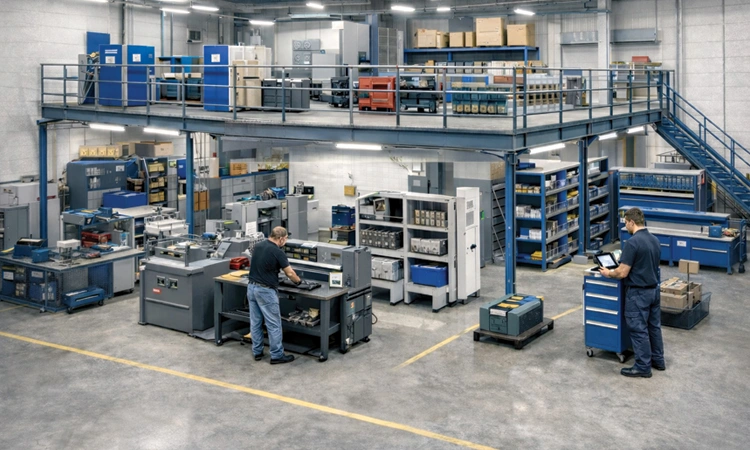
In modern engineering workshops, storage is no longer a passive function limited to holding tools, components, or raw materials. As manufacturing environments become more compact, automated, and productivity-driven, efficient storage solutions play a crucial role in ensuring smooth operations, workplace safety, and optimal utilisation of available space. Poorly planned storage leads to clutter, wasted movement, misplaced tools, and safety hazards, all of which directly impact productivity and operational costs.
Challenges of Space Constraints in Engineering Workshops
Engineering workshops often operate under significant space constraints, particularly in urban industrial zones or legacy facilities where expansion is difficult. The challenge is further compounded by the diversity of items that need to be stored—ranging from small cutting tools and fasteners to heavy dies, fixtures, and work-in-progress components. Without a systematic storage strategy, workshops risk underutilising vertical space, overcrowding aisles, and creating inefficiencies that slow down production.
Planning Storage Around Workflow and Layout
An effective storage solution begins with understanding the workshop workflow. Storage must support, not hinder, material movement between machining, fabrication, assembly, and inspection areas. Frequently used tools and components should be positioned close to workstations, while slower-moving inventory can be stored in secondary locations. By aligning storage zones with production flow, workshops can reduce handling time, minimise operator movement, and improve overall efficiency.
Modular Racking & Shelving Systems
Modular racking and shelving systems form the backbone of organised workshop storage. Adjustable shelves, boltless racks, and pallet racking systems allow workshops to customise storage layouts based on changing requirements. These systems are particularly effective for optimising vertical space, enabling workshops to store more within the same floor area. Load-rated racks also ensure safe storage of heavy components, dies, and fixtures commonly found in engineering environments.
Tool Storage and Point-of-Use Solutions
Efficient tool storage is essential for maintaining productivity on the shop floor. Tool cabinets with drawers, shadow boards, pegboards, and mobile tool trolleys ensure that tools are stored systematically and are easily accessible. Point-of-use storage—where tools are kept close to the machines or workstations where they are used—reduces search time and operator fatigue. Visual management techniques such as colour coding and tool silhouettes further enhance organisation and accountability.
Storage for Dies, Moulds, and Heavy Components
Engineering workshops dealing with press tools, dies, moulds, or heavy fixtures require specialised storage solutions. Die racks, pull-out shelving systems, and cantilever racks enable safe and space-efficient storage of bulky and high-weight items. These systems allow easy access using cranes or forklifts while ensuring stability and load safety. By adopting dedicated heavy-duty storage solutions, workshops can free up valuable floor space and improve handling safety.
Optimising Vertical and Overhead Space
One of the most underutilised assets in many workshops is vertical and overhead space. High-rise racking systems, mezzanine floors, and overhead storage platforms allow workshops to significantly increase storage capacity without expanding the footprint. Mezzanines can be used for storing spares, documentation, or light components, while the shop floor below remains available for production activities. Proper structural design and load calculations are essential to ensure safety and compliance.
Mobile and Space-Saving Storage Systems
For workshops with severe space limitations, mobile storage systems offer an effective solution. Mobile shelving and compact racking systems eliminate fixed aisles, allowing storage units to move along tracks and open only when access is required. These systems can increase storage density by up to 40–50 percent compared to conventional static racks. Mobile storage is particularly useful for tool rooms, maintenance stores, and inspection areas.
Digital and Smart Storage Solutions
As workshops move toward digitalisation and Industry 4.0 practices, storage systems are becoming smarter and more connected. Automated storage and retrieval systems (ASRS), vertical lift modules, and smart tool cabinets track inventory in real time and control access. Integrated with ERP or maintenance management systems, these solutions reduce inventory errors, prevent tool loss, and support predictive maintenance strategies. Although typically adopted in high-volume or high-value environments, smart storage is gradually becoming accessible to smaller workshops as well.
Safety, Ergonomics, and Compliance
Storage solutions must prioritise safety and ergonomics alongside space optimisation. Proper load distribution, clear labelling, anti-tip mechanisms, and safe access systems reduce the risk of accidents. Ergonomically designed storage—such as waist-height shelves and pull-out drawers—minimises strain and improves operator comfort. Compliance with safety standards and best practices also helps workshops meet audit and regulatory requirements.
Storage as a Productivity Enabler
Well-planned storage directly contributes to productivity by reducing non-value-added activities such as searching, handling, and rework. Organised storage supports lean manufacturing principles, improves visual control, and enables faster response to production changes. By making better use of available space, workshops can accommodate new machines or processes without costly expansions.
The Road Ahead for Workshop Storage
The future of storage solutions in engineering workshops lies in flexible, modular, and intelligent systems that adapt to changing production needs. As space constraints intensify and product complexity increases, workshops will increasingly view storage as a strategic investment rather than an afterthought. The integration of smart storage with digital manufacturing systems will further enhance efficiency, traceability, and competitiveness.
Conclusion
Storage solutions are a critical yet often overlooked aspect of engineering workshop efficiency. By adopting systematic, space-optimised, and safety-focused storage strategies, workshops can unlock hidden capacity, improve productivity, and create a more organised and professional working environment. In an era where space is at a premium and efficiency is paramount, intelligent storage is not just about storing more—it is about working smarter.