

Trending Tools for Metal Cutting: Shaping Precision Manufacturing
From Carbide to Smart Sensors, How Cutting Tools Are Reinventing Themselves


Metal cutting is a core driver of manufacturing productivity, precision, and competitiveness across industries — from automotive and aerospace to energy, defence, and heavy engineering. As materials become stronger, tolerances tighter, and delivery expectations shorter, cutting tools are evolving rapidly. Today’s cutting tools are engineered systems — combining advanced substrates, high-performance coatings, intelligent geometries, and digital readiness.
These trends are reshaping not only global machining strategies but also the Indian tooling ecosystem.
Advanced Tool Materials — Beyond Conventional Carbides
Carbide remains the backbone of metal cutting tools, but advancements in substrate technology have enhanced toughness and thermal resistance. In India, this trend is mirrored by increasing adoption of micro-grain and ultra-fine carbide inserts and end mills, enabling stable machining at higher speeds & feeds.
Global materials such as ceramics, CBN (Cubic Boron Nitride), and PCD (Polycrystalline Diamond) are also finding greater acceptance in Indian workshops, particularly in automotive, aerospace, and precision engineering clusters in Pune, Bengaluru, and Gurugram.
Coating Technologies — More Than Surface Protection
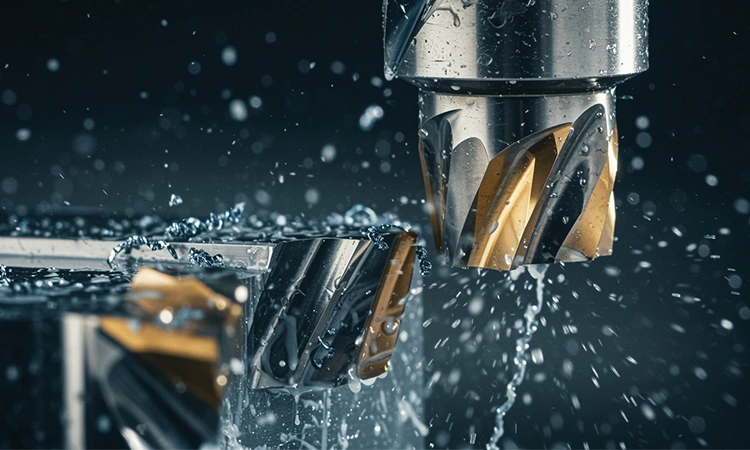
High-performance coatings like AlTiN, AlCrN, TiSiN, and nano-composites have transformed tool life and productivity by enhancing wear resistance and heat tolerance. Indian tool manufacturers and distributors are increasingly offering region-specific coated tooling solutions, especially for dry machining in regions where coolant costs or environmental constraints are rising. Large OEMs and tier suppliers, particularly in automotive hubs of Chennai and Pune, are moving towards optimized coating-platform tool kits to reduce dependence on trial-and-error tooling cycles.
High-Performance Geometries and Chip Control
Tool geometry innovations — such as optimized chip breakers, edge preparations, and variable rake angles — enhance cutting stability and chip evacuation. Indian manufacturers in sectors like aerospace and defence are increasingly specifying such geometries when machining stainless steels, Inconel, and titanium alloys.
These advanced geometries have enabled jobs that once required trial machines or overseas support to be completed domestically, reducing cost and waiting time.
High-Speed and High-Feed Machining — Productivity Accelerators
High-speed machining (HSM) and high-feed milling (HFM) doctrines are gaining traction in India, especially in mould & die and automotive component manufacturing. High-feed cutters with axial force redirection significantly cut cycle time while stabilizing operations.
For Indian job shops transitioning from conventional milling, high-speed cutting tools act as productivity multipliers — shortening lead times and enabling price competitiveness in exports.
India Tooling Market Insights — Growth, Challenges, Opportunities
Market Growth and Domestic Demand
India’s tooling market is expanding rapidly, buoyed by strong manufacturing growth under initiatives like Make in India, PLI (Production Linked Incentive) schemes, and automotive & defence localisation. According to industry sources, the Indian metal cutting tool market is estimated to grow at a healthy CAGR over the next decade, driven by:
• Rising domestic machining demand
• Growth in automotive, aerospace, railway, and heavy engineering sectors
• Increased adoption of CNC and multi-axis machining
• Investments in skill development and automation
Compared to global tooling markets, India still has a higher dependency on imports, especially for advanced carbide grades, coated inserts, and PCD/CBN tools. However, domestic tool manufacturers are rapidly improving capabilities.
Domestic Tool Manufacturers and Value Chains
Indian manufacturers such as those in the MSME tooling clusters of Rajkot, Pune, Bengaluru, and Coimbatore are increasingly producing carbide end mills, indexable inserts, drills, and reamers with quality approaching international standards.
Major tooling brands have set up manufacturing and re-coating facilities in India, enabling shorter turnaround times and cost-effective support. The tooling ecosystem is also supported by specialised trade expos such as IMTEX and Tooltech India, which showcase local innovations and global technologies.
Challenges in Adoption
Despite growth, the Indian tooling market faces challenges:
• Skill gaps in advanced machining and tool optimiser roles
• Higher cost of advanced coated tools compared to locally manufactured uncoated alternatives
• Fragmented demand in small job shops, making high-end tooling investments less predictable
• Limited standardization in tooling specifications across small OEMs
To counter these, many manufacturers are embracing tooling advisory partnerships, where tooling suppliers help optimise selections based on material, machine, and part geometry, driving both cost control and performance improvement.
Smart and Digital Cutting Tools — The Next Frontier
Digital technologies, such as RFID-enabled tool tracking, embedded sensors, and real-time wear monitoring, are reshaping how tools are selected and managed. In India, high-volume manufacturers are investing in digital tool management systems that integrate with MES and ERP platforms. These help reduce unexpected tool failures, improve uptime, and control tooling costs relative to production outputs.
 Specialised Tools for Difficult-to-Machine Materials
As sectors like aerospace, energy, and defence grow within India, so does the demand for tools tailored to high-temperature alloys, composites, and hardened steels. Indian precision engineering shops are increasingly investing in:
• PCD tools for aluminium components
• CBN grades for hardened steel machining
• Advanced drills and reamers for aerospace alloys
Such tools, paired with application-focused cutting strategies, are enabling high value-added components to be produced domestically rather than outsourced overseas.
Sustainability and Cost-Per-Component Economics
Sustainability is increasingly shaping tool selection in India. With rising energy costs and environmental regulations, manufacturers are exploring:
• Dry machining and MQL (Minimum Quantity Lubrication) friendly tools
• Longer-life tools with recoating or regrinding capabilities
• Tooling solutions that reduce scrap and rework
Manufacturers are shifting focus from tool price to cost-per-part, recognising that premium tools often deliver better total economics through fewer changeovers and improved consistency.
Modular, Quick-Change Systems — A Productivity Enabler
To reduce non-productive time in setups, Indian factories are adopting modular tooling and quick-change systems. These systems allow rapid replacement of cutting heads with high positional accuracy — ideal for high-mix, low-volume environments prevalent in Indian job shops.
This trend is supported by increased availability of modular tool holders and standardised interfaces, reducing reliance on bespoke setups.
Conclusion — Tools That Enable Competitiveness
Metal cutting tools are no longer passive bits of carbide; they are strategic assets that influence manufacturing economics, quality, sustainability, and competitiveness. In India, the tooling ecosystem is evolving — fuelled by domestic machining growth, improving local manufacturing capabilities, digital adoption, and strategic partnerships with global suppliers.
To succeed in this rapidly changing landscape, manufacturers must balance cost, performance, and sustainability — moving beyond simple price selection to informed tooling strategies that enhance productivity and profitability.
As India’s manufacturing base expands, the role of trending metal cutting tools will only grow more central — enabling precision, robustness, and speed in the country’s march toward global competitiveness.