

Powder Handling Technologies & Equipment: Enabling Efficiency, Safety, and Consistency Across Industries
From Pharma to Battery Plants, Why Powder Handling Is Never Simple

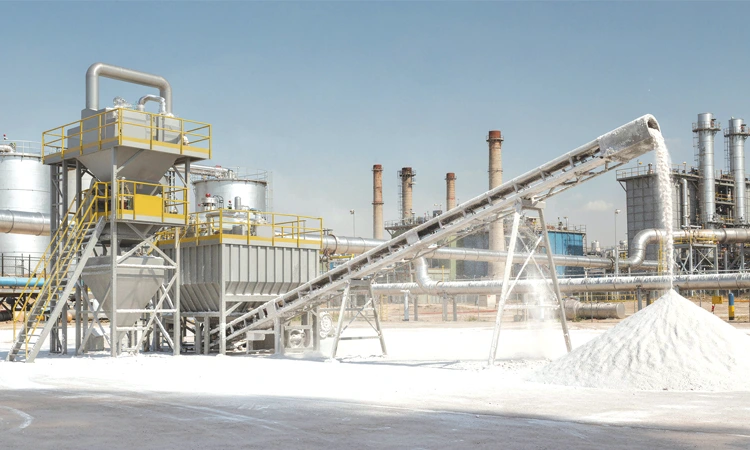
Powder handling is a critical but often under-appreciated function across a spectrum of manufacturing sectors—from pharmaceuticals and food processing to chemicals, minerals, plastics, additive manufacturing, and specialty materials. As industries push for higher productivity, stringent hygiene, precision dosing, and safer work environments, powder handling technologies have evolved into highly engineered systems that combine mechanical design, automation, material science, and process optimization. Modern powder handling goes well beyond simple transfer. It includes receiving, conveying, storage, blending, dosing, screening, compaction, packaging, dust control, and integrated automation—all designed to ensure that powders with varying particle sizes, densities, flow properties, and sensitivities behave predictably throughout the process chain. This article explores the key technologies, equipment, and industry applications shaping the landscape today.
The Complexity of Powders: Why Handling Them Is Challenging
Unlike liquids or gases, powders are inherently inconsistent in their behavior. They may bridge, rat-hole, segregate, compact, absorb moisture, create dust clouds, or respond unpredictably to environmental changes. Flowability depends on particle size, shape, surface texture, and static charge. Powders can be abrasive, fragile, hazardous, or explosive. These characteristics demand engineered handling solutions tailored to each material and operating condition. Modern systems often incorporate sensors, intelligent controls, and material testing results to ensure smooth, uninterrupted flow.
Key Powder Handling Technologies
1. Mechanical Conveying Systems
Mechanical conveyors remain widely used for robust, heavy-duty, or abrasive powders. Major types include:
- Screw conveyors: Suitable for controlled feeding, inclined transfer, and metering tasks.
- Belt conveyors: Ideal for bulk powders in mining, cement, and minerals processing.
- Bucket elevators: Used for vertical lifting of free-flowing powders or granules.
- Vibratory conveyors: Gentle on fragile materials and useful for dosing applications.
Mechanical conveying offers durability and high throughput but can introduce contamination or degradation if not properly designed.
2. Pneumatic Conveying Systems
Pneumatic systems use air (or inert gases) to transport powders through pipelines. These are preferred where cleanliness, enclosure, & layout flexibility are essential.
Two main types exist:
- Dilute-phase conveying: High velocity, low pressure; suited for non-fragile powders in food, plastics, & chemicals.
- Dense-phase conveying: Low velocity, high pressure; ideal for fragile, abrasive, or cohesive powders like cement, alumina, catalysts, and specialty chemicals.
Advanced pneumatic systems integrate smart valves, flow controls, & air management to reduce energy consumption and minimize product degradation.
3 Bulk Bag Handling & Sack Tip Stations
As industries shift to bulk supplies, equipment for safe and efficient unloading becomes essential:
- Bulk bag unloaders (FIBCs): Incorporate hoists, massaging paddles, flow aids, and dust control features.
- Sack tip stations: Enable manual bag dumping with integrated dust extraction.
These systems are common in food, nutraceuticals, and specialty chemicals, ensuring hygiene and operator safety.
4. Feeders, Weighing, and Dosing Technologies
Accurate dosing is critical, especially in pharmaceuticals, additives, pigments, and battery materials.
Key solutions include:
- Loss-in-weight feeders for continuous precise dosing
- Volumetric feeders where accuracy tolerance is higher
- Gravimetric batching systems for recipe-driven manufacturing
- Micro-feeders for ultra-low feed rates of potent actives
Integration with PLCs, SCADA, and MES software ensures traceability and consistent product quality.
5. Blending and Mixing Equipment
Powder mixing technologies address challenges like particle segregation, uniformity, and heat build-up.
Common mixers include:
- Ribbon blenders for dry mixes
- Double-cone and V-blenders for gentle blending
- High-shear mixers for cohesive powders
- Fluidized zone mixers for rapid, homogenous mixing
Advanced mixers feature programmable cycles, load monitoring, and CIP/WIP-friendly designs.
6. Screening, Classification and Conditioning
To ensure consistent particle profiles, manufacturers use:
- Vibratory sieves and separators
- Air classifiers
- Ultrasonic screening systems
- Dehumidification & conditioning chambers
These help remove contaminants, break agglomerates, and standardize particle distribution, directly influencing downstream performance.
7. Dust Control Systems
Powders often generate airborne particulates that can pose respiratory risks, explosion hazards, or contamination threats.
Dust management technologies include:
- Dust collectors with bag filters, cartridges, or cyclones
- Local extraction and hood systems
- Explosion relief vents and suppression systems
- Enclosed conveying & sealed interfaces
Regulated industries dedicate substantial investment to dust control for compliance and safety.
Emerging Trends in Powder Handling
Automation and Digital Integration
The rise of Industry 4.0 has transformed powder handling through:
- Real-time monitoring of flow rates, clogging, or segregation
- Automated recipe control
- Predictive maintenance for feeders, conveyors, and valves
- Digital twins for flow simulation and equipment layout
These advancements enhance throughput, consistency, and visibility across the supply chain.
Material-Specific Customization
Battery gigafactories, additive manufacturing hubs, & specialty chemical plants require powder systems tailored to:
- Ultrafine metal powders
- Lithium-ion materials
- Hygroscopic pharmaceutical actives
- Temperature-sensitive food ingredients
- Abrasive minerals and refractories
This demands precise environmental control, inert atmosphere management, anti-static designs, and validated hygiene protocols.
Hygienic & Modular Designs
With growing focus on GMP, allergen control, and frequent recipe changeovers, systems now emphasize:
- Stainless-steel construction
- Crevice-free surfaces
- Quick disassembly
- CIP/WIP capabilities
- Modular skids for fast installation
Such designs minimize cross-contamination and reduce downtime.
Additive Manufacturing-Friendly Handling
Metal and polymer powders for 3D printing require ultra-clean environments, moisture control, and traceability. Handling systems ensure:
- Closed-loop powder recovery
- Automated sieving and conditioning
- Oxygen-level monitoring
- Containment for operator safety
The AM sector is driving new innovation in powder purity management.
Industry Applications
Pharmaceuticals & Nutraceuticals
Precise batching, cleanroom-compatible conveying, hygienic mixers, and advanced containment systems are essential for handling APIs, excipients, and blends.
- Food & Beverage: Sugar, flour, spices, cocoa, whey, and premixes require hygienic handling, allergen segregation, and accurate dosing.
- Chemicals & Petrochemicals : Catalysts, pigments, resins, and polymers demand robust conveying, classification, and dust control systems.
- Minerals, Cement & Mining: Large-volume abrasive materials rely on heavy-duty conveying, crushing, screening, and storage solutions.
- Plastics & Masterbatch : Pellets, granules, and powders use pneumatic conveying, blending, and dosing systems for compounding and molding.
- Batteries & Electronics : High-purity cathode/anode powders require inert handling and environmental control.
- Additive Manufacturing : Powders must be managed without contamination, with strict particle size distribution control.
Conclusion
Powder handling technologies are indispensable across modern manufacturing, ensuring safe, consistent, and efficient operations. As industries scale up, shift to cleaner processes, and integrate automation, powder handling equipment will continue to evolve—becoming smarter, more hygienic, and more tailored to material characteristics. Whether in a food plant, a pharma facility, a battery gigafactory, or a foundry, the right powder handling system is the backbone of productivity and product quality. In the years ahead, we will see even tighter integration with digital platforms, more emphasis on sustainability, and greater precision in managing the unique behavior of every powder.