

Strengthening Building Installation Solutions: The Critical Role of Engineered Cable Trays
The Nervous System of Every Building, And Why It's Often Overlooked

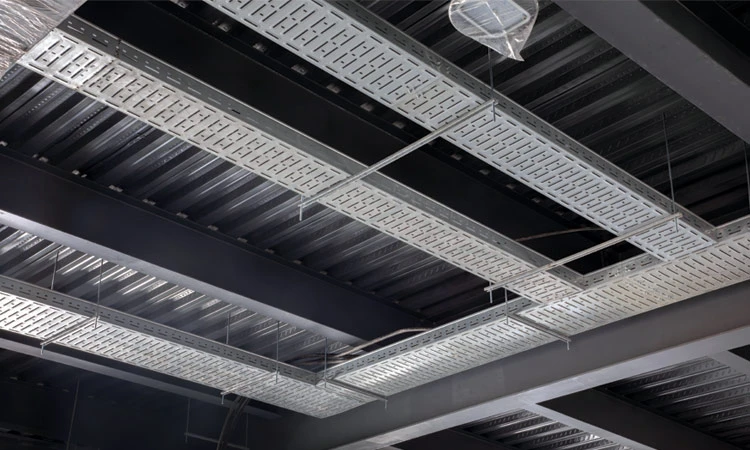
In the age of rapid urbanisation, digital transformation, and smart infrastructure, the reliability and safety of building installations have become more critical than ever. Be it commercial high-rises, industrial plants, data centres, hospitals, or transportation hubs — the integrity of the electrical infrastructure determines how safely and efficiently these buildings function.
At the heart of this infrastructure lies a component that is often underestimated but immensely vital — the cable tray system.
Cable trays are not just mechanical supports. They are the nervous system of modern buildings, responsible for routing power, control, and data cables seamlessly across the facility. Ensuring the use of well-engineered, standard-compliant cable trays is no longer optional — it is a foundational necessity for safe, scalable, and sustainable building practices.
Why Engineered Cable Trays Are Essential
Choosing the right cable management system — particularly one that is engineered and manufactured to strict quality standards — has far-reaching implications. Engineered cable trays are designed using tested materials, precise load calculations, and protective finishes suitable for diverse environments, from humid coastal zones to heavy-duty industrial conditions.
In contrast, non-engineered or site-fabricated trays often fall short in consistency, structural integrity, and corrosion resistance. These inconsistencies can lead to long-term issues, including overheating of cables, premature failure, and even fire hazards.
Engineered systems offer several distinct advantages:
- Predictable load-bearing capacity
- Corrosion-resistant finishes
- Modular designs for easier installation and maintenance
- Compliance with international standards
- Improved aesthetics and audit readiness
These benefits are not theoretical. In real-world applications, properly selected and installed cable trays have proven to reduce system downtimes, improve cable life, and ensure safety for both people and property.
Safety Begins with Good Engineering
Electrical safety should never be an afterthought. Unfortunately, it’s often during system failures or fire investigations that we realise the importance of proper cable containment systems. Cable trays that are poorly designed, corroded, or overloaded pose significant risks.
Choosing engineered cable trays ensures that:
- Cables remain securely routed, with no risk of sagging or damage
- Systems can handle future expansion or load increases
- Maintenance teams have clear, accessible routing for inspections
- Fire propagation is minimised in case of emergencies
Building installations are a long-term investment, and safety must be designed in — not added later. When the right components are used from the beginning, the building’s entire lifecycle becomes easier to manage, maintain, and upgrade.
![Electrical Infrastructure]() Supporting the Infrastructure of Tomorrow
Supporting the Infrastructure of Tomorrow
 Supporting the Infrastructure of Tomorrow
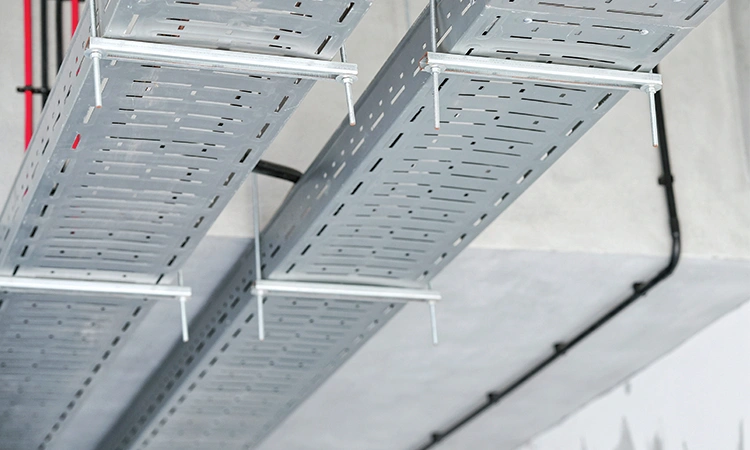
Modern buildings are expected to evolve with technology, regulatory norms, and user expectations. Whether it’s transitioning to renewable energy, adopting automation, or expanding IT infrastructure, the backbone of such advancements is a reliable electrical system.
A scalable and intelligently designed cable tray solution supports this transition by offering flexibility without compromising safety. Engineered trays are easier to adapt, allowing teams to add or reroute cables without needing a complete overhaul.
Further, with sustainability becoming a key driver in construction, the use of durable, recyclable, and corrosion-resistant trays contributes positively to green building certifications and energy-efficient practices.
Beyond Cost: A Matter of Long-Term Vision
Too often, decisions in construction are driven purely by upfront costs. However, cable trays represent a small percentage of the overall project budget — while their failure can result in significant financial and reputational loss.
It’s important for decision-makers — from consultants and electrical designers to project managers and building owners — to look beyond immediate savings and focus on value, compliance, and longevity.
Awareness is key. When all stakeholders understand the technical and operational benefits of engineered systems, better choices are made at every level of the project lifecycle.
Conclusion: Building Responsibly
In today’s world, where infrastructure powers economies and supports everyday life, we carry a deep responsibility to build with foresight and integrity.
As someone who has seen projects succeed — and sometimes fail — based on the smallest infrastructure decisions, I believe this: the real strength of a building lies not just in its design, but in the invisible systems that keep it running safely and reliably.
Let us raise the standards of our industry by choosing engineered solutions that stand the test of time, support the future, and uphold the safety of all who use them.
Because when we build with intention, we build for generations.
For more information,
www.oboindia.com