
Polycab : Powering the Next Wave of India’s a Electrification

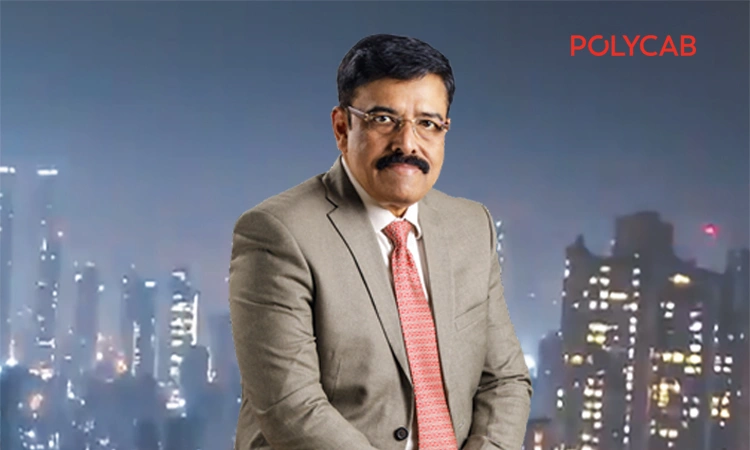
Director and CEO-B2B
Channel & Corporate Communication, Polycab
From its stronghold in wires and cables to a broader portfolio spanning FMEG, EPC, specialised electrical solutions and international markets, Polycab is redefining its growth trajectory. Backed by manufacturing scale, deep backward integration, automation, R&D and its ambitious Project Spring roadmap, the company is positioning itself to capture emerging opportunities in renewable energy, data centres, EVs, smart infrastructure and industrial growth. Shashi Amin, Director and CEO – B2B Channel & Corporate Communication, Polycab, outlines the company’s vision to evolve from a product-focused manufacturer into a globally respected, customer-centric electrical solutions provider. Excerpts from an exclusive interview:
Q. Polycab has evolved from being a leading wires and cables manufacturer into a diversified electrical solutions provider. What are the key milestones in this transformation, and what is the larger strategic vision for the company over the next five years?
Polycab’s journey over the past decade has been one of purposeful evolution. While we remain deeply rooted in our leadership position in wires and cables, we have steadily transformed ourselves into a diversified electrical solutions company, aligned with India’s rapidly changing infrastructure and energy landscape.
Our growth has been driven by a series of strategic milestones. We strengthened our core wires and cables business, expanded into fast-growing electrical categories, enhanced our manufacturing footprint, invested in backward integration and automation, and built strong capabilities across infrastructure, power, industrial and residential applications. At the same time, we broadened our horizons through EPC solutions, innovation-led product development, and a growing international presence that today
spans 94 countries.
This transformation is about moving up the value chain, from being a product-focused manufacturer to becoming a trusted partner that delivers end-to-end electrical solutions for homes, businesses, industries and large-scale infrastructure projects.
A key enabler of our next phase of growth is Project SPRING, our strategic transformation programme that is focused on accelerating market share gains, strengthening execution excellence, enhancing customer engagement, driving operational efficiencies and building future-ready organisational capabilities. The initiative has already contributed meaningfully to stronger execution and market share expansion in our core business, while creating a foundation for sustainable long-term growth across segments.
Looking ahead, our vision over the next five years is to strengthen our leadership in wires and cables, scale our FMEG and solutions businesses, expand our global footprint, and leverage technology, digitalisation and innovation to create greater value for customers and stakeholders. We see significant opportunities emerging from India’s infrastructure build-out, manufacturing growth, energy transition, urbanisation and increasing focus on electrification.
The next phase is Project Spring, our FY30 roadmap. It is built on six pillars: strengthening B2B leadership, accelerating B2C growth, expanding international business, driving innovation and automation, nurturing talent and deepening ESG integration. Our objective is not merely to grow larger, but to become a globally respected electrical solutions company that combines manufacturing scale, technology leadership and customer-centric solutions.
The larger vision is clear: lead India’s electrification journey while building a future-ready global enterprise.
Q. Polycab’s core cables and wires business continues to benefit from India’s investments in power, infrastructure, real estate, renewables and other sectors. Which application areas and emerging industries do you see as the biggest growth drivers going forward?
India’s growth story is being powered by large investments in power infrastructure, renewable energy, real estate, manufacturing and digital infrastructure, making these the key demand drivers for the wires and cables industry. We see particularly strong opportunities in power transmission and distribution, solar and wind projects.
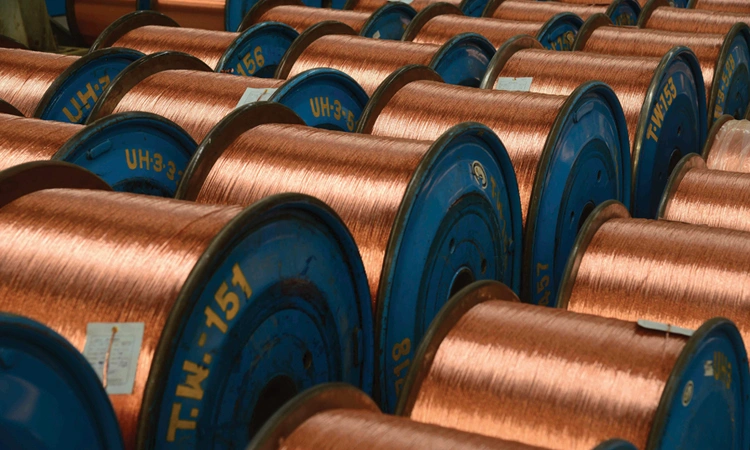
Our diversified portfolio at Polycab enables us to participate across these growth areas through products such as building wires, power cables, solar DC cables, instrumentation and control cables, communication cables and specialised industrial solutions. Whether it is powering homes, enabling renewable energy projects, supporting factories, connecting data centres or strengthening critical infrastructure, our products are integral to India’s development journey.
As electrification, digitalisation and sustainability continue to reshape the economy, we believe the demand for reliable, safe and future-ready electrical solutions will only accelerate, positioning Polycab strongly for long-term growth.
Q. Manufacturing excellence and vertical integration are important competitive differentiators for Polycab. Could you elaborate on your manufacturing footprint, level of backward integration, process automation and Industry 4.0 initiatives that are helping improve productivity, quality and cost competitiveness?
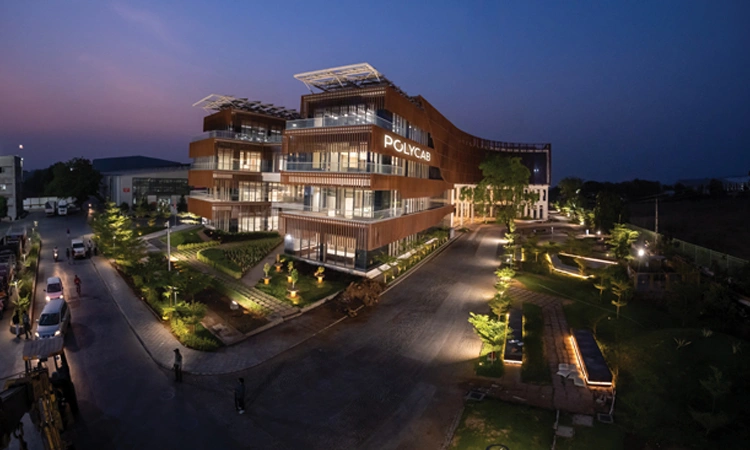
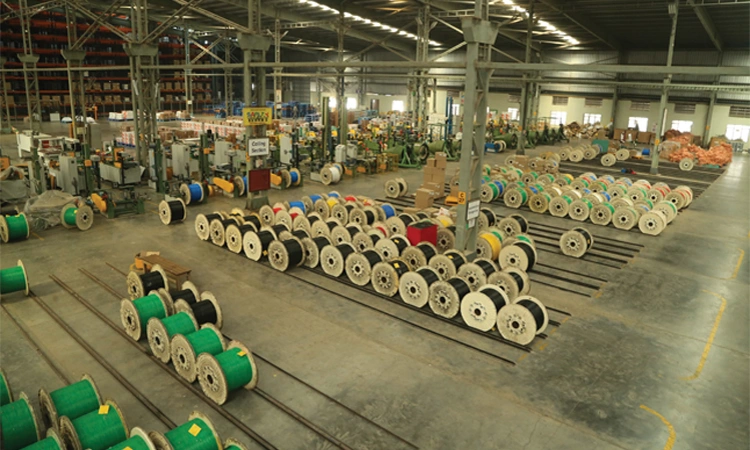
Manufacturing has always been central to Polycab’s competitive advantage. Our 26 manufacturing facilities and deep backward integration give us greater control over critical inputs and processes, helping us maintain consistency in quality, improve responsiveness and strengthen cost competitiveness.
Automation and digitisation are becoming increasingly important across our operations. Under Project Spring, innovation and automation form one of the six core strategic pillars. We are digitising processes across the value chain, strengthening data visibility, improving supply chain efficiency and increasing automation-led manufacturing productivity.
We are also applying this approach beyond cables. Our fan and switchgear facilities use automated production and testing systems, helping improve precision, consistency and productivity. For us, Industry 4.0 is ultimately about making manufacturing more intelligent, predictable and responsive, rather than simply adding more automation.
Q. Polycab has invested significantly in R&D, including its Polymer R&D Centre, to develop advanced and sustainable materials and globally compliant products. What are the major technology and product innovations currently emerging from your R&D initiatives?
Innovation is a key pillar of Polycab’s growth strategy as customer requirements are evolving rapidly across infrastructure, renewable energy and industrial applications. Our NABL-certified R&D ecosystem is supported by around 90 R&D professionals and collaborations with international research teams focused on polymer science and specialised cable technologies. Through our Polymer R&D Centre and advanced engineering capabilities, we are developing next-generation materials and products that enhance safety, performance, durability and sustainability. Our current focus areas include advanced insulation technologies, fire-safe and high-performance cables, specialised solutions for renewable energy, data centres, electric mobility and critical infrastructure applications.
Sustainability is increasingly embedded into our product development. That means lower environmental impact materials, improved energy efficiency, enhanced safety performance and longer lifecycle reliability. Our innovations are not limited to cables alone. In FMEG, we continue developing energy-efficient lighting, BLDC fans and smart electrical solutions aligned with changing consumer preferences.
Beyond products, we are leveraging automation, digitalisation and smart manufacturing technologies to strengthen quality and operational excellence. As customer requirements evolve, our R&D efforts remain focused on delivering globally compliant, future-ready electrical solutions that support India’s infrastructure and energy transition journey.
 Q. The company is increasingly adopting a solutions-led approach for institutional and industrial customers rather than simply a product-led model. How is Polycab working with EPCs, OEMs and infrastructure developers to provide application-specific solutions, particularly in areas such as data centres, EV infrastructure, automation, renewable energy and mobility?
We are increasingly moving from a product-led approach to a solutions-led engagement, particularly as institutional customers look for greater technical support and application-specific solutions.
This is complemented by our manufacturing, R&D and EPC capabilities, allowing us to bring together the right products and technical expertise for specific applications.
Our EPC business is an important part of this evolution. Through projects such as BharatNet and RDSS, we are participating in large-scale power and digital infrastructure projects.
The objective is to engage with EPCs, OEMs and infrastructure developers earlier, understand their requirements and provide the right combination of products, expertise and execution capabilities. This allows us to move from being a product supplier to becoming a more integrated partner in the projects we serve.
Q. With renewable energy, electrification and smart infrastructure expanding rapidly, what new cable technologies, materials and product architectures will become critical in meeting the requirements of these future applications?
As the energy and infrastructure landscape evolves, future-ready electrical networks will require cables that are safer, efficient and sustainable.
As renewable energy expands, demand will grow for high-performance solar cables, grid infrastructure cables, and solutions that minimise transmission losses. Electrification and smart grids will require advanced materials capable of handling higher loads, greater durability and higher levels of operational efficiency.
Smart infrastructure will also increase demand for communication cables, fibre connectivity solutions and cable systems capable of supporting digital monitoring and intelligent asset management. Data centres, AI-driven infrastructure and high-density industrial environments will demand higher reliability and performance standards
We expect strong demand for advanced insulation materials, fire-resistant and low-smoke cables, high-performance power transmission solutions, and specialised cables designed for renewable energy, data centres, electric mobility and smart infrastructure applications. Material innovation will also play a critical role.
At Polycab, we are focusing on next-generation polymers, enhanced durability, higher energy efficiency and environmentally responsible solutions that can perform reliably in demanding operating conditions.
 Q. Project Spring sets out an ambitious five-year growth roadmap for Polycab. What are the principal pillars of this strategy, and how do you intend to balance capacity expansion, technology investments, exports, operational efficiency and capital allocation while sustaining profitable growth?
Project Spring is our roadmap for the next phase of Polycab’s growth, with a clear focus on accelerating growth while strengthening the foundations of the business. Its six pillars span strengthening our B2B leadership, expanding B2C, ramping up international business, driving innovation and automation, nurturing talent and integrating ESG more deeply into the business.
Our growth aspirations include growing the Wires & Cables business at approximately 1.5x industry growth, increasing international business contribution to over 10% of revenue and expanding FMEG at 1.5-2x industry growth while improving profitability.
The important part is that these priorities are interconnected. We are investing in capacity and backward integration with an investment plan of ₹60-80 billion over the next five years while simultaneously improving automation, digitising processes and strengthening our R&D capabilities. This allows us to build capacity while also improving productivity, quality and cost competitiveness.
We are taking a similarly calibrated approach to international expansion, focusing on markets and applications where our manufacturing capabilities, certifications and product portfolio can create a sustainable advantage.
Q. As Indian manufacturers increasingly compete in global markets, how is Polycab positioning itself as an export-oriented manufacturer? Which international markets and product categories offer the greatest potential, and what investments are being made to meet global standards and customer expectations?
Exports are a key pillar of Polycab’s long-term growth strategy and an important driver of our next phase of growth. As India’s role in global supply chains strengthens, we are leveraging our manufacturing scale, product quality and innovation capabilities to serve customers across international markets. Today, Polycab has its presence in 94 countries, reflecting our steadily expanding global footprint. We work closely with utilities, EPC contractors, renewable energy developers, OEMs and distributors to ensure compliance with regional standards and customer requirements
We see significant opportunities arising from global investments in infrastructure, energy transition, digitalisation and industrial development. With a strong manufacturing base in India and a growing international presence, we are well positioned to strengthen Polycab’s standing as a trusted global electrical solutions company.
 Q. Looking ahead, what does Polycab believe will define the future of the electrical industry in India—electrification, renewable energy, digitalisation, smart buildings, EVs, data centres or something else—and where does the company see its strongest role in shaping this transformation?
I believe the future of the electrical industry will be shaped by the convergence of electrification, digitalisation and the energy transition. Power demand is rising, renewable capacity is expanding, and new applications such as data centres, EVs, smart infrastructure and advanced manufacturing are creating sophisticated requirements from the electrical ecosystem. Polycab identifies these emerging sectors as important contributors to the industry’s next phase of growth.
For us, this creates an opportunity to bring together our strengths across wires and cables, FMEG, solar, EPC, specialised cables and R&D to address this evolving demand. Our focus will increasingly be on application-specific, technology-led solutions rather than individual products.
At the same time, we believe the growth of the electrical industry has to be accompanied by greater emphasis on safety, quality and sustainability. That is where we see Polycab playing a meaningful role: enabling India’s infrastructure and electrification journey with solutions that are reliable, future-ready and safe.