

The Art of Gear Manufacturing Precision Engineering That Powers Modern Industry

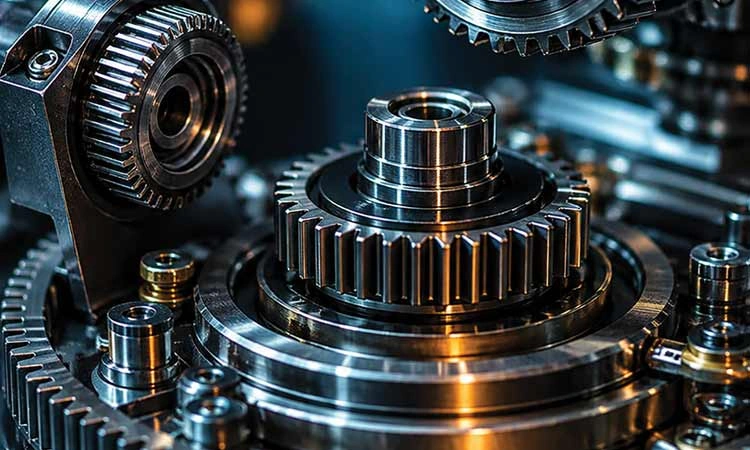
Gears are among the most fundamental components in mechanical engineering, transmitting power and motion with remarkable efficiency and precision. From automobiles and machine tools to wind turbines, industrial robots, aerospace systems and heavy mining equipment, gears are indispensable to countless applications. Though often hidden within complex machinery, they play a vital role in ensuring smooth operation, speed control, torque transmission and overall equipment reliability.
Manufacturing high-quality gears is both a science and an art. It requires a perfect blend of advanced engineering, material science, precision machining, heat treatment, metrology and skilled craftsmanship. Even the slightest deviation in tooth geometry or surface finish can lead to excessive noise, vibration, premature wear and reduced service life. As industries demand quieter, stronger and more efficient transmission systems, gear manufacturers are adopting cutting-edge technologies to achieve ever tighter tolerances and superior performance.
Understanding Gear Manufacturing
Gear manufacturing is a multi-stage process involving design, material selection, machining, heat treatment, finishing and quality inspection. Each stage contributes to the final performance of the gear.
The manufacturing process begins with the selection of the appropriate gear type based on the application. Spur gears, helical gears, bevel gears, worm gears, planetary gears and internal gears each serve different functional requirements. Factors such as torque, speed, load capacity, operating environment and efficiency determine the most suitable gear configuration.
Modern design software enables engineers to optimise gear geometry, tooth profiles and contact patterns before production begins. Computer-aided design (CAD) and Computer-Aided Engineering (CAE) tools simulate gear behaviour under varying loads, helping manufacturers improve performance while reducing development time.
Material Selection: Building Strength from the Core
The performance of a gear depends significantly on the material from which it is made. Alloy steels remain the preferred choice for most industrial gears because of their excellent strength, toughness and wear resistance.
Materials such as 16MnCr5, 20MnCr5, EN353, SAE 8620 and other case-hardening steels are commonly used for automotive and industrial gears. High-speed applications may require nitriding steels, while stainless steels are selected for corrosive environments. Bronze and engineering plastics are often used for worm gears and specialised low-noise applications.
Material selection must consider not only mechanical properties but also machinability, heat treatment characteristics and operating conditions.
Precision Gear Cutting Processes
Gear cutting represents the heart of gear manufacturing.
Gear hobbing remains the most widely used method for producing external spur and helical gears. A rotating hob progressively generates gear teeth with excellent productivity, making it ideal for medium and large production volumes.
Gear shaping is particularly suitable for internal gears and gears located close to shoulders where hobbing is impractical. The reciprocating cutter gradually forms the required tooth profile while maintaining high accuracy.
Gear milling is generally used for prototypes, large gears and small production batches where flexibility is more important than production speed.
For bevel gears, specialised bevel gear generators produce complex tooth geometries required for differential systems, machine tools and industrial drives.
Advances in CNC technology have significantly improved gear cutting accuracy, enabling manufacturers to produce complex gear profiles with micron-level precision and excellent repeatability.
Heat Treatment for Enhanced Performance
After machining, gears undergo heat treatment to improve hardness, fatigue strength and wear resistance.
Carburising followed by quenching and tempering is widely used for case-hardened gears. This process creates an extremely hard wear-resistant surface while maintaining a tough, ductile core capable of absorbing shock loads.
Nitriding offers another effective method of surface hardening, particularly for high-precision gears requiring minimal distortion. Induction hardening is frequently employed for larger gears or applications requiring selective hardening.
Modern heat treatment facilities use computer-controlled furnaces to maintain precise temperature profiles, ensuring consistent metallurgical properties and minimising dimensional distortion.
Gear Grinding: Achieving Micron-Level Accuracy
Heat treatment often introduces slight dimensional changes that must be corrected through precision finishing.
Gear grinding removes microscopic amounts of material to restore tooth geometry, improve surface finish and achieve the required accuracy. Continuous generating grinding and profile grinding are widely employed depending on gear geometry and production requirements.
Ground gears offer numerous advantages, including lower noise, smoother operation, higher efficiency and longer service life. Industries such as aerospace, machine tools, automotive transmissions and robotics depend heavily on precision-ground gears.
Modern CNC gear grinding machines incorporate automatic wheel dressing, in-process measurement and adaptive control systems to maintain exceptional consistency throughout production.
Honing, Lapping and Superfinishing
In addition to grinding, advanced finishing processes further enhance gear performance.
Gear honing improves tooth geometry and surface finish while reducing transmission noise. It is widely used in automotive transmission manufacturing where quiet operation is essential.
Gear lapping employs abrasive compounds to improve tooth contact patterns, particularly in bevel gears.
Superfinishing technologies produce ultra-smooth surfaces that reduce friction, minimise heat generation and extend lubricant life. These processes significantly improve efficiency while increasing gear durability under demanding operating conditions.
Inspection and Quality Assurance
High-quality gears demand rigorous inspection throughout the manufacturing process.
Coordinate Measuring Machines (CMMs), CNC gear measuring centres and specialised gear inspection systems evaluate parameters such as tooth profile, lead, pitch, runout, concentricity and helix angle.
Surface roughness testers verify finishing quality, while hardness testers ensure compliance with heat treatment specifications. Non-destructive testing methods such as magnetic particle inspection and ultrasonic testing detect surface and subsurface defects before gears enter service.
Increasingly, AI-powered vision systems and automated inspection equipment are enabling faster, more reliable quality control while reducing dependence on manual inspection.
Emerging Technologies Shaping the Future
The future of gear manufacturing is being shaped by artificial intelligence, additive manufacturing, advanced coatings and intelligent machining systems.
AI-powered process optimisation is helping manufacturers select optimal cutting parameters, monitor tool wear and improve overall equipment effectiveness. Machine learning algorithms can predict quality issues before they occur, reducing scrap and rework.
Additive manufacturing is opening new possibilities for producing lightweight gear prototypes, complex internal structures and customised transmission components. Although conventional machining remains essential for high-performance gears, hybrid manufacturing is expected to play an increasingly important role in specialised applications.
Advanced surface coatings such as Diamond-Like Carbon (DLC), Physical Vapour Deposition (PVD) and Chemical Vapour Deposition (CVD) are enhancing wear resistance and reducing friction, particularly in high-speed and high-load applications.
Conclusion
Gear manufacturing is a perfect example of how traditional engineering expertise and modern technology come together to create components that drive the world’s industries. Every stage-from design and material selection to machining, heat treatment, finishing and inspection-demands exceptional precision and attention to detail.
The art of gear manufacturing lies not only in producing perfectly formed teeth but also in mastering the intricate balance between design, materials, precision engineering and technological innovation. In an increasingly competitive industrial landscape, this blend of craftsmanship and cutting-edge technology will continue to keep the wheels of modern industry turning smoothly for years to come.