

What’s Crucial in Making Heat Exchangers?
Engineering Efficiency into the Heart of Industrial Processes

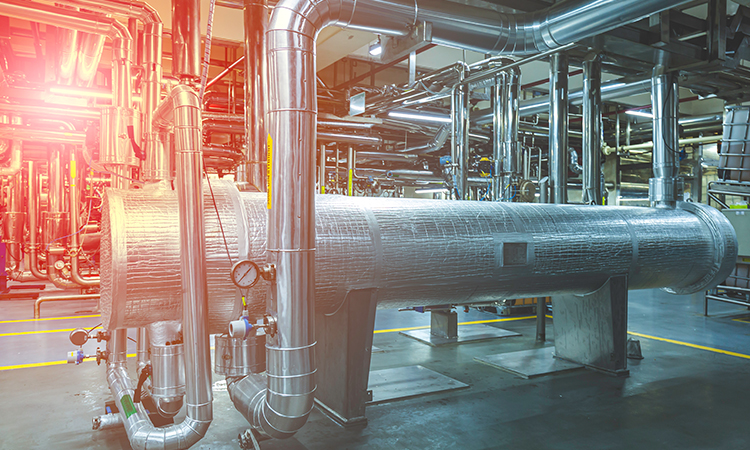
Heat exchangers are among the most critical yet often overlooked components in modern industry. Whether in power plants, chemical processing units, oil refineries, HVAC systems, food processing facilities, pharmaceutical plants, marine vessels, or renewable energy installations, heat exchangers play a pivotal role in transferring thermal energy efficiently between fluids. At first glance, a heat exchanger may appear to be a simple assembly of tubes, plates, shells, and fins. In reality, however, its design and manufacture demand a sophisticated blend of thermal engineering, materials science, precision fabrication, welding expertise, and quality assurance. Even minor shortcomings in design or manufacturing can result in reduced efficiency, excessive pressure drops, premature failures, and significant operational losses.
As industries pursue greater energy efficiency, sustainability, and process optimization, the question becomes increasingly relevant: What is truly crucial in making a high-performance heat exchanger?
Understanding the Purpose
The primary function of a heat exchanger is straightforward—transfer heat from one medium to another without allowing them to mix. However, achieving maximum heat transfer while maintaining structural integrity, operational reliability, and economic viability presents significant engineering challenges.
An ideal heat exchanger must:
• Maximize thermal efficiency
• Minimize pressure losses
• Withstand operating pressures and temperatures
• Resist corrosion and fouling
• Ensure long service life
• Facilitate easy maintenance
• Operate safely under varying conditions
Balancing these requirements begins at the design stage and continues throughout manufacturing.
Design: The Foundation of Performance
The success of any heat exchanger starts with proper thermal and mechanical design.
Engineers must evaluate numerous parameters, including:
• Heat load requirements
• Fluid characteristics
• Flow rates
• Operating temperatures
• Pressure levels
• Allowable pressure drops
• Space constraints
• Maintenance requirements
Sophisticated simulation software and Computational Fluid Dynamics (CFD) tools are increasingly used to optimize designs before fabrication begins. Designers seek to maximize heat transfer surface area while minimizing equipment size and manufacturing costs. At the same time, they must ensure uniform fluid distribution and avoid dead zones that can reduce efficiency or encourage fouling. An optimized design often determines whether a heat exchanger achieves its intended performance throughout its service life.
Material Selection: A Critical Decision
One of the most important factors in heat exchanger manufacturing is selecting the right materials.
Heat exchangers frequently operate under challenging conditions involving:
• High temperatures
• Elevated pressures
• Corrosive chemicals
• Saline environments
• Thermal cycling
• Mechanical stresses
• Commonly used materials include:
• Carbon steel
• Stainless steel
• Duplex stainless steel
• Copper and copper alloys
 • Titanium
• Nickel-based alloys
• Aluminum
Material selection depends on process conditions and expected service life. For example, titanium may be chosen for seawater applications due to its exceptional corrosion resistance, while stainless steel is widely used in food processing and pharmaceutical industries because of its hygienic properties. Choosing inappropriate materials can lead to corrosion, leakage, contamination, and costly downtime.
Precision Fabrication Matters
Modern heat exchangers demand extremely high manufacturing accuracy. Tube sheets, plates, shells, headers, and internal components must be fabricated to tight tolerances to ensure:
• Proper alignment
• Efficient heat transfer
• Structural integrity
• Leak-free operation
Advances in CNC machining, laser cutting, plasma cutting, and automated forming technologies have significantly improved fabrication precision. Accurate machining of tube sheets is particularly important because even slight deviations can complicate tube insertion and compromise sealing performance. Precision manufacturing not only improves performance but also reduces assembly time and enhances product reliability.
Welding Excellence: The Backbone of Reliability
Welding is one of the most critical manufacturing processes in heat exchanger production. A typical shell-and-tube heat exchanger may contain hundreds or even thousands of welded joints. Each weld must maintain its integrity under operating pressures and temperatures throughout the equipment’s lifespan.
Common welding processes include:
• TIG welding
• MIG welding
• Orbital welding
• Submerged arc welding
• Laser welding
Automated and robotic welding systems are increasingly employed to improve consistency and repeatability.
Particular attention is required for:
• Tube-to-tube sheet joints
• Shell welds
• Pressure-retaining components
• High-alloy material welds
Poor welding quality remains one of the leading causes of heat exchanger failures, making skilled welding procedures and stringent inspection protocols indispensable.
Surface Enhancement and Heat Transfer Efficiency
The efficiency of a heat exchanger depends largely on how effectively heat is transferred between fluids.
Manufacturers employ various techniques to increase heat transfer performance, including:
• Finned tubes
• Corrugated plates
• Enhanced surface geometries
• Micro-channel designs
• Turbulence-promoting structures
These features increase surface area and improve fluid flow characteristics, resulting in enhanced thermal performance. Recent developments in surface engineering have enabled compact heat exchangers that deliver higher efficiency while occupying less space. Such innovations are particularly valuable in industries where footprint reduction and energy optimization are key priorities.
Quality Control: Ensuring Dependability
Heat exchangers are often deployed in mission-critical applications where failure can result in production losses, environmental hazards, or safety risks. Consequently, quality assurance is a crucial aspect of manufacturing.
Typical inspection procedures include:
• Dimensional verification
• Material traceability checks
• Weld inspections
• Hydrostatic testing
• Pneumatic testing
• Helium leak testing
• Non-destructive testing (NDT)
• Advanced NDT methods such as:
• Radiographic testing
• Ultrasonic testing
• Dye penetrant inspection
• Eddy current testing
Help identify hidden defects before equipment enters service. Comprehensive quality control ensures compliance with international standards and customer specifications.
Thermal Stress Management
Heat exchangers are exposed to repeated thermal cycles during operation. Differences in temperature can cause expansion and contraction of various components, leading to thermal stresses. If not properly managed, these stresses can result in:
• Tube failures
• Weld cracking
• Distortion
• Fatigue damage
Engineers employ expansion joints, floating heads, and specialized support structures to accommodate thermal movements. Thermal engineering analysis helps ensure long-term reliability under dynamic operating conditions.
The Role of Automation and Industry 4.0
Heat exchanger manufacturing is increasingly benefiting from digital technologies.
Modern production facilities utilize:
• Automated welding systems
• CNC fabrication equipment
• Robotic material handling
• Digital inspection tools
• Real-time production monitoring
Industry 4.0 technologies are improving traceability, productivity, and quality consistency. Digital twins and simulation models allow manufacturers to optimize designs and predict performance before physical production begins. These technologies are helping reduce lead times while improving product reliability.
Sustainability and Energy Efficiency
As industries pursue decarbonization and sustainability goals, heat exchangers have become central to energy conservation strategies. Efficient heat recovery systems can dramatically reduce fuel consumption and greenhouse gas emissions.
Modern heat exchangers contribute to sustainability through:
• Waste heat recovery
• Process energy optimization
• Reduced operating costs
• Lower environmental impact
Manufacturers are increasingly designing heat exchangers with enhanced thermal efficiency and reduced material usage, supporting both economic and environmental objectives.
Emerging Trends in Heat Exchanger Manufacturing
Several innovations are shaping the future of heat exchanger technology.
Additive Manufacturing
3D printing is enabling the creation of complex internal geometries that were previously impossible to manufacture using conventional methods. These designs can significantly improve heat transfer performance while reducing equipment size. Compact Heat Exchangers Industries increasingly demand smaller, lighter, and more efficient equipment.
Compact heat exchangers offer:
• Higher thermal performance
• Reduced footprint
• Lower material consumption
• Easier integration
Advanced Materials
New alloys and composite materials are expanding operational limits and improving corrosion resistance. These materials enable heat exchangers to operate reliably in increasingly demanding environments.
Smart Monitoring Systems
Integrated sensors and predictive analytics are transforming heat exchanger maintenance. Real-time monitoring of temperature, pressure, flow rates, and fouling conditions enables predictive maintenance strategies that reduce downtime and improve reliability.
Conclusion
Manufacturing a high-performance heat exchanger is far more complex than assembling metal components into a pressure vessel. It requires the seamless integration of thermal engineering, advanced materials, precision fabrication, welding expertise, quality assurance, and digital technologies. From design optimization and material selection to welding integrity and thermal stress management, every stage plays a vital role in determining the efficiency, reliability, and longevity of the final product.
As industries continue to prioritize energy efficiency, sustainability, and operational excellence, the demands placed on heat exchangers will only increase. Manufacturers that embrace innovation, precision engineering, and advanced manufacturing practices will be best positioned to deliver the next generation of high-performance heat exchange solutions. In the end, what is crucial in making heat exchangers is not merely the ability to transfer heat—it is the ability to do so efficiently, safely, reliably, and sustainably over decades of service.