


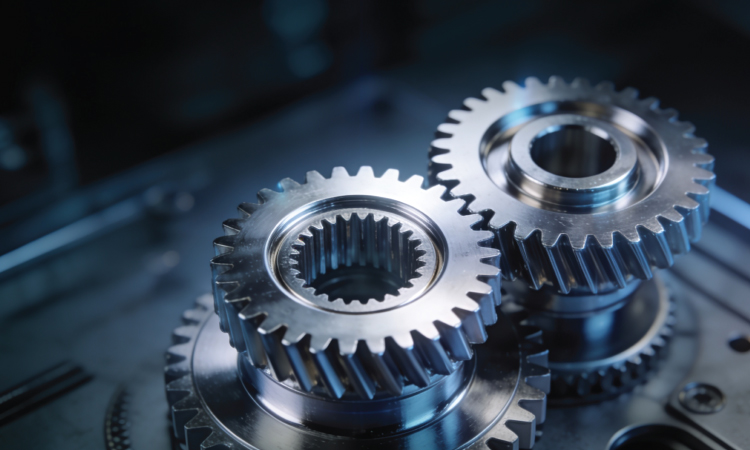
Gears are among the most critical components in modern machinery. From automobiles and aircraft to wind turbines, industrial robots, and machine tools, gears are responsible for transmitting power with efficiency, accuracy, and reliability. As industries demand higher performance, quieter operation, greater energy efficiency, and longer service life, gear manufacturers are under increasing pressure to produce gears with unprecedented levels of precision.
At the heart of this pursuit lies gear grinding-a finishing process that defines the final geometry, surface quality, and performance characteristics of a gear. In recent years, significant breakthroughs in gear grinding machine technology have transformed the way gears are manufactured, enabling higher productivity, superior accuracy, and greater process flexibility than ever before. Driven by advancements in CNC technology, automation, digitalization, abrasive materials, and process monitoring, modern gear grinding machines are setting new standards in precision manufacturing.
The Growing Importance of Gear Grinding
Most high-performance gears undergo heat treatment to achieve the hardness required for demanding applications. However, heat treatment often causes dimensional distortions that affect tooth geometry and gear accuracy. Gear grinding is employed to restore the precise tooth profile, lead, pitch, and surface finish required for optimal performance. The process is especially critical in industries such as:
• Automotive and electric vehicles
• Aerospace
• Railways
• Wind energy
• Industrial gearboxes
• Construction equipment
• Robotics and automation
The increasing demand for high-efficiency transmissions and low-noise powertrains has elevated gear grinding from a finishing operation to a strategic manufacturing process.
Advances in CNC Technology
One of the most significant breakthroughs in gear grinding machines has been the evolution of CNC control systems.
Modern CNC gear grinders feature:
• Multi-axis simultaneous control
• High-speed processing capabilities
• Adaptive motion control
• Real-time error compensation
• Advanced user interfaces
These capabilities allow manufacturers to produce highly complex gear geometries with micron-level accuracy. Today’s CNC systems can automatically calculate grinding paths, compensate for machine deviations, and optimize process parameters, significantly reducing setup time and operator dependency. The result is greater consistency, shorter production cycles, and improved productivity.
Integrated Measurement and Closed-Loop Control
Traditionally, gears were transferred to separate inspection stations after grinding. Any deviations detected required process adjustments and rework. A major breakthrough has been the integration of in-machine measurement systems.
 Modern gear grinding machines now incorporate:
• Touch probes
• Laser measuring systems
• In-process inspection technologies
• Automatic profile correction systems
These systems continuously monitor gear geometry during production. If deviations are detected, the machine automatically adjusts grinding parameters in real time, creating a closed-loop manufacturing process. This approach significantly reduces scrap rates while ensuring consistent quality across large production batches.
High-Speed Grinding Technologies
Manufacturers are increasingly seeking higher throughput without compromising precision. Advances in machine rigidity, spindle design, and abrasive technology have enabled the development of high-speed grinding processes.
Modern gear grinding machines feature:
• High-power grinding spindles
• Dynamic balancing systems
• Enhanced vibration damping
• High-speed rotary drives
These innovations allow greater material removal rates while maintaining exceptional surface finish and dimensional accuracy. High-speed grinding not only improves productivity but also reduces manufacturing costs per component.
Advanced Grinding Wheel Technologies
The grinding wheel itself has undergone remarkable technological advancement. Conventional abrasive wheels are increasingly being replaced by high-performance materials such as:
• Cubic Boron Nitride (CBN)
• Vitrified CBN wheels
• Hybrid bond abrasives
• High-porosity grinding wheels
CBN technology, in particular, has revolutionized gear grinding.
Its advantages include:
• Superior wear resistance
• Longer wheel life
• Higher cutting efficiency
• Reduced thermal damage
• Improved surface finish
The combination of advanced grinding wheels and intelligent machine controls enables manufacturers to achieve tighter tolerances and longer tool life.
Digitalization and Industry 4.0 Integration
The rise of Industry 4.0 is transforming gear manufacturing operations worldwide. Modern gear grinding machines are increasingly connected to smart factory networks through advanced communication systems.
These machines can now provide:
• Real-time process monitoring
• Production analytics
• Predictive maintenance alerts
• Remote diagnostics
• Performance optimization reports
Data collected from sensors throughout the machine is analyzed to identify trends and potential issues before they affect production. This predictive approach minimizes downtime, enhances machine utilization, and improves overall equipment effectiveness (OEE). For manufacturers operating in high-volume production environments, digitalization offers substantial competitive advantages.
Automation and Robotic Integration
Labor shortages and increasing productivity requirements are driving the adoption of automation in gear manufacturing.
Today’s gear grinding systems are frequently integrated with:
• Robotic loading systems
• Automated workpiece handling
• Flexible manufacturing cells
• Automated storage solutions
These technologies enable lights-out manufacturing where machines operate continuously with minimal human intervention. Automation not only increases throughput but also ensures consistent handling, reducing the risk of operator-induced errors. For automotive and industrial gear manufacturers, automated grinding cells have become a key component of modern production strategies.
Breakthroughs in Thermal Stability
Temperature variations have always been a challenge in precision grinding operations. Even microscopic thermal expansion can affect gear accuracy. To address this issue, machine builders have introduced sophisticated thermal management technologies, including:
• Active cooling systems
• Thermally stable machine structures
• Temperature-controlled spindles
• Real-time thermal compensation algorithms
These innovations help maintain consistent machine geometry regardless of environmental conditions. As a result, manufacturers can achieve higher precision over extended production runs.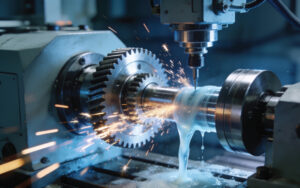
Precision Grinding for Electric Vehicles
The rapid growth of electric mobility is creating new requirements for gear manufacturing. Unlike internal combustion engines, electric motors operate at high rotational speeds and generate minimal background noise. Consequently, transmission gears must meet exceptionally stringent noise and vibration standards. Modern gear grinding machines are being developed specifically to produce gears for electric vehicle transmissions.
These machines offer :-
• Ultra-high profile accuracy
• Superior surface finish
• Enhanced tooth contact optimization
• Advanced noise reduction capabilities
As EV adoption accelerates worldwide, gear grinding technology will continue evolving to meet increasingly demanding performance expectations.
Artificial Intelligence in Gear Grinding
Artificial Intelligence (AI) is beginning to play a transformative role in precision manufacturing. In gear grinding applications, AI-powered systems can:
• Predict wheel wear
• Optimize grinding parameters
• Identify process anomalies
• Improve cycle efficiency
• Reduce energy consumption
Machine learning algorithms continuously analyze operational data and recommend adjustments that improve productivity and quality. Over time, these systems become increasingly effective at optimizing grinding processes, reducing operator intervention and enhancing process reliability.
Sustainability and Energy Efficiency
Sustainability is becoming a major consideration in machine tool design. Modern gear grinding machines incorporate numerous features aimed at reducing environmental impact, including:
• Energy-efficient drives
• Regenerative braking systems
• Optimized coolant management
• Reduced lubricant consumption
• Smart power management systems
These innovations help manufacturers reduce operating costs while supporting corporate sustainability objectives. Energy-efficient production is increasingly viewed not only as an environmental responsibility but also as a business necessity.
Future Trends in Gear Grinding
The future of gear grinding technology will be shaped by several emerging trends:
Hybrid Manufacturing Systems
Future machines may combine grinding, honing, inspection, and finishing operations within a single platform, reducing handling time and improving efficiency.
Digital Twin Technology
Virtual machine models will enable manufacturers to simulate grinding processes before production begins, minimizing setup time and improving process optimization.
Autonomous Process Control
Artificial intelligence and advanced analytics will increasingly enable self-optimizing grinding systems capable of making real-time adjustments without operator intervention.
Ultra-Precision Manufacturing
As industries such as aerospace, robotics, and electric mobility demand even tighter tolerances, gear grinding machines will continue pushing the boundaries of precision engineering.
Conclusion
Gear grinding machines have undergone a remarkable transformation over the past decade. Advances in CNC controls, automation, digitalization, thermal stability, abrasive technology, and artificial intelligence have elevated gear grinding to new levels of performance and efficiency. These breakthroughs are enabling manufacturers to produce gears with exceptional accuracy, superior surface quality, and enhanced durability while simultaneously reducing production costs and increasing throughput.
As electric vehicles, renewable energy systems, advanced robotics, and high-performance industrial machinery continue to evolve, the demand for precision gears will only increase. Meeting these requirements will depend heavily on the next generation of gear grinding machines. In this rapidly advancing landscape, gear grinding is no longer merely a finishing process-it has become a critical enabler of innovation, efficiency, and competitiveness in modern manufacturing. The latest breakthroughs are ensuring that gear manufacturers remain equipped to meet the challenges of tomorrow’s precision-driven industries.